

So, what’s the deal with organic biotin vitamins?
At their core, they’re a plant-based form of Vitamin B7 designed to fuel your body’s natural energy production. That energy is what powers the health and growth of your hair, skin, and nails. Unlike their synthetic counterparts, organic versions come from whole food sources and skip the artificial fillers, making them a perfect fit for a clean, natural approach to wellness.
Why Organic Biotin Is Your Natural Beauty Ally
Think of biotin, or Vitamin B7, as a spark plug for your cells. Its main job is to help convert the food you eat—all the fats, proteins, and carbs—into pure, usable energy. When your cells are properly energized and firing on all cylinders, the results start to show on the outside.
This cellular energy is what powers the growth and upkeep of tissues that turn over rapidly, like your hair and skin. It’s exactly why organic biotin vitamins have become such a go-to for anyone looking to build beauty from the inside out.
The main benefits really boil down to this:
- Stronger Hair and Nails: Biotin is a key player in producing keratin, which is the tough, structural protein that literally builds your hair and nails.
- Radiant Skin: It also helps with fat metabolism, a process that’s absolutely essential for keeping your skin healthy and supple.
- Clean, Plant-Based Sourcing: Organic biotin is usually made from natural sources, which means you’re avoiding unwanted synthetic additives, pesticides, and GMOs.
The Shift Toward Natural Wellness
The move toward organic supplements isn’t just some passing trend. It’s part of a much bigger shift where people are demanding more transparency and purity in what they put in their bodies. This desire for clean ingredients has caused the global biotin supplement market to boom, especially as social media shines a spotlight on hair and skin health.
Millennials and Gen Z are really leading the charge here, putting their money behind brands with clean labels and sustainable sourcing.
When you choose an organic option, you’re doing more than just taking a vitamin—you're embracing a whole philosophy. It's about nourishing your body with high-quality ingredients you can actually recognize. Instead of just trying to fix a single symptom, you're supporting the foundational processes that create lasting radiance. To see how biotin fits into the bigger picture, check out our guide on the best vitamins for skin health.
By giving your body a clean, plant-derived form of this essential B-vitamin, you're fueling the very systems responsible for building strong, vibrant tissues from the inside out.
Organic vs. Synthetic Biotin at a Glance
It can be tough to know what you’re really getting in a supplement bottle. This quick table breaks down the key differences between organic, food-based biotin and the synthetic kind you’ll often find on shelves.
| Feature | Organic Biotin | Synthetic Biotin |
|---|---|---|
| Source | Derived from whole foods like seeds, nuts, and vegetables. | Chemically synthesized in a lab using industrial chemicals. |
| Bioavailability | Often more easily recognized and absorbed by the body. | May be less bioavailable and harder for the body to use. |
| Co-Factors | Contains other natural nutrients and enzymes from the source food. | An isolated nutrient with no additional co-factors. |
| Purity | Free from synthetic fillers, binders, pesticides, and GMOs. | May contain artificial additives, solvents, and fillers. |
Ultimately, choosing an organic biotin supplement means you’re opting for a form that’s closer to what you’d find in nature, complete with the other nutrients that help your body put it to good use.
How Biotin Works as Your Body's Master Builder
To really get what organic biotin vitamins can do for you, it helps to peek under the hood at how this nutrient actually works. Think of biotin less like a vitamin and more like the master foreman on your body’s cellular construction site. It doesn't swing the hammer itself, but it hands the workers—your enzymes—the plans they need to get the job done right.
Scientifically speaking, biotin is a coenzyme. This just means it's a critical helper molecule that switches on the enzymes in charge of metabolism. Imagine a highly skilled carpenter who can’t start building until you hand them their favorite tool. Biotin is that essential tool, giving your body the green light to break down and use the building blocks from your food.
Fueling Your Cells from the Ground Up
The three main materials on this cellular job site are fats, carbohydrates, and proteins. Biotin is absolutely essential for metabolizing all three, helping your body convert them into usable energy and the specific parts needed for growth and repair.
This whole process is the foundation for pretty much everything your body does. When you get enough organic biotin, whether from food or a quality supplement, you’re making sure this fundamental system runs like a well-oiled machine.
This simple diagram shows the direct line between biotin's job and its most famous beauty benefits.
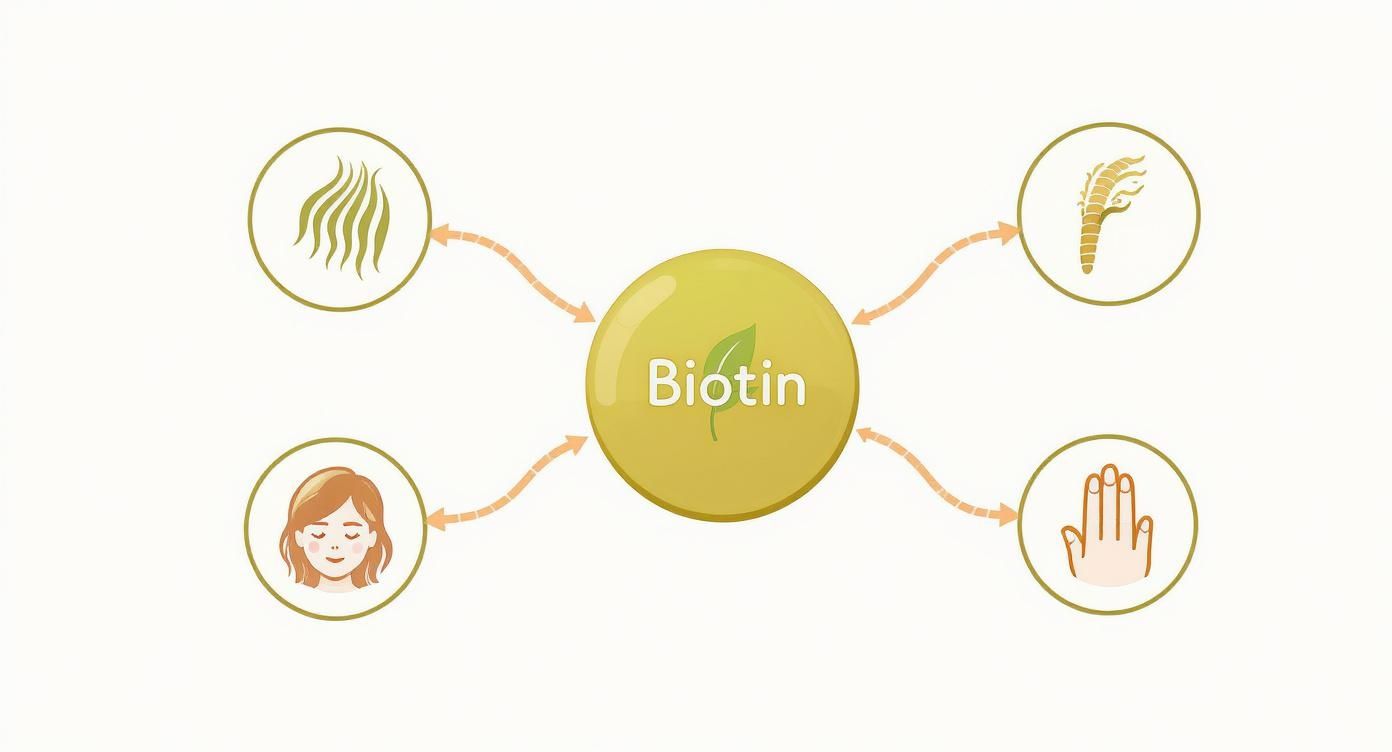
As you can see, biotin's core role in metabolism directly fuels the systems responsible for creating strong hair, glowing skin, and tough nails.
The Keratin Connection: Building Stronger Hair and Nails
So, how exactly does turning food into energy lead to better hair and nails? The answer comes down to one powerful protein: keratin.
Keratin is the tough, fibrous stuff that makes up the very structure of your hair, skin, and nails. It’s what gives them their strength and resilience. Biotin plays a starring role in creating keratin by supporting the metabolism of amino acids—the individual building blocks of all proteins.
Think of it like building a brick wall:
- Amino Acids are the individual bricks.
- Keratin is the strong, finished wall.
- Biotin is the foreman making sure the bricks are made correctly and delivered to the worksite on time.
Without enough biotin, the whole production line can slow down. The result? Weaker structures, like brittle nails or hair that’s more prone to breaking.
A consistent supply of biotin is like giving your body a steady stream of top-quality construction materials. It empowers it to build and maintain strong, keratin-based tissues day in and day out.
Supporting Skin Health Through Fatty Acids
Biotin’s job doesn’t stop with keratin. It’s also a key player in creating fatty acids, which are absolutely crucial for healthy skin cells.
These healthy fats help form a protective barrier that locks moisture in and keeps irritants out. This is what contributes to a plump, hydrated, and radiant complexion.
When your body has enough biotin to process fats effectively, it can nourish your skin cells from the inside out. This deep, cellular-level support helps maintain the skin’s natural lipid barrier—your first line of defense against daily environmental stress and moisture loss.
Ultimately, biotin isn't some magic ingredient that creates beauty out of thin air. It’s a foundational nutrient that empowers your body's own natural processes. By making sure your metabolic engine is firing on all cylinders, organic biotin vitamins give your body the essential support it needs to build strong, healthy, and beautiful hair, skin, and nails from the ground up.
Where to Find the Best Plant-Based Biotin
While a top-notch supplement is a great way to hit your biotin targets, I always believe the best wellness plans start with what's on your plate. Your body is wired to recognize and use nutrients from whole foods, making your diet the most powerful tool you have for building foundational health.
The good news? Nature has packed this essential B-vitamin into tons of delicious, plant-based foods.
Eating these foods doesn't just up your biotin intake; it also delivers a whole team of vitamins, minerals, and antioxidants that work together to support your overall vitality. Think of it like building your house on a solid foundation before you even think about adding the decor.

Top Whole-Food Biotin Powerhouses
Weaving biotin-rich foods into your daily meals is probably easier than you think. A lot of everyday, versatile ingredients are absolutely loaded with this beauty nutrient.
Here are some of the best plant-based options to add to your shopping list:
- Avocados: More than just a source of healthy fats, avocados are also a fantastic source of biotin. They’re a perfect addition to salads, toast, or smoothies.
- Sweet Potatoes: This vibrant root veggie is packed with beta-carotene and gives you a solid amount of biotin, supporting both skin health and cellular energy.
- Nuts and Seeds: Almonds, walnuts, and especially sunflower seeds are biotin superstars. A small handful is all you need for a convenient, nutrient-dense snack.
- Legumes: Foods like beans, lentils, and peas deliver a great mix of protein, fiber, and biotin, which is a winning combination for your overall health.
- Broccoli: This cruciferous hero, famous for its detox-supporting properties, also contains a healthy dose of biotin alongside other key vitamins.
Focusing on a diverse, plant-rich diet gives your body the raw materials it needs to thrive, long before you ever reach for a supplement bottle.
If you're curious about how much biotin is in some common foods, this table gives you a quick snapshot.
Top Organic Food Sources of Biotin
| Food Source | Serving Size | Approximate Biotin (mcg) |
|---|---|---|
| Sunflower Seeds | 1/4 cup, roasted | 9.6 |
| Sweet Potato | 1/2 cup, cooked | 2.4 |
| Almonds | 1/4 cup, roasted | 1.5 |
| Broccoli | 1/2 cup, fresh | 0.4 |
| Avocado | 1 medium (200g) | 1.8 |
As you can see, a few simple additions to your meals can make a real difference in your daily biotin intake.
It's Not Just How Much, But How Well You Absorb It
When you do decide to add a supplement to your routine, it’s critical to look past the dosage on the label. The most important thing isn't just how much biotin is in each capsule, but how much your body can actually absorb and put to work. This is a concept called bioavailability.
Here’s an analogy I like: Imagine you’re trying to water a plant. You could dump a whole gallon of water on it at once, but most of it will just run off the soil. The plant only gets a tiny fraction of what it needs. A slow, steady drip, on the other hand, allows the water to soak in deep.
It's a similar story with biotin. Biotin from a natural, organic source tends to have higher bioavailability because it comes packaged with other natural compounds, or co-factors, that your body recognizes. This helps it absorb the nutrient much more efficiently. Synthetic biotin, which is created in a lab, is often just an isolated molecule that your body might not process as well.
Bioavailability is the true measure of a supplement's power. A lower dose of highly bioavailable organic biotin can be far more effective than a megadose of a synthetic version that your body struggles to absorb.
What "Organic" Really Means in a Biotin Supplement
So, what does it actually mean when a label says organic biotin vitamins are sourced from plants? It means that unlike synthetic versions made through industrial chemical processes, this biotin is extracted directly from botanicals.
One of the most respected sources is the Sesbania grandiflora plant, sometimes called the Hummingbird Tree. Its leaves are naturally rich in biotin and have been used in traditional wellness practices for centuries.
When a supplement uses an extract from a plant like Sesbania, you're getting biotin in a form that’s much closer to how it appears in nature. This whole-food approach means the vitamin is accompanied by other phytonutrients that can help it on its journey from the supplement bottle to your cells, maximizing its potential to support your hair, skin, and nails.
How to Choose a High-Quality Biotin Supplement
Walking into the supplement aisle can feel overwhelming. With so many bottles making the same promises, how do you actually pick the right one? Making a smart choice really comes down to knowing what to look for on the label—and what to avoid.
The demand for biotin supplements has exploded, and people are getting smarter, showing a strong preference for natural and organic options. This shift is all about a bigger focus on clean wellness, and e-commerce has made it easier than ever to find high-quality organic biotin vitamins. You can dig deeper into the growth of the biotin supplements market if you're curious.
This guide will walk you through how to decode labels, understand different supplement forms, and check a brand’s trustworthiness. Let's turn you into a confident shopper.
Decoding Labels and Certifications
Think of certifications on a label as stamps of approval. They tell you a product has met specific, tough standards and are your fastest way to spot a clean, high-quality supplement.
Here are the key logos to look for and what they really mean:
-
USDA Organic: This seal is your guarantee that the ingredients were grown without nasty pesticides, synthetic fertilizers, or GMOs. For a biotin supplement sourced from plants like Sesbania, this is a non-negotiable sign of purity.
-
Non-GMO Project Verified: That little butterfly logo confirms the product went through a strict verification process to make sure it’s free from genetically modified organisms. It's an extra layer of confidence in your ingredients.
When you choose a product with these certifications, you're not just getting biotin. You're getting a brand's commitment to clean sourcing, backed by independent proof.
Spotting Unnecessary Fillers and Additives
Beyond the fancy seals, the "Other Ingredients" list tells the real story. High-quality formulas keep this list short and sweet. Lower-quality products? They're often packed with junk.
Be on the lookout for these common additives that do nothing for your health:
- Binders: Things like magnesium stearate are just there to hold tablets together.
- Fillers: Ingredients like rice flour or silicon dioxide are added to bulk up capsules and save the company money.
- Artificial Colors and Flavors: You’ll see these a lot in gummies, and they’re purely for looks.
A truly clean supplement gets right to the point, delivering the good stuff without the fluff. The fewer strange names on that ingredient list, the better.
Comparing Different Supplement Forms
Biotin comes in a few different forms, and the best one for you usually boils down to your personal preference and lifestyle. Each one has its pros and cons.
| Supplement Form | Pros | Cons |
|---|---|---|
| Capsules | Simple to dose, usually have fewer additives, and are tasteless. | Can be tough for some people to swallow. |
| Liquids | May absorb more easily and are simple to add to drinks. | Can have a weird taste and often need to be refrigerated. |
| Gummies | Fun to take—they feel more like a treat than a supplement. | Almost always contain added sugars, artificial flavors, and colors. |
If you’re all about purity, capsules are often your best bet. They’re the most likely to be free from the added sugars and artificial junk common in gummies.
Evaluating Brand Trustworthiness
Finally, the brand behind the bottle matters just as much as what's inside it. A company you can trust will be open about its entire process, from start to finish.
Here’s what to look for when you're checking out a brand:
- Sourcing Transparency: The brand should be upfront about where its ingredients come from. Do they tell you the source of their organic biotin, like Sesbania grandiflora?
- Manufacturing Standards: Look for a mention of Good Manufacturing Practices (GMP) certification. This ensures the product is made and controlled according to strict quality standards.
- Third-Party Testing: This is the gold standard. Good brands send their products to independent labs to test for purity and potency. Even better, they make those results available to you.
By following these steps, you can confidently pick a top-notch organic biotin supplement that truly supports your wellness goals.
Using Biotin Safely and Effectively
So you've decided to add organic biotin to your routine. That's great! To really get all those amazing benefits, it's important to use it responsibly. A little bit of know-how on dosage and potential interactions will make sure your wellness journey is both safe and successful.
How Much Biotin Do You Really Need?
For most adults, the sweet spot for biotin intake is around 30 micrograms (mcg) per day. If you’re breastfeeding, you might need a little more, closer to 35 mcg. Many of us get a good amount of this from a balanced diet—think nuts, seeds, and certain veggies. A supplement just acts as a safety net, ensuring you consistently hit that target.
The good news? Biotin is a water-soluble vitamin. Your body doesn't hang onto it for long. It takes exactly what it needs, and the rest is naturally flushed out. This is why it’s considered incredibly safe, and there are no known cases of anyone being harmed by taking too much.
The One Big Interaction to Keep in Mind
While biotin is exceptionally safe, there's one critical detail everyone should know: it can sometimes mess with lab test results. High doses of biotin from supplements can skew the numbers on important blood work, which could lead to an incorrect diagnosis.
This isn't a minor thing; it can affect tests for:
- Thyroid Function: It might make your results look like you have an overactive thyroid (hyperthyroidism) or, worse, hide an underactive one (hypothyroidism).
- Heart Health: Tests for troponin, a marker used to diagnose a heart attack, can become unreliable.
- Hormone Levels: It can also throw off tests for hormones like testosterone and progesterone.
To play it safe, it’s a best practice to stop taking your biotin supplement for at least 72 hours before any scheduled blood work. And always, always tell your doctor about all the supplements you’re taking—including organic biotin—so they can interpret your results accurately.
What About Side Effects?
Honestly, side effects from taking biotin are extremely rare, especially if you’re sticking to the recommended amounts. Most people tolerate it perfectly without any issues.
In very unusual situations, extremely high doses might cause minor things like an upset stomach or a skin rash. If you notice anything out of the ordinary after starting a new supplement, it’s always smart to check in with your healthcare provider. Again, these cases are not common, but it's always good to be aware.
Always Chat With a Pro First
Before adding any new supplement to your daily routine, it's so important to have a quick chat with your doctor or another qualified healthcare provider. This is non-negotiable, especially if you have any existing health conditions, are on other medications, or are pregnant or breastfeeding.
Your doctor can give you personalized advice and help figure out the right approach for your unique needs. They’ll make sure an organic biotin supplement fits safely and effectively into your overall health plan. This simple step is the best way to get all the glow-boosting benefits for your hair, skin, and nails without any unwelcome surprises.
Nutrients That Amplify Your Biotin Results
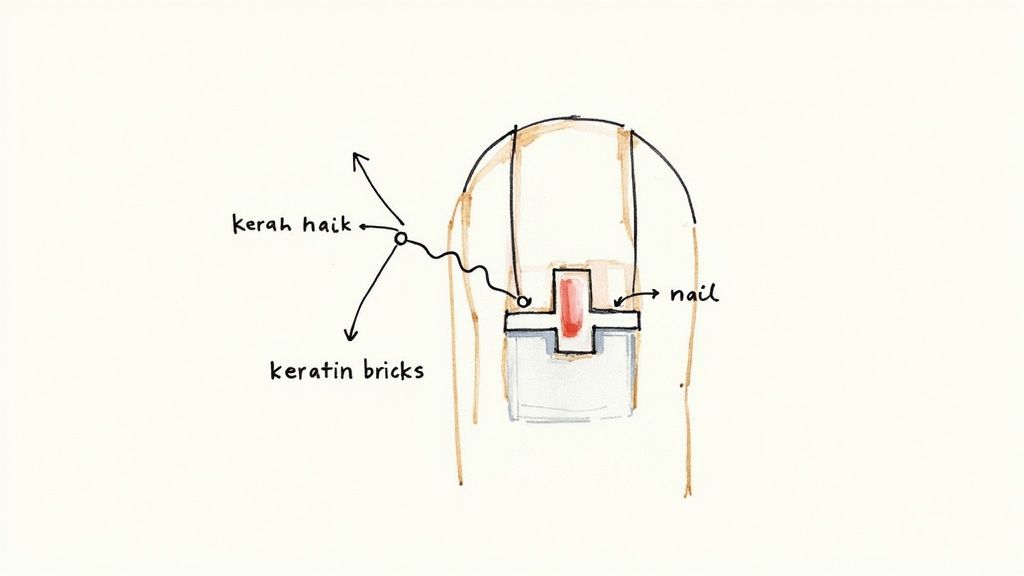
While organic biotin is a powerhouse for healthy cells, it works best when it has the right support crew. Think of it like this: if biotin helps your body build strong keratin “bricks” for your hair and nails, other nutrients are the “mortar” needed to hold the entire structure together.
Getting this combination right is the real secret to unlocking beauty from within. When you pair biotin with complementary nutrients, you create a powerful routine that delivers results far beyond what any single ingredient can achieve on its own.
The Power of Collagen-Supporting Nutrients
One of biotin's most effective partners is a group of nutrients that help your body make its own collagen. Collagen is the most plentiful protein you have, acting as the fundamental framework for your skin and giving it firmness and elasticity.
Biotin is fantastic for producing keratin, but that keratin needs a strong foundation to build on. That's where collagen's building blocks come into play.
- Essential Amino Acids: Your body requires specific amino acids—namely glycine, L-lysine, and L-proline—to synthesize new collagen. Supplying these raw materials is like delivering high-quality cement to a construction site; it ensures the whole structure is sound.
- Vitamin C: This is an absolute must-have for collagen synthesis. Without enough Vitamin C, the entire production process grinds to a halt, no matter how many amino acids you have on hand.
- Bamboo Extract (Silica): Rich in silica, bamboo extract helps strengthen the connective tissues in your hair, skin, and nails, adding extra resilience to your collagen framework.
When you combine organic biotin vitamins with these collagen-supporting elements, you're not just strengthening individual hairs or nails. You’re fortifying the entire underlying system that supports them. For a deeper dive, check out our complete guide to the best vitamins for nail growth.
By fueling both keratin and collagen production at the same time, you create a complete support system. Biotin builds strong keratin fibers, while collagen provides the supple, resilient foundation they need to truly thrive.
Antioxidants That Protect Your Progress
Another critical piece of the puzzle is protecting your cells from everyday damage. Oxidative stress, caused by things like UV rays and pollution, can break down existing collagen and keratin, quietly undoing all your hard work.
This is where a team of powerful antioxidants can step in and act as your body's personal security detail.
- Grape Seed Extract: This potent antioxidant helps shield your skin's collagen and elastin from degradation, preserving its firmness.
- Vitamin E: A classic skin-support vitamin, it works to neutralize free radicals and protect cell membranes from damage.
- Zinc: This essential mineral not only helps with skin repair but also plays a role in keeping your hair and nails strong.
Pairing these protective nutrients with your biotin supplement ensures that the new, healthy tissues you're building are well-defended against the environmental stressors that cause premature aging. This growing awareness of how nutrients work together is driving major growth in the global market for organic biotin vitamins, as more people look for comprehensive, eco-friendly supplements.
By taking this team-based approach, you move beyond just taking a supplement and start nourishing your body strategically. The combination of biotin, collagen boosters, and antioxidants creates a cycle of building, strengthening, and protecting for more resilient hair, firmer skin, and stronger nails.
Common Questions About Organic Biotin
As you get ready to add organic biotin to your wellness routine, it's natural for a few final questions to pop up. Let's walk through some of the most common things people ask, so you can feel confident and clear about what to expect.
How Long Until I See Results?
When it comes to biotin, patience and consistency are everything. Think of it as a long-term investment in your body. Because hair and nails grow pretty slowly, it usually takes a good three to six months of daily use before you start to see a real difference in the strength and quality of new growth.
You might notice skin benefits a bit sooner, often within a few months, since skin cells turn over more quickly. The key is making your organic biotin supplement a non-negotiable part of your daily ritual. That’s how you give your body the steady support it needs to do its work.
Is a Supplement Necessary with a Healthy Diet?
This is a great question. For most people, a balanced diet full of biotin-rich foods like nuts, seeds, and avocados provides enough for general health. So, where does a supplement fit in?
Think of a supplement as a valuable insurance policy. It guarantees you’re hitting your biotin goals every single day, even when life gets busy and your diet isn't perfect. It's especially helpful if you’re specifically trying to boost your hair, skin, and nail health and want to leave nothing to chance.
A high-quality organic biotin supplement bridges any potential nutritional gaps, providing a reliable foundation for your beauty-from-within goals.
Will Taking Extra Biotin Make My Hair Grow Faster?
This is probably one of the biggest myths out there. While biotin can definitely help restore normal growth if you're truly low on it, taking massive doses won't magically make your hair grow faster than its natural, genetically-determined rate.
Instead of chasing extreme doses, focus on giving your body a consistent, appropriate amount of organic biotin vitamins. This approach supports your body’s foundational health, which is the real secret to achieving strong, vibrant hair. To dive deeper into this, you can learn more about what to expect from biotin for hair growth results in our dedicated guide.
Ready to nourish your body from the inside out? Staye offers a clean, plant-based collagen booster formulated with organic biotin and other essential nutrients to support strong hair, radiant skin, and resilient nails. Discover the difference at https://shopstaye.com.