

Let's get straight to it: when it comes to biotin for hair growth, the most dramatic results happen for people who are actually deficient in it. For everyone else, it’s more of a supporting player, not a magic wand for thinning hair.
What to Realistically Expect From Biotin for Hair Growth
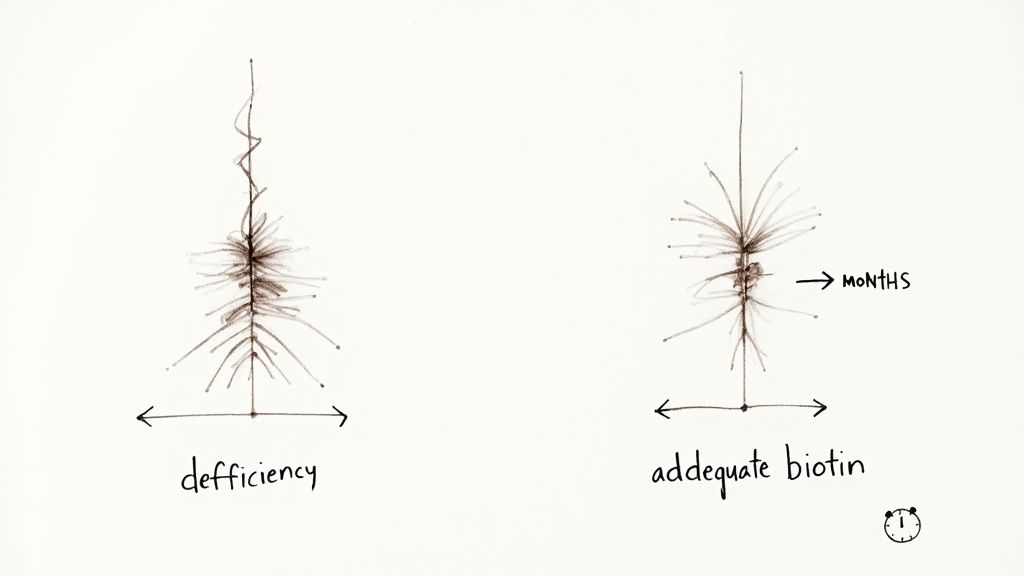
Before you add a bottle of biotin to your cart, it’s crucial to set some realistic expectations. Biotin, also known as vitamin B7, is essential for producing keratin—the protein that literally builds your hair. Think of biotin as the oil in your car’s engine. It's absolutely necessary for everything to run smoothly.
But here’s the thing: if your oil tank is already full, pouring more in won't make the car faster or more powerful. The same logic applies to biotin. If you’re already getting enough from your diet, taking extra supplements probably won’t lead to a sudden explosion of new hair or a massive increase in thickness.
Who Actually Sees the Biggest Difference?
The most impressive biotin for hair growth results are almost always seen in people who are correcting a deficiency. While a true, clinical biotin deficiency is pretty rare, certain things like medical conditions, specific medications, or highly restrictive diets can put you at risk. For those individuals, getting their biotin levels back to normal can make a real, visible difference in hair strength and can help slow down thinning.
On the other hand, for the average, healthy person, the scientific proof just isn’t there to back biotin as a standalone hair growth superstar. One major review of clinical cases found that biotin supplements were most effective for hair and nail health in patients who had an underlying deficiency or related medical issue. For everyone else? The benefits for hair growth are unproven.
A Realistic Timeline for Results
If you do happen to be deficient and start taking biotin, you’ll need to be patient. Hair grows in cycles, and it can take several months before you notice any real changes. You’re supporting the new hair growing from the follicle, not changing the hair that’s already on your head.
Key Takeaway: Biotin's effectiveness really boils down to your body's current levels. It’s a foundational nutrient for hair, but its power as a supplement is mainly unlocked when you’re fixing a deficiency, not just adding more to an already full tank.
Ultimately, getting stronger, healthier hair is about more than just one vitamin. The best strategy is a holistic one that combines smart supplementation with a balanced diet and a solid hair care routine. For a deeper dive into building a comprehensive hair health plan, check out our guide on how to make hair thicker.
How Biotin Supports Your Hair's Natural Growth Cycle
To get a real handle on what biotin does for your hair, you have to look at what's happening on a cellular level. Let's picture your body's "hair factory." The main thing being built here is keratin, which is the tough protein that makes up over 90% of every single hair strand.
In this factory, you can think of biotin as the master foreman. Its job is to make sure the entire production line is running smoothly and efficiently.
Without this foreman, the assembly line sputters, slows down, or can even grind to a halt. Biotin's main role is to act as a crucial coenzyme, helping your body metabolize fats, carbohydrates, and proteins. In simpler terms, it helps break down the food you eat and turn it into the raw energy and building blocks your hair follicles desperately need to construct new hair.
Imagine you're supplying the factory with all the right materials—amino acids from protein, energy from carbs—but without biotin, the workers (your cells) can't actually use them. It’s like having piles of bricks and mortar but no one there to lay the foundation. This metabolic role is the real secret behind how biotin supports your hair's growth cycle.
Fueling the Keratin Production Line
Building a complex protein like keratin is an incredibly energy-hungry process for your hair follicles. Biotin jumps right into the action by activating the enzymes that are absolutely essential for getting the job done.
Here’s a quick look at where biotin makes the biggest difference:
- Amino Acid Synthesis: Amino acids are the fundamental building blocks of keratin. Biotin is a key player in producing them. If you don't have enough biotin, your body just can't create these building blocks as well.
- Energy Conversion: Your hair follicles are some of the most metabolically active cells in your entire body. Biotin helps turn the glucose from carbs into usable energy, which provides the fuel needed for the rapid cell division that happens during the anagen (growth) phase of your hair cycle.
- Fatty Acid Production: Biotin also helps produce fatty acids. These aren't just another energy source; they also contribute to the overall health of your scalp, creating a better environment for hair to grow in the first place.
By managing these critical jobs, biotin makes sure the hair follicle has everything it needs to build strong, resilient hair strands from the inside out. When your biotin levels are low, this entire factory starts to struggle, which can lead to weaker hair and sluggish growth.
The key thing to remember is that biotin doesn't magically create new hair follicles or rewrite your hair's genetic code. What it does do is optimize the function of the follicles you already have, making sure they're properly fueled and stocked with the materials they need for strong, steady growth.
The Growth Cycle and Biotin's Impact
Your hair is always cycling through three phases: anagen (growth), catagen (transition), and telogen (resting). Biotin’s influence is felt most strongly during the anagen phase, which is when your hair is actively growing. This phase can last anywhere from two to seven years, and its health really dictates the length and quality of your hair.
Having a steady supply of biotin helps keep this growth phase running like a well-oiled machine. If a deficiency pops up, it can throw this delicate cycle out of whack, potentially shortening the anagen phase or causing the hair that is produced to be weaker and more brittle. This is exactly why correcting a deficiency can lead to such noticeable biotin for hair growth results—you're not giving your hair a superpower, you're just restoring the factory back to its full operational capacity.
At the end of the day, biotin is a foundational nutrient. It’s the behind-the-scenes operator making sure the complex machinery of hair production has the energy and resources it needs to do its job. While it's not a miracle cure for every type of hair loss, its vital role in basic cellular metabolism and protein synthesis makes it an indispensable part of your body's natural ability to grow healthy hair.
The Real Story: What Clinical Studies Say About Biotin and Hair Growth
When you start digging into biotin for hair growth results, it's easy to get tangled up in marketing hype and personal stories. To get to the truth, we have to look at the clinical studies and see what the science actually says. The picture isn’t black and white; it’s a nuanced mix of genuine potential and important limitations.
One of the first things you'll notice is that many hair growth studies test supplements with a whole cocktail of ingredients, not just biotin. This makes it tricky to pinpoint exactly what's causing the results. Think of it like a chef's secret sauce—if it tastes incredible, is it the basil, the garlic, or the perfectly ripe tomatoes? It's often the combination that works its magic, which makes it hard to give all the credit to a single ingredient.
This infographic breaks down biotin's core job: helping your body produce keratin, the very protein that builds the structure of your hair.
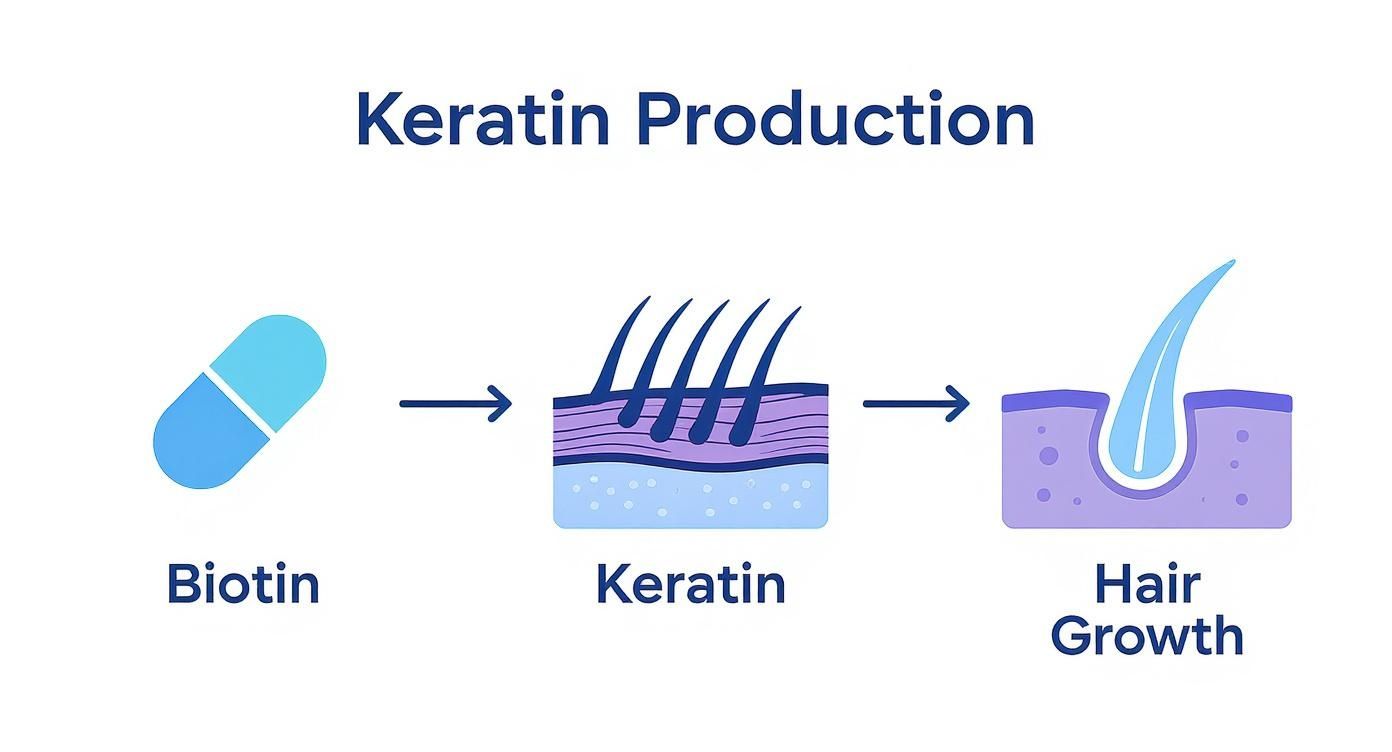
As you can see, biotin is a critical catalyst in the process. Without it, the keratin factory just can't run efficiently, and you can't build strong, healthy hair strands.
The Good News: Examining the Positive Evidence
Even with the "cocktail" effect, some studies on these multi-nutrient formulas have delivered some pretty impressive outcomes. A standout double-blind, placebo-controlled study, for example, looked at a proprietary supplement containing biotin. The results for women with self-perceived thinning hair were remarkable.
Over 180 days, participants taking the supplement more than doubled their average terminal hair count, jumping from 271 hairs to around 609 hairs. That’s not a small change. You can read the full research about these hair growth findings for yourself.
To put these kinds of findings into perspective, I've pulled data from two key placebo-controlled trials. This table gives you a side-by-side look at what the researchers found when testing biotin-containing supplements.
Biotin Clinical Study Results at a Glance
| Study Metric | Study 1 (Glynis Ablon, 2012) | Study 2 (Morgana Colombo et al., 2017) |
|---|---|---|
| Primary Outcome | Increased hair count and thickness | Increased hair density and reduced shedding |
| Key Finding | 125% increase in terminal hair count over 180 days (from 271 to 609 hairs) | 10.1% increase in hair density over 180 days (placebo group saw a 2% decrease) |
| Formula Type | Multi-ingredient supplement (biotin, zinc, marine complex, etc.) | Multi-ingredient supplement (biotin, zinc, iron, L-cystine, etc.) |
| Study Design | Double-blind, placebo-controlled | Double-blind, placebo-controlled |
| Participants | Women with self-perceived thinning hair | Women with telogen effluvium (temporary hair loss) |
These results are compelling and point toward the power of a well-rounded nutritional approach. The supplements didn't just contain biotin; they included other well-known players in hair, skin, and nail health. It really reinforces the idea that biotin works best when it has a strong supporting cast of other vitamins and minerals.
The Big Picture: The most successful clinical trials rarely use biotin in isolation. It’s almost always part of a team of nutrients working together, which strongly suggests that this combined approach delivers the most significant improvements for hair health.
This holistic strategy just makes sense. Hair follicles are complex little engines that need a whole range of resources to run smoothly. Giving them the full spectrum of support—from biotin to zinc to amino acids—creates a much better environment for growth than just banking on a single nutrient to do all the heavy lifting.
But Here's the Catch: Understanding the Study Limitations
While the positive results are exciting, we have to look at them with a critical eye. The biggest limitation, as mentioned, is the "combination effect." When a supplement has biotin plus zinc, vitamin C, and collagen precursors, we can't definitively say that biotin was the hero of the story.
This is a recurring theme in dermatological research. We know the formulas work, but we can't always prove which component did what. This is why most dermatologists and scientists remain cautiously optimistic. They all agree that biotin is essential for basic hair health, but the evidence for high-dose supplementation in people who aren't deficient is still a bit thin.
The strongest, most undeniable case for biotin supplements is for individuals with a confirmed deficiency. For everyone else, the scientific community is still waiting for more targeted research that can truly isolate biotin's effects.
So, What Does This All Mean for You?
Let’s translate this research into realistic expectations. The data consistently points to one clear conclusion: biotin is a vital piece of the hair health puzzle, but it's rarely the entire puzzle. The most impressive biotin for hair growth results come from formulas that provide comprehensive, multi-faceted nutritional support.
Here’s what the evidence suggests for you:
- If you have a biotin deficiency: Supplementing is very likely to deliver noticeable benefits. You're essentially restoring a critical component needed for keratin production.
- If you are not deficient: Biotin can still play a supportive role, making sure your hair follicles have a key coenzyme they need. However, you'll probably see far better results from a supplement that addresses multiple nutritional pathways at once, like providing the building blocks for your body's own collagen production.
Ultimately, the clinical data encourages us to think bigger. Instead of searching for a single magic bullet, the evidence points us toward building a complete foundation for hair wellness, ensuring all the necessary building blocks and supportive nutrients are in place.
Who Is Most Likely to See Results From Biotin?
While the idea of a magic pill for thicker hair is appealing, biotin isn't a one-size-fits-all fix. It’s more like a key. If you have the right lock—a genuine need for more biotin—it can absolutely work wonders. But for everyone else, it’s just another key on the ring that won’t turn anything.
So, who gets those jaw-dropping biotin for hair growth results? The answer is simple: people with a confirmed biotin deficiency.
This condition is pretty rare in the general population, but it creates the perfect storm for biotin supplements to make a massive difference. When your body is truly running low on this vital B vitamin, things start to break down. And often, your hair is one of the first and most obvious casualties.
Fixing a deficiency is like finally watering a thirsty, wilting plant. You're giving your hair follicles the one thing they were desperately missing, allowing them to get back to work. This is where those incredible before-and-after photos you see online come from.
Identifying the Signs of Biotin Deficiency
Since a true deficiency is the clearest path to seeing results, it’s helpful to know what to look for. The symptoms usually go beyond just your hair, offering important clues that your body is sending out an S.O.S. for more biotin.
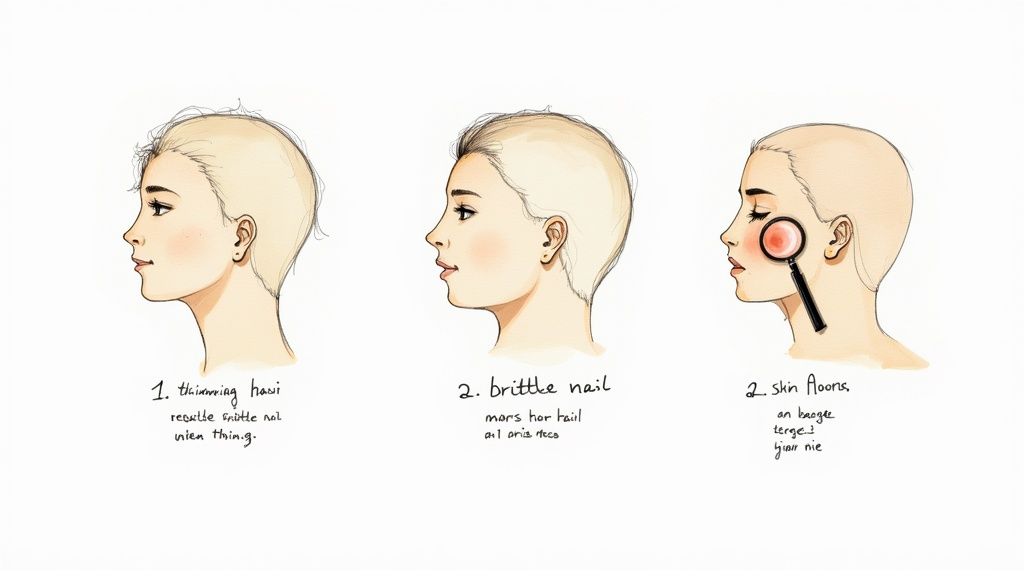
The classic signs often show up as a distinct trio:
- Progressive Hair Thinning: We're not talking about normal shedding here. This is often diffuse hair loss across the whole scalp, and in some cases, you might even lose eyebrow and eyelash hair. What’s left can feel weak and brittle.
- Brittle, Splitting Nails: Biotin is crucial for strong nails, too. If yours are constantly breaking, peeling, or splitting, it could point to low biotin levels.
- Specific Skin Rashes: One of the hallmark symptoms is a scaly, red rash (dermatitis), especially around the eyes, nose, and mouth.
Spotting these signs is the first step, but self-diagnosing is never the way to go. A doctor can run simple tests to confirm if you're deficient and rule out any other issues, making sure you get the right treatment.
Common Causes Behind Low Biotin Levels
If biotin deficiency is so rare, who’s actually at risk? Certain medical conditions, lifestyle choices, and even your genes can make it harder for your body to get, absorb, or use the biotin it needs.
Here are some of the main culprits:
- Genetic Disorders: Conditions like biotinidase deficiency stop the body from recycling biotin, which quickly leads to a shortage.
- Long-Term Medication Use: Certain drugs, like some antiepileptics and long-term courses of antibiotics, can mess with biotin absorption.
- Gastrointestinal Conditions: Diseases like Crohn's can damage your gut’s ability to pull nutrients from food, including biotin.
- Restrictive Diets: If your diet cuts out a wide range of biotin-rich foods, you might not be getting enough over time. The classic (though rare) example is consuming lots of raw egg whites, which contain a protein that binds to biotin and blocks it from being absorbed.
- Chronic Alcohol Use: Heavy drinking can also get in the way of absorbing biotin and other essential vitamins.
The Bottom Line: Biotin works best when it's filling a real nutritional gap. If you fall into one of these at-risk groups and you're seeing the symptoms, you’re in the small but specific group most likely to see powerful hair growth results.
For many of us, weak hair isn't caused by a deficiency but by physical damage. In that case, learning how to stop hair breakage can be just as important as what you put in your body. A solid hair care strategy addresses both internal nutrition and external care for healthier, stronger hair.
Alright, so you and your doctor have decided biotin might be a good move for your hair. That’s a great first step, but just popping a pill isn't the whole story. To actually get the kind of biotin for hair growth results you're hoping for, you need to be smart and consistent about it.
Think of it like tending a garden. You don't just toss some seeds on the ground and expect a prize-winning harvest. It needs consistent watering and care over time to grow strong. It's the same idea with your hair follicles—they need a reliable supply of nutrients to do their best work.
Finding Your Optimal Dosage
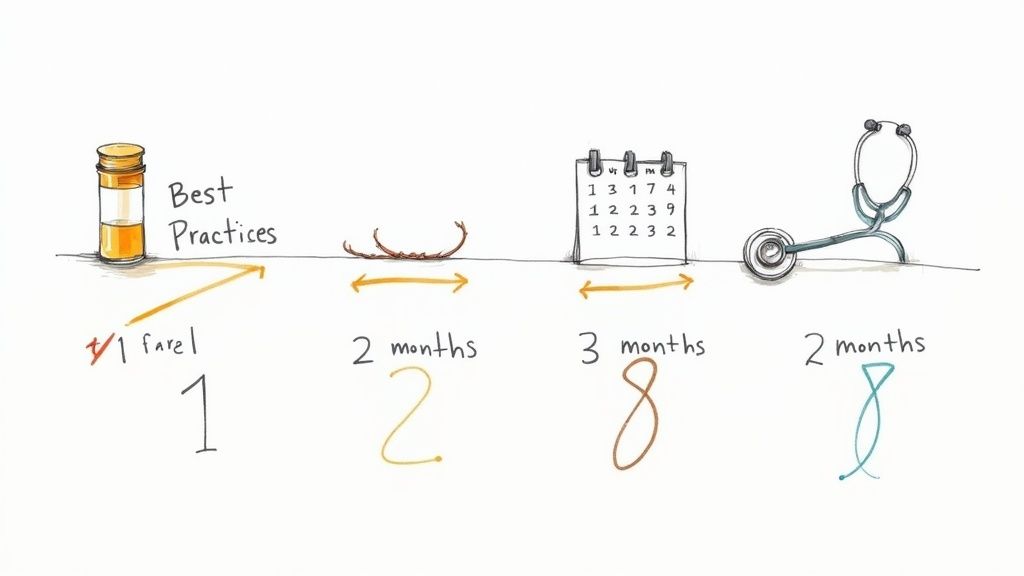
Wandering down the supplement aisle, you’ll see bottles screaming about high doses like 5,000 mcg or even 10,000 mcg. But with biotin, more isn't automatically better. The adequate daily intake for an adult is only about 30 mcg, a tiny amount that most of us easily get from food.
If you have a diagnosed deficiency, your doctor will likely recommend a much higher therapeutic dose. For everyone else, starting lower is usually the way to go. The key is to get a professional opinion instead of just grabbing the bottle with the biggest number on the label.
One major clinical trial really showed how this plays out over time. In the study, people taking a supplement with biotin saw a 10.1% increase in hair density over six months. That's a pretty big deal, especially when you consider the placebo group actually saw a small decrease. It’s solid proof that you need to stick with it for months to see a real, measurable change. You can read more about the study's findings if you're curious.
Consistency Is Non-Negotiable
Hair growth is a marathon, not a sprint. The active growth phase, called anagen, can last for years, but each strand only grows about half an inch per month. This means patience isn't just a virtue; it's a requirement.
Critical Takeaway: Taking biotin here and there is like watering that garden once a month and hoping for the best. To see any meaningful difference, you have to make it a daily habit for at least 3-6 months. That gives your new, healthier hair enough time to actually grow out from the scalp where you can see it.
One Safety Warning You Cannot Ignore
Biotin is a water-soluble vitamin, which is good news. It means your body just gets rid of what it doesn't need. But there's one massive catch that everyone needs to be aware of: high doses of biotin can seriously mess with certain lab tests.
This isn't a minor inconvenience; it can lead to dangerously wrong results for some really important health markers.
- Thyroid Hormones: It can give false readings that might make it look like you have a serious condition like Graves' disease when you don't.
- Troponin Levels: This is the test doctors use to see if you're having a heart attack. A wrong result here could be life-threatening.
- Other Hormones: It can also throw off tests for things like vitamin D and reproductive hormones.
This is a huge deal. That’s why you absolutely must tell your doctor about any biotin supplements you're taking before you get blood drawn. Most experts recommend you stop taking biotin for at least 72 hours before a lab test to be safe. It’s a simple step that ensures your doctor gets the accurate information they need to take care of you properly.
Building a Complete Strategy for Hair Wellness
If you're looking for the best biotin for hair growth results, it's tempting to search for that one magic bullet. But real, lasting hair health comes from a complete strategy that supports your body from every angle.
Think of biotin as one key player on a much larger team—it's essential for its role, but it can't win the game alone. When you shift your perspective from quick fixes to building a sustainable foundation, you give your body all the resources it needs to produce strong, resilient hair naturally.
Biotin is a crucial coenzyme for producing keratin, but keratin itself is made of protein. Without a protein-rich diet, biotin has nothing to work with. It's like having a master builder on a construction site with no bricks or mortar. Your body needs a steady supply of amino acids—the building blocks of protein—to construct every single strand of hair.
The Core Nutrients Your Hair Needs
The truth is, biotin rarely works in isolation. Healthy hair follicles are complex little factories that need a whole range of vitamins and minerals to function at their best. If you're deficient in any one of these, it can put a speed limit on your hair growth, no matter how much biotin you take.
Beyond biotin, your hair's support team includes:
- Iron: This mineral is vital for producing hemoglobin, which carries oxygen to all your cells, including your hair follicles. It's no surprise that low iron is a well-known cause of hair shedding and thinning.
- Zinc: Zinc plays a massive role in hair tissue growth and repair. It also helps keep the oil glands around the follicles working correctly, which is key for a healthy scalp environment.
- Vitamin D: Often called the "sunshine vitamin," low levels of Vitamin D have been linked to alopecia areata, a type of hair loss. It helps create new follicles—the tiny pores where new hair can grow.
These nutrients all work together, creating a powerful synergy that supports the entire hair growth cycle. You'll see far better results by addressing your nutritional profile as a whole instead of just focusing on a single ingredient.
Supporting Hair Structure with Collagen
Another critical piece of the puzzle is collagen. While biotin helps synthesize keratin, collagen provides the structural support for the hair follicle and the skin on your scalp. As we get older, our natural collagen production declines, which can weaken the very foundation our hair grows from.
A holistic approach means you're not just fueling keratin production, but also reinforcing the entire structure that supports healthy hair growth. This dual-action strategy delivers more comprehensive and lasting results.
Instead of just taking animal-derived collagen, you can empower your body to build its own. This is where plant-based collagen boosters come in—they provide the specific nutrients your body needs to ramp up its own collagen synthesis. To see how this works, you can explore the benefits of plant-based collagen supplements in our detailed guide.
By combining biotin with a protein-rich diet, essential minerals like iron and zinc, and support for your body's own collagen production, you create a complete ecosystem for hair wellness. This thoughtful, well-rounded strategy is the most effective way to achieve strong, vibrant hair that lasts.
Got Questions? We've Got Answers.
How Long Until I Actually See Results from Biotin?
Let's be real: this isn't an overnight fix. Since hair only grows about half an inch per month, you have to play the long game. Most people need to take biotin consistently for at least 3 to 6 months before they start to notice a real difference.
That timeline gives your body enough time for the new, healthier hair to grow from the follicle and get long enough to actually change your hair's overall look and feel. Patience is key here.
What's the Best Biotin Dosage for Hair Growth?
You'll see supplements on the shelf with massive doses like 5,000 mcg or even 10,000 mcg, but bigger isn't always better. The recommended daily intake for adults is just 30 mcg, and most of us easily get that from our diet.
If a doctor has confirmed you're actually deficient, they might recommend a higher dose. For general hair support, though, a lower-dose supplement is usually all you need. The best move? Chat with your healthcare provider to figure out the right amount for your specific needs.
Heads Up: Super-high doses of biotin can seriously mess with important lab test results, including tests for your thyroid and heart. Always tell your doctor you're taking biotin and make sure to stop at least 72 hours before any blood work.
Will Biotin Work for Everyone?
Not necessarily. The most dramatic biotin for hair growth results are almost always seen in people who have a genuine biotin deficiency.
If your levels are already fine, biotin is more of a supportive player—it's not going to magically trigger a ton of new growth all on its own. It performs best as part of a team, working alongside other crucial hair nutrients like zinc, iron, and protein to build a strong foundation for your hair.
Ready to support your hair from the inside out? Staye provides biotin along with plant-based ingredients to fuel your body’s natural collagen production, creating a complete foundation for stronger, healthier hair.
Discover the difference at https://shopstaye.com.