

When people ask me what the best vitamins for nail growth are, I tell them to think of it as assembling an all-star team. The MVPs are definitely biotin (Vitamin B7), iron, and zinc. These are the heavy hitters responsible for producing keratin—the tough-as-nails (literally) protein that gives your nails their strength and resilience.
Ultimately, a balanced diet is your best bet for getting all the raw materials your body needs.
Understanding The Foundations Of Healthy Nails
Before we dive into a list of specific nutrients, let's get a clear picture of what your nails are actually made of and what they need to thrive.
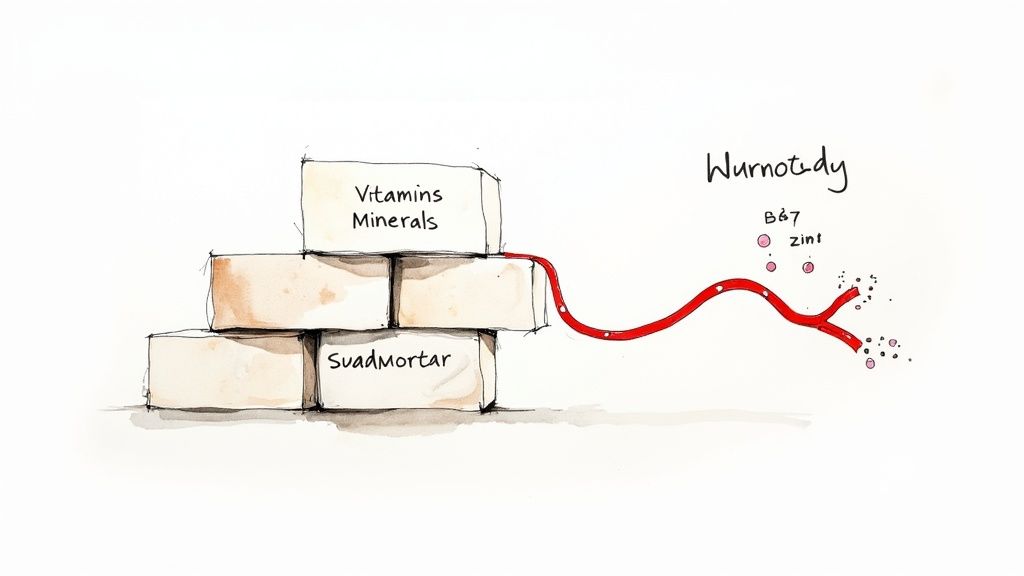
I love using an analogy here: think of growing strong nails like building a sturdy brick wall. To do it right, you need three things: high-quality bricks, strong mortar to hold them together, and a reliable crew to bring all the materials to the construction site.
In our nail-building project, the "bricks" are a protein called keratin. This is the same fibrous stuff that makes up your hair and the outer layer of your skin. If you don't have enough quality keratin, your nails get weak, brittle, and start to split—just like a wall built with crumbling bricks.
The "mortar" holding it all together is a team of essential vitamins and minerals. These nutrients are the skilled construction crew, making sure the keratin bricks are produced efficiently and laid down correctly. They're the catalysts for all the biological processes that create a strong, healthy nail plate.
And finally, the "delivery system" is your circulatory system. Good blood flow is absolutely crucial for shuttling oxygen and all those vital nutrients to the nail matrix. That’s the little factory under your cuticle where new nail cells are born. A poor supply line means the construction site doesn't get the materials it needs, slowing down the whole project or compromising the final structure.
The Three Pillars of Nail Strength
So, to build strong, healthy nails from the inside out, your body needs these three elements working together in perfect harmony:
- Keratin Production: This is step one. Synthesizing this core protein is the most fundamental part of the process.
- Nutrient Support: You need the right vitamins and minerals on hand to fuel keratin production and protect the new nail cells.
- Healthy Circulation: You’ve got to have an efficient delivery route to get those nutrients to the nail bed where the magic happens.
This diagram really helps visualize how keratin, vitamins, and blood flow are the true foundation of nail health.
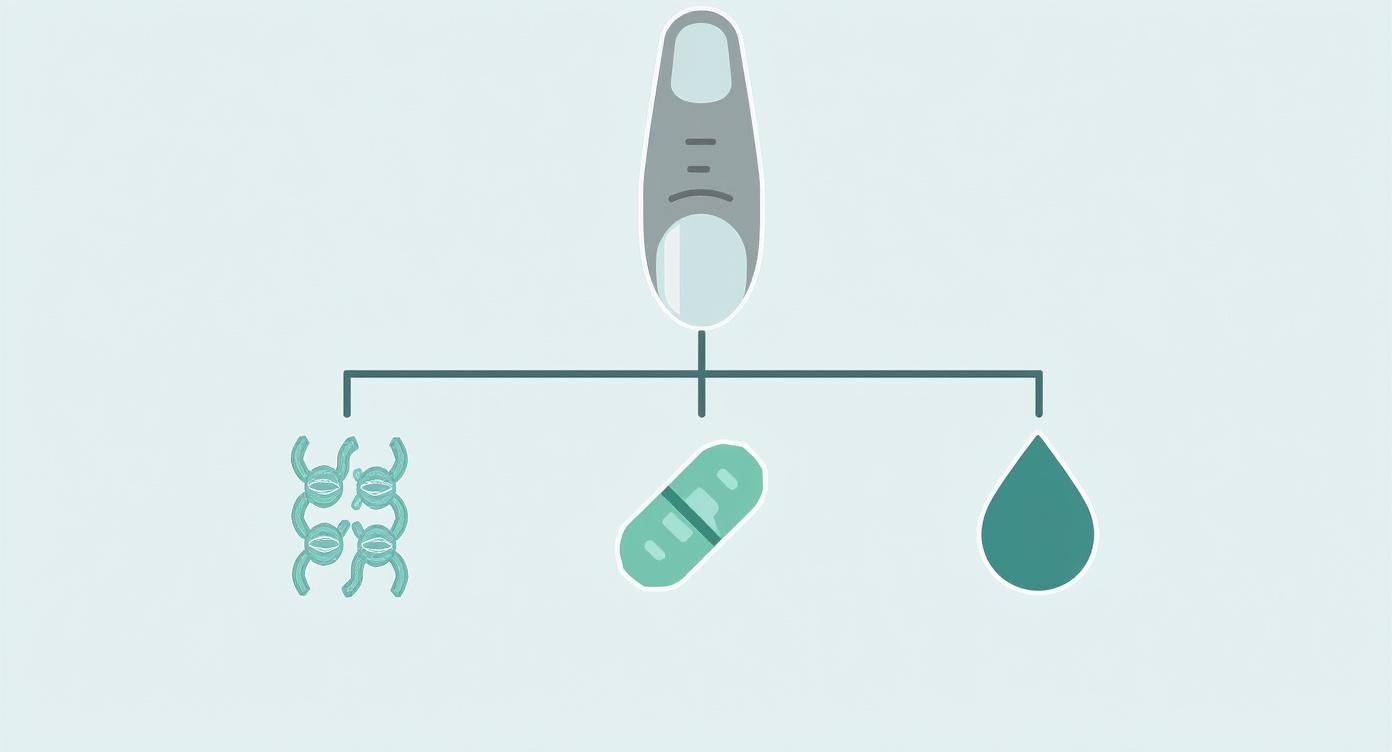
As you can see, strong nails aren't an accident. They're the direct result of a well-supported biological system where every component plays a critical role. This is why supplements for hair and nails have become so incredibly popular—people are recognizing the importance of nutrients like biotin, iron, and collagen.
While biotin gets a lot of hype for its role in keratin production, the science shows its benefits are most dramatic for people who are actually deficient. The same goes for iron; it’s vital for getting oxygen to the nail beds, and supplements can be a game-changer for the estimated 2 billion people around the world with iron deficiency anemia. If you want to dig deeper, you can explore more about the science behind these popular supplements to understand their specific jobs and how effective they really are.
Top Nutrients for Nail Growth at a Glance
To make things simple, here's a quick rundown of the most important players in the nail game, what they do, and where you can find them.
| Nutrient | Primary Role in Nail Health | Top Food Sources |
|---|---|---|
| Biotin (B7) | Essential for keratin production and cell growth. | Eggs, almonds, salmon, sweet potatoes, avocado. |
| Iron | Carries oxygen to the nail matrix for healthy growth. | Red meat, spinach, lentils, tofu, fortified cereals. |
| Zinc | Crucial for cell division and protein synthesis needed for nails. | Oysters, beef, pumpkin seeds, chickpeas, cashews. |
| Vitamin C | Required for collagen synthesis, which provides strength. | Oranges, strawberries, bell peppers, broccoli, kiwi. |
| Collagen Peptides | Provide the amino acid building blocks for nail proteins. | Bone broth, or hydrolyzed collagen supplements. |
| Silica | Strengthens connective tissues, including nails. | Bananas, green beans, leafy greens, brown rice. |
This table gives you a great starting point for focusing your diet on foods that will give you the strongest, healthiest nails possible.
The Role of Biotin in Keratin Production
If you've ever gone down the rabbit hole of vitamins for nail growth, you've definitely run into biotin. It’s often called Vitamin B7 and has a huge reputation for strengthening hair and nails. But how does it actually pull it off?
Biotin’s main job is to act as a coenzyme, which means it helps other enzymes do their work—specifically, the ones that break down fats, carbs, and most importantly for our nails, proteins.
Think of your body’s keratin production like a high-tech assembly line. Keratin is the super-tough protein that makes up the physical structure of your nails. In this factory, biotin is the essential foreman, making sure all the raw materials (amino acids) are put together correctly to build strong, resilient keratin.
Without enough biotin on the job, the whole operation slows down and gets sloppy. The result? Weaker output—in this case, brittle nails that just don't seem to grow.
The Science Behind Biotin and Nail Strength
So, is the hype around biotin real? It is, but the context here is everything. Biotin works wonders when it's fixing an existing deficiency. For people with conditions that prevent them from absorbing biotin properly, supplements can make a world of difference in their nail quality.
A deep dive into clinical trials backs this up. The review looked at 18 cases where people with underlying health issues had brittle nails. After they started taking biotin, researchers saw consistent, clear improvements in nail strength. This tells us biotin is a powerful solution for pathology-driven nail problems.
This is a really important point. For someone who is truly deficient, biotin isn't just a beauty supplement; it’s a necessary tool to get their body’s systems back on track.
That said, the evidence for biotin as a universal nail-growth booster for healthy people is a lot less dramatic. The principles are similar to what we see with hair, which you can learn more about in our guide to the evidence-backed connection between biotin and healthy hair.
Do You Need a Biotin Supplement?
This leads to the big question: should you be taking a biotin supplement?
For most of us eating a reasonably balanced diet, a true biotin deficiency is pretty rare. Your body doesn't need massive amounts of it, and it’s found in a lot of everyday foods.
Signs of a real deficiency are quite specific and can include:
- Brittle, thinning hair or significant hair loss
- A red, scaly rash, especially around the eyes, nose, and mouth
- Thinning or splitting fingernails
- Fatigue and other neurological symptoms
If any of this sounds familiar, your first step should be to talk to a doctor who can run tests to be sure. But for the average person just looking for a little nail support, focusing on food first is a great strategy.
Getting Enough Biotin From Your Diet
Boosting your biotin through whole foods is the safest and most natural way to give your body what it needs to build strong keratin. The recommended adequate intake for adults is just 30 micrograms (mcg) per day.
Hitting that target is easier than you might think.
Top Food Sources of Biotin:
- Eggs: One large cooked egg is a powerhouse, delivering about 10 mcg of biotin.
- Salmon: A 3-ounce serving of this healthy fatty fish gives you around 5 mcg.
- Almonds: A quarter-cup of roasted almonds contains about 1.5 mcg.
- Sweet Potatoes: You’ll get roughly 2.4 mcg in a half-cup of cooked sweet potato.
- Avocados: A whole avocado can provide anywhere from 2 to 6 mcg.
By weaving these foods into your diet, you’ll keep that internal nail-building factory running smoothly, setting the stage for stronger, healthier nails from the inside out.
Essential Minerals That Build Stronger Nails
While biotin often steals the spotlight when we talk about vitamins for nail growth, it’s really just one member of a much larger team. A whole crew of essential minerals works just as hard behind the scenes, providing the fundamental strength and structure that healthy nails absolutely depend on.
Think of it this way: if biotin is the foreman overseeing keratin production, then minerals like iron and zinc are the skilled workers handling the most critical tasks on the construction site. Without them, the whole project grinds to a halt. These minerals are completely non-negotiable for building resilient nails that can stand up to daily life.
Iron: The Oxygen Delivery Specialist
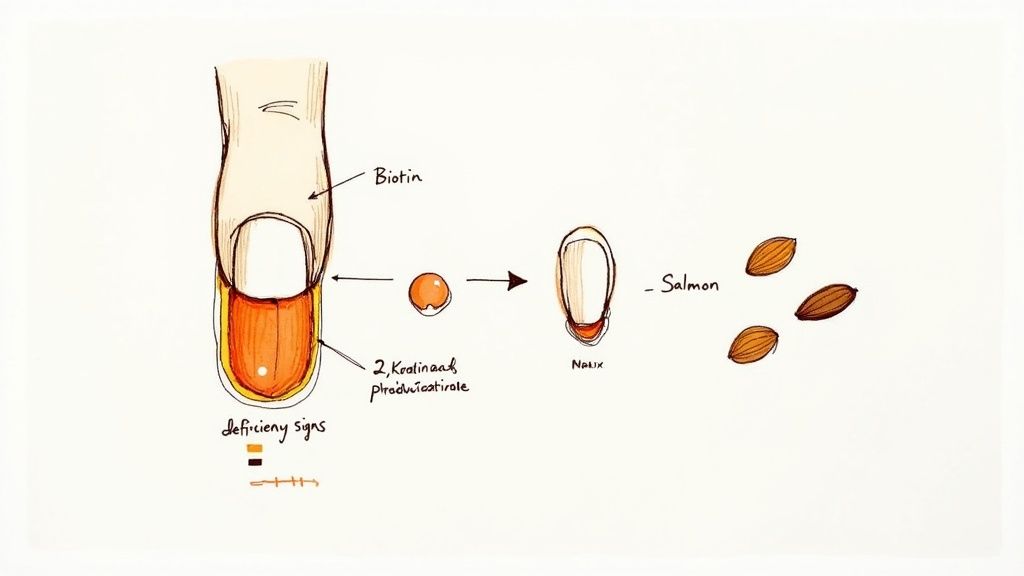
One of the most vital minerals for your entire body, iron plays a very specific and crucial role in nail health. Its main job is to help form hemoglobin, a protein in your red blood cells that carts oxygen from your lungs to every single cell—including those in your nail matrix.
Your nail matrix is the "factory" where new nail cells are made. Just like any factory, it needs a constant supply of energy to run, and oxygen is the fuel that makes it all happen. Without enough iron, that oxygen delivery becomes sluggish and inefficient.
This shortage can lead to some pretty noticeable nail issues:
- Brittleness: Nails can become weak and break easily because the cells aren't getting the fuel they need to grow strong.
- Koilonychia: This is a condition where nails become soft and develop a concave, spoon-like shape. It's a classic sign of iron-deficiency anemia.
- Vertical Ridges: While ridges can have many causes, a lack of sufficient iron can definitely contribute to their appearance.
Making sure you have enough iron is a cornerstone of any good nail health strategy, as it directly fuels the growth process right at the source.
Zinc: The Master Growth Coordinator
If iron is the fuel delivery system, then zinc is the master architect and project manager for nail growth. This powerful mineral is essential for two processes that are fundamental to creating new nail tissue: cell division and protein synthesis.
Every new nail cell is the result of rapid cell division happening in the nail matrix. Zinc is a key player here, ensuring that cells can replicate quickly and correctly. A deficiency can slow this process down dramatically, leading to noticeably sluggish nail growth.
But zinc's role doesn't stop there. It's also a critical cofactor for the enzymes needed to synthesize proteins—including keratin. Without enough zinc, your body simply can't build the strong keratin "bricks" needed for a durable nail plate, no matter how much biotin you consume.
Because it's so involved in cell growth, a lack of zinc can show up as white spots on the nails (leukonychia) or just slow overall growth.
Meeting Your Mineral Needs Through Diet
For most people, a balanced diet provides all the essential minerals you need. Prioritizing whole foods is the best way to support your body's natural nail-building powers. Here’s a quick look at where you can find these powerhouse minerals.
Top Food Sources for Iron and Zinc:
| Mineral | Recommended Daily Intake (Adults) | Excellent Food Sources |
|---|---|---|
| Iron | 8 mg (men), 18 mg (women) | Lean red meat, poultry, fish, lentils, spinach, tofu, and fortified cereals. |
| Zinc | 11 mg (men), 8 mg (women) | Oysters, beef, pumpkin seeds, chickpeas, cashews, and crab. |
Focusing on these nutrient-dense foods gives your body the raw materials it needs to construct strong, healthy nails from the inside out. When you pair these minerals with vitamins like biotin, you create a complete nutritional toolkit for achieving the resilient, beautiful nails you’re looking for.
How Collagen and Antioxidants Support Nail Health
When we look past individual vitamins and minerals, we find a powerful partnership between structural proteins and protective antioxidants. Think of it like a construction project for your nails: collagen is the crew bringing in the raw materials, and antioxidants are the security team guarding the site.
Collagen delivers the essential building blocks, while antioxidants shield the delicate new cells from damage. This one-two punch creates the perfect environment for growing strong, resilient nails. It's a holistic view that goes beyond single ingredients to paint a complete picture of nail health.
Collagen: The Blueprint for Keratin
Your nails are almost entirely made of a tough protein called keratin. But to build that keratin, your body needs a very specific set of amino acids. That's where collagen steps in.
As the most abundant protein in your body, collagen is naturally packed with amino acids like glycine, proline, and hydroxyproline—the exact materials required to synthesize new keratin.
Imagine trying to build a house without a steady supply of bricks. You could have the world's best builders, but the project would grind to a halt. In this analogy, collagen peptides are that reliable supply chain, delivering the necessary amino acids right to the nail matrix where new growth happens. You can dive deeper into what collagen is and why it's so important for your body in our detailed guide.
But there's a catch. Your body can’t just use collagen; it has to actively produce it. And for that, one vitamin is absolutely crucial.
Vitamin C is an indispensable co-factor for collagen synthesis. Without enough of it, your body's ability to produce collagen plummets, impacting not just your skin and joints, but the very strength and integrity of your nails.
This critical link makes getting enough Vitamin C a non-negotiable for anyone serious about building a strong nail foundation from the inside out.
Antioxidants: The Cellular Bodyguards
While collagen provides the building blocks, the nail matrix—the delicate area where new nail cells are born—is constantly under attack. Every day, our cells face threats from unstable molecules known as free radicals. These are the natural byproducts of our metabolism and our exposure to environmental stressors like UV rays and pollution.
Free radicals cause something called oxidative stress, which you can think of as a kind of cellular "rust." This damage can mess with cell function, slow down growth, and weaken new nail tissue before it even gets a chance to fully form.
This is where the antioxidant security team comes into play.
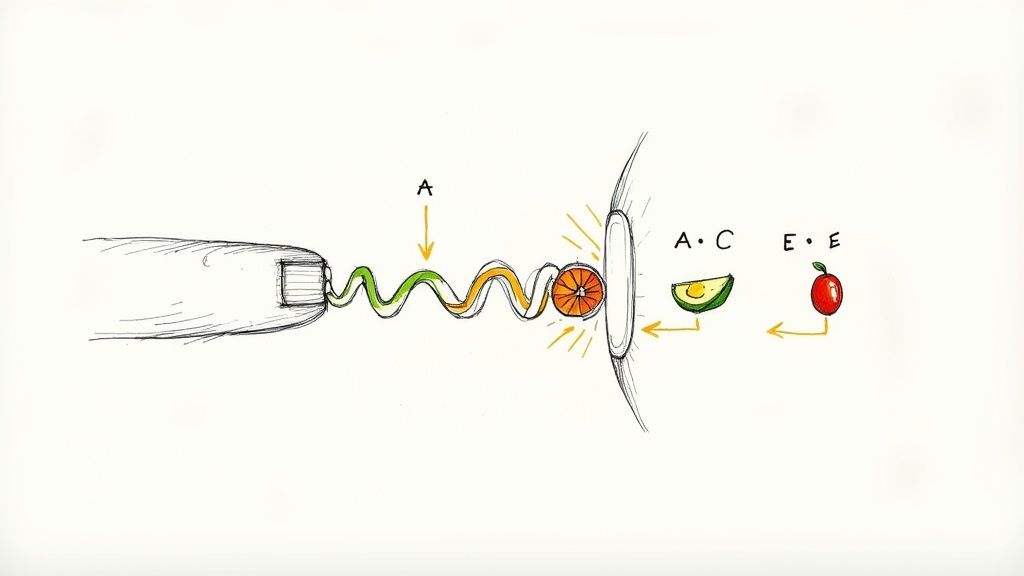
Vitamins A, C, and E are powerful antioxidants that step in to neutralize free radicals, protecting the hardworking cells in your nail bed from harm.
-
Vitamin C: Beyond its starring role in collagen production, Vitamin C is a potent antioxidant that defends your cells from damage. You'll find it in citrus fruits, strawberries, and bell peppers.
-
Vitamin E: This antioxidant works within cell membranes, stopping free radical chain reactions in their tracks. It's plentiful in foods like almonds, sunflower seeds, and avocados.
-
Vitamin A: Essential for cell growth, Vitamin A also doubles as an antioxidant, protecting your tissues from oxidative stress. Sweet potatoes and leafy greens like spinach are fantastic sources.
By filling your diet with these antioxidant-rich foods, you give your nail matrix a constant shield of protection. This ensures the keratin production line can run at peak efficiency, creating nails that are stronger, smoother, and healthier. This defensive strategy is every bit as important as providing the right building materials.
Choosing Between Food and Supplements
It’s the age-old question in wellness: can you get everything you need for strong nails from your plate, or are supplements a better shortcut? The truth is, it’s not an either-or situation. The smartest approach is a blend of both—a great diet backed by targeted supplementation when you really need it.
Think of your diet as the foundation of a house. A "food-first" philosophy means building that foundation with solid, nutrient-rich materials. We're talking whole foods brimming with the vitamins and minerals that create strong, healthy nails from the inside out. This foundation isn't just important; it's non-negotiable.
Supplements, then, are like calling in the specialists. They’re fantastic for fixing a specific issue, but they can't build the whole house for you.
The Power of a Food-First Philosophy
When you eat a balanced diet, you're getting far more than just a list of isolated nutrients. Whole foods deliver a complex cocktail of fiber, phytonutrients, and other compounds that all work together in a way a single pill just can't mimic.
This approach gives you a huge spectrum of benefits that go way beyond your nails. For instance, when you eat foods that support collagen production—like citrus fruits and leafy greens—you’re not just strengthening your nails but also boosting your skin, joints, and overall vitality. Check out our full guide on foods that naturally boost your body’s collagen production.
A diet packed with these powerhouse foods gives your body the raw materials it needs to build strong keratin naturally. It’s the most sustainable and holistic path to achieving nails that don't just look good, but are genuinely resilient.
When Supplements Are a Smart Choice
While your plate should always be the priority, there are times when a supplement can be a real game-changer. It’s not about replacing good nutrition, but about filling in a gap that’s tough to close with diet alone.
Here’s when you might want to consider a supplement:
- Diagnosed Deficiencies: If a blood test shows you're low in something like iron or Vitamin B12, a supplement is the most direct route to get your levels back on track (always with a doctor's guidance).
- Dietary Restrictions: If you’re vegan, vegetarian, or follow another restrictive diet, it can be tricky to get enough of certain nutrients like B12, zinc, or iron from food.
- Absorption Issues: Some medical conditions can mess with your body's ability to absorb nutrients from food, making supplementation a medical necessity.
In these cases, a supplement is a targeted tool for a known problem, helping restore your body’s balance so it can do its job properly.
Navigating the Supplement Aisle Safely
The supplement market is booming, and it feels like every bottle promises a miracle. But this explosion has brought some real safety and quality concerns. The industry isn't regulated as tightly as pharmaceuticals, which means you have to be your own best advocate.
Consumer and medical awareness about dietary supplements has grown dramatically, but scientific evidence for many products remains limited. One analysis found that around 12% of supplements had potential safety or quality issues, and for two-thirds of substances reviewed, there wasn't enough data to confirm their safety or effectiveness.
This really drives home the need to be cautious. Popping supplements without a clear reason can lead to weird interactions or even create new problems. For example, taking too much zinc can actually block your body from absorbing copper, causing a new deficiency while you were trying to fix another. You can explore the detailed evidence on nail supplement safety and efficacy to help make smarter choices.
To pick a high-quality supplement, keep an eye out for a few key things:
- Third-Party Testing: Look for seals from trusted organizations like NSF International, USP, or ConsumerLab. This means an independent lab has verified that what's on the label is actually in the bottle.
- Appropriate Dosages: Steer clear of "megadoses" unless a doctor specifically tells you to take them. More isn’t always better, and sometimes it's downright harmful.
- Clean Ingredients: Go for products without a long list of unnecessary fillers, artificial colors, and common allergens.
By building your nail health on a foundation of nutrient-rich food and using high-quality supplements only when needed, you create a powerful, balanced strategy for building the strong, healthy nails you’ve always wanted.
Common Questions About Vitamins for Nail Growth
Diving into the world of nail vitamins can bring up a lot of questions. We’ve covered the key nutrients and the massive role your diet plays, but let's clear up some of the practical questions that pop up when you're ready to start.
Think of this as the final piece of the puzzle, designed to give you the confidence to move forward and finally get those strong, healthy nails you've been wanting.
How Long Does It Really Take to See Results?
This is, without a doubt, the question I hear most often. And the honest answer is, it takes patience. Your fingernails grow at an average rate of about 3.47 millimeters (mm) per month, which is just a tiny fraction of a millimeter each day. Toenails are even slower, clocking in at around 1.62 mm per month.
What this means is that the nutritional boost you give your body today won't show up in the visible part of your nail for a while. The new, stronger nail has to grow its way out from under the cuticle.
You'll likely need to wait 3 to 6 months of consistently taking the right vitamins for nail growth before you see a real difference in the quality and strength of your new nails.
Remember, you're not repairing the old nail—you're building a brand-new one from the inside out. The weak, brittle parts have to grow out and be replaced by the healthier nail your body is now equipped to produce.
Is It Safe to Take Multiple Nail Growth Supplements at Once?
This can get tricky, and I generally advise against mixing and matching supplements without talking to a professional. The biggest risk is accidentally overloading on certain vitamins and minerals, especially the fat-soluble ones (A, D, E, K) or minerals like zinc.
For instance, taking way too much zinc from a few different products can actually block your body from absorbing copper, which can create a whole new deficiency. Similarly, excess Vitamin A can become toxic.
A much safer and more effective strategy is to find one comprehensive, well-formulated supplement that covers all the bases in a balanced way.
A Few Rules of Thumb for Supplement Safety:
- Stick to One Formula: Pick a single, high-quality multivitamin or a blend specifically designed for hair, skin, and nails.
- Read the Labels: Always check the ingredient list and the dosages. You want to make sure you’re not doubling (or tripling) up on the same nutrients.
- Talk to a Pro: Before you start combining supplements, have a chat with your doctor or a registered dietitian. They can help you figure out what you truly need.
Are Lifestyle Habits More Important Than Vitamins?
Vitamins are absolutely crucial, but they’re just one piece of a much larger puzzle. Your daily habits have a huge impact on your nails, and no supplement in the world can make up for a lifestyle that's constantly causing damage.
Here's an analogy I like to use: think of vitamins as the high-quality lumber and steel for building a house. But your lifestyle habits are the construction site conditions. If the site is constantly getting hit with storms and floods, even the best materials won't hold up.
Key Lifestyle Factors for Healthy Nails:
- Hydration: Being dehydrated affects every cell in your body, and your nail cells are no exception. Drinking plenty of water is non-negotiable for keeping your nails and cuticles from getting dry and brittle.
- Gentle Nail Care: Stop using your nails as tools to scrape stickers or pop open cans! Keep them neatly trimmed and filed, and make moisturizing your hands and cuticles a regular habit.
- Protection from Chemicals: Always wear gloves when you're washing dishes or using harsh cleaning sprays. Those chemicals strip the natural oils right out of your nails, leaving them weak.
- A Solid Diet: A supplement works best when it's supplementing an already solid, nutrient-rich diet. Make sure you're loading up on whole foods like lean proteins, leafy greens, colorful fruits, and healthy fats first.
At the end of the day, the best vitamins for nail growth work hand-in-hand with healthy habits. When you combine a great diet, smart supplementation, and mindful nail care, you create the perfect environment for growing strong, resilient nails that really last.
Ready to provide your body with the essential building blocks for healthier nails from within? Staye offers a clean, plant-based collagen booster designed to support the natural production of keratin and collagen. Fuel your journey to stronger, more beautiful nails today. Discover the benefits of Staye.