

If you're staring in the mirror at dull, brittle, or frizzy hair, you're in the right place. Repairing your hair naturally isn't just a fantasy—it's a totally achievable journey that also happens to build a much healthier relationship with your hair.
Let's be real: heat styling, chemical treatments, and even just day-to-day environmental stress can really do a number on your hair's health.
This guide isn't about slapping on a temporary fix. We're going to walk through a sustainable, practical plan to bring your hair back to life. I'll show you some immediate rescue treatments to stop the damage in its tracks, help you build a weekly ritual with powerful DIY masks, and, most importantly, teach you how to nourish your hair from the inside out.
The Big Shift to Natural Hair Care
You're definitely not alone in wanting a more natural approach. The global market for natural hair care products hit about USD 10.17 billion in 2024 and is expected to jump to USD 16.99 billion by 2030. That’s a huge leap, and it shows a massive shift in how we think about hair.
People are tired of synthetic chemicals and are looking for ingredient transparency and real, long-term hair wellness over a quick cosmetic fix. It’s all about finally understanding what your hair truly needs and giving it pure, effective nourishment. You can dig into the numbers and the growth of natural hair care on Grandview Research if you're curious.
Laying the Groundwork for Healthy Hair
Before we jump into specific treatments, let's get the basics straight. Restoring your hair is a marathon, not a sprint, and patience is your best friend here. The goal is to create a supportive, healing environment for your hair.
This means looking at the whole picture, which includes a few key areas:
- Nourishing from Within: You have to give your body the building blocks for strong hair, like proteins, vitamins, and minerals. Nutrients like biotin are critical here because they support your hair's keratin structure.
- Protecting from the Outside: It's all about shielding your hair from daily aggressors like friction (think rough pillowcases), UV rays, and harsh weather.
- Consistent Hydration: You have to regularly replenish the moisture your hair loses from washing, styling, and just being out in the world.
Think of this as your complete playbook for getting back your hair's natural strength and shine. It's the small, consistent things you do every day that add up to big, lasting results.
Getting your nutrition right is a fantastic starting point. To see just how vital internal health is for external beauty, you can check out our deep dive on biotin for hair growth results. When you combine a nutrient-rich diet with gentle hair care, you're creating the perfect conditions for your hair to truly thrive.
Assessing Your Hair and Applying Immediate Rescue
Before you can really start fixing damaged hair, you have to play detective. Seriously. You need to understand what kind of trouble your hair is in before you can choose the right tools for the job. A quick, honest look in the mirror and a feel of your strands can tell you almost everything.
Let’s start with texture. Run your fingers through your hair. Does it feel like straw? Does it catch and snag on itself? When you gently tug on a single strand, does it snap immediately? That’s usually a sign of chemical or heat damage—think bleach, color, or flat irons. The very structure of your hair has been compromised.
Or maybe the issue is more about a constant halo of frizz and a sea of split ends you just can't seem to tame. This is often the result of good old-fashioned mechanical damage. We're talking about aggressive brushing, super-tight ponytails, or even just the friction from your pillowcase night after night.
The Simple Strand Test
For a more concrete answer, try this quick test right now. Grab one clean, damp strand of hair and hold it between two fingers. Now, gently stretch it.
- It barely stretches and then snaps: Your hair is thirsty. It's dehydrated and desperately needs moisture to get its flexibility back.
- It stretches a lot, feels a bit gummy, then breaks: This is a classic sign of over-moisturized hair. It needs a protein boost to rebuild its strength.
- It stretches just a little, then bounces back to its original length: Perfect! Your hair has a healthy balance of protein and moisture.
This little test gives you a clear snapshot of what your hair is crying out for, so you can stop guessing and start giving it what it actually needs.
Key Takeaway: Figuring out if your hair needs moisture or protein is the most critical first step. Giving your hair the wrong thing—like a heavy protein treatment when it's already brittle and dry—can actually make things worse.
This is where you need to figure out which path to take.
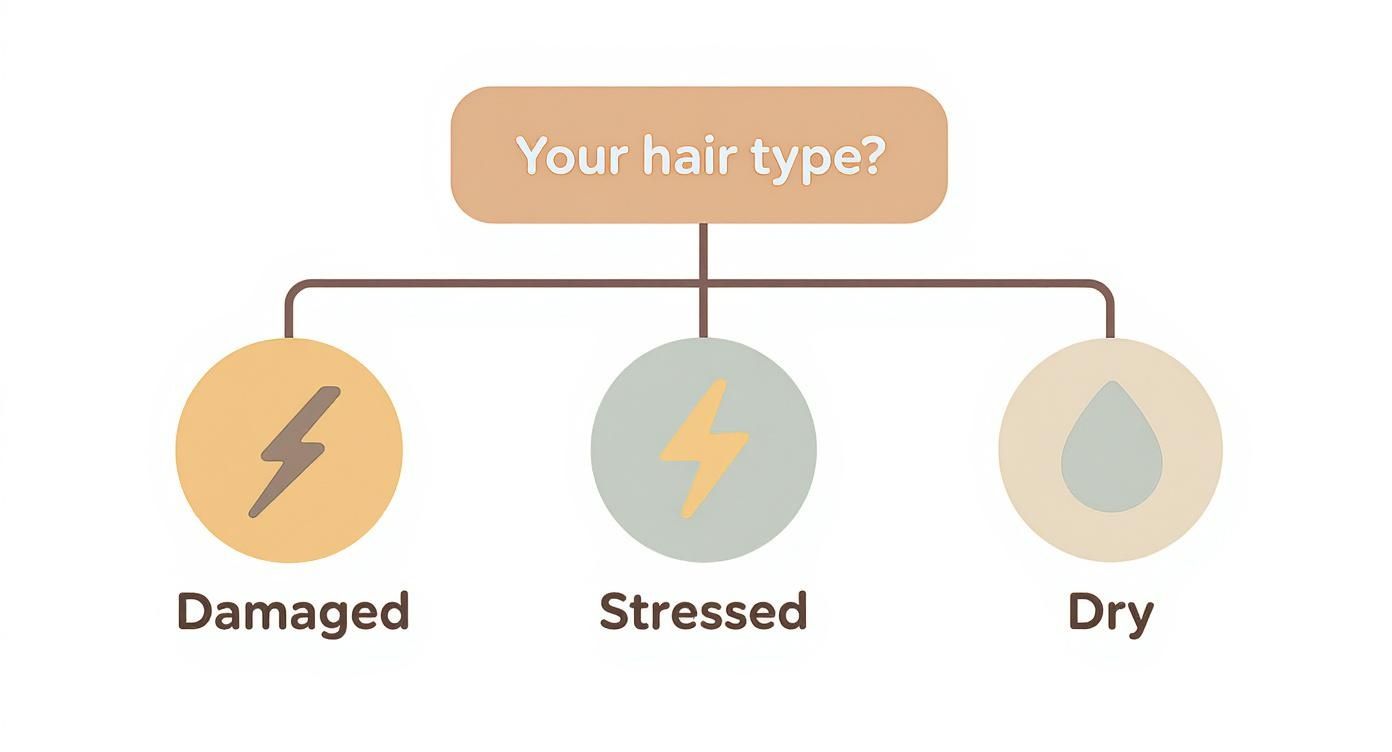
As you can see, whether your hair is truly damaged, just stressed, or simply dry will change your entire approach to bringing it back to life.
Your Immediate Rescue Plan
Okay, now that you have a better idea of what's going on, it's time for some hair first aid. The goal right now isn't a miraculous overnight fix. It's about stabilizing the situation and giving your hair a clean slate to start healing.
First up, a gentle clarifying rinse. You need to get rid of all the gunk—product buildup, hard water minerals, even pollution—that's coating your hair. If you don't, all those nourishing masks and oils you plan on using won't be able to penetrate and do their job.
An apple cider vinegar (ACV) rinse is perfect for this. Just mix one part raw, unfiltered ACV with four parts water. After shampooing, pour it over your hair, work it in from scalp to ends, and let it sit for a minute or two. Rinse it all out with cool water. The ACV helps smooth and seal the hair's outer layer, the cuticle, which immediately boosts shine and cuts down on frizz.
With your hair clarified, it's primed for a deep, restorative mask. For this very first treatment, play it safe and go with something focused purely on hydration—it's a solid choice for almost any type of damage. You can easily whip one up in your kitchen.
Simple Hydrating Avocado Mask:
- Mash up half of a ripe avocado until it’s totally smooth.
- Stir in one tablespoon of honey (it's a natural humectant, meaning it pulls moisture into the hair).
- Add one tablespoon of olive or coconut oil for some extra conditioning power.
Slather this mixture onto damp hair, really focusing on the mid-lengths and ends where damage tends to hang out. Pop on a shower cap and let it sit for at least 30 minutes. The healthy fats in the avocado will deeply nourish and soften your strands, giving your hair that drink of water it's been craving. This first rescue mission helps soothe your hair and gets it ready for the consistent weekly habits that will build real, lasting strength.
Building Your Weekly Natural Hair Repair Ritual
Those immediate rescue treatments are fantastic for damage control, but the real, lasting transformation happens when you build a consistent routine. This is where we pivot from hair first-aid to a sustainable weekly ritual that actually fits into your life.
It’s not about finding hours you don’t have. It's about weaving small, powerful, and natural habits into your schedule. Over time, these simple acts add up, creating the perfect environment for your hair to heal and regain its strength. Think of it as dedicated time to give back to your hair—a ritual it will definitely thank you for.
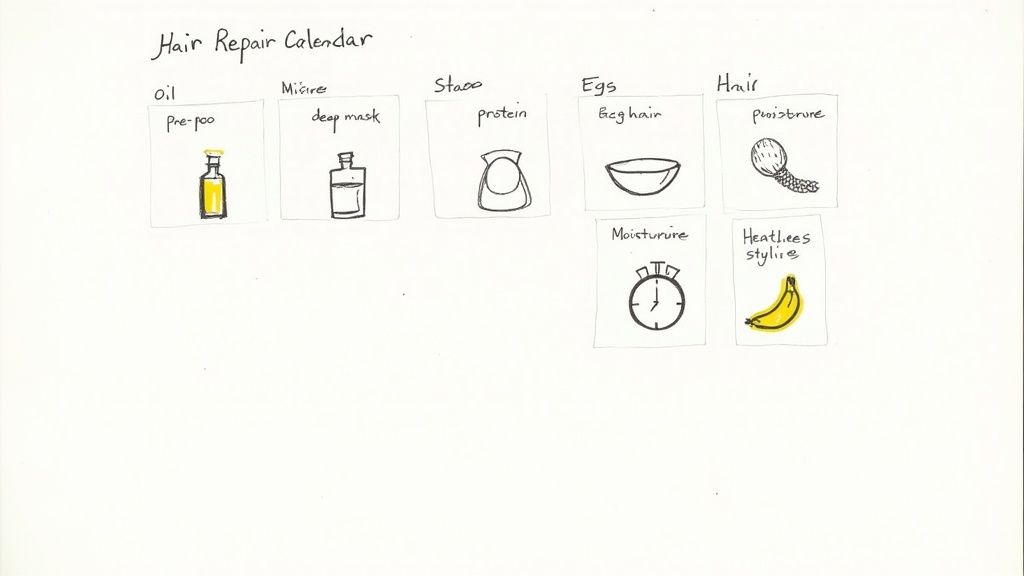
Start with a Protective Pre-Shampoo Treatment
One of the best habits you can get into is the pre-shampoo oil treatment, sometimes called a "pre-poo." It’s simple: you coat your dry hair with a nourishing oil before you even think about stepping into the shower.
Why bother? Even the gentlest shampoos can strip your hair of its natural oils, leaving it dry and vulnerable. A pre-poo creates a protective shield around the hair shaft, minimizing how much oil gets washed away. This cuts down on friction, helps prevent breakage, and leaves your hair feeling way softer after you wash it.
How to do it:
- Pick an oil. Coconut oil is a classic for a reason—its tiny molecules can actually get inside the hair shaft. Olive oil is another great choice that coats and protects beautifully.
- Gently warm a few tablespoons of the oil. You want it warm, not hot.
- Apply it to dry hair, really focusing on the fragile mid-lengths and ends.
- Let it sit for at least 30 minutes. If you have more time, leave it on for a few hours (or even overnight) with your hair tucked into a silk scarf for a really deep treatment.
This one step can completely change your wash day from a potentially damaging event into a genuinely nurturing one.
Master the Art of the DIY Deep Conditioning Mask
After you've shampooed out your pre-poo, it's time for the main event: a deep conditioning mask. While there are some great store-bought options, making your own lets you customize the ingredients to give your hair exactly what it’s craving.
Think back to the strand test you did. Let those results guide your ingredients.
- If your hair snaps easily, it's thirsty for moisture.
- If your hair feels gummy or overly stretchy, it needs protein to rebuild its structure.
I’ve found that a good DIY mask can work wonders, and it's much simpler than it sounds. Below is a quick guide to help you pick the right ingredients for your weekly treatment.
DIY Hair Mask Ingredients for Different Hair Needs
| Hair Concern | Best Natural Ingredients | Why It Works |
|---|---|---|
| Dryness & Brittleness | Avocado, Banana, Honey, Aloe Vera | These are packed with natural oils, vitamins, and humectants that draw moisture deep into the hair shaft and improve elasticity. |
| Weakness & Breakage | Egg, Greek Yogurt, Gelatin | These ingredients deliver a dose of protein to patch up weak spots in the hair's cuticle, reinforcing its structure. |
| Dullness & Lack of Shine | Apple Cider Vinegar (in a rinse), Olive Oil, Argan Oil | They help smooth the hair cuticle, which allows it to reflect more light. ACV also helps clarify buildup that can make hair look dull. |
| Frizz & Flyaways | Argan Oil, Shea Butter, Coconut Milk | Rich in fatty acids, these ingredients coat the hair to smooth it down, lock in moisture, and fight humidity. |
Choosing the right components makes all the difference. Don't be afraid to mix and match to create a custom blend that's perfect for you.
Pro Tip: When rinsing out a mask that has egg in it, always use cool or lukewarm water. Hot water can literally scramble the egg in your hair, and trust me, that is not a mess you want to deal with.
There's a reason so many people are turning to these kinds of simple, botanical routines. The natural hair care market is growing at a 9.4% CAGR, which blows the overall hair care market's 3.2% growth out of the water. It’s a clear sign that people want effective, natural solutions. You can dig deeper into these numbers by checking out these hair care market growth statistics on freeyourself.com.
Embrace No-Heat Styling as a Weekly Reset
The last piece of your weekly ritual is maybe the most important: give your hair a break from heat. Even with the best heat protectants, flat irons, curling wands, and blow dryers take a toll. Setting aside a few days a week for no-heat styling gives your hair a much-needed chance to just be.
This doesn’t mean you’re stuck with a sad-looking ponytail. You can get some incredible styles without plugging a single thing in.
A few of my favorite no-heat ideas:
- Braid-Outs for Soft Waves: Braid your hair when it’s damp—one big braid for loose waves, or a few smaller ones for a tighter pattern. Let it air dry completely, then unravel for gorgeous, heat-free texture.
- Heatless Curling Rods: These soft, flexible rods are a total game-changer. You just wrap sections of damp hair around them, let your hair dry, and end up with everything from bouncy curls to gentle waves. Zero heat damage.
- The Classic Bun: A loosely twisted top knot or a low bun is not only chic but also keeps your ends tucked away and protected from friction and daily wear and tear.
When you commit to this weekly ritual—the pre-poo, the targeted mask, the break from heat—you're actively creating the space for your hair to heal itself, get stronger, and truly thrive.
Nourishing Your Hair From the Inside Out
While masks, oils, and gentle treatments are fantastic for managing the outside of your hair, they’re only one piece of the puzzle. Real, lasting hair health is built from within, strand by strand. The food you eat is the literal fuel for growing strong, resilient hair—and skipping out on good nutrition is like trying to build a house on a shaky foundation.
This is where you can make a serious, long-term impact on your hair repair journey. Your follicles need a constant stream of specific nutrients to do their job right.
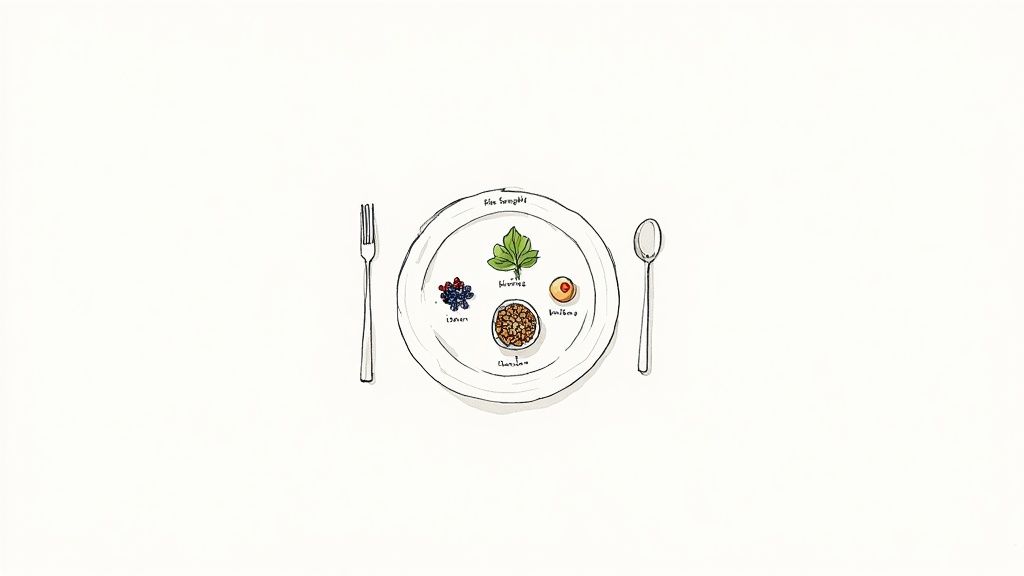
The Building Blocks of Strong Hair
Think of your diet as your internal repair kit. Your body uses proteins, vitamins, and minerals to create keratin, the tough-as-nails protein that makes up over 90% of each hair strand. When you’re running low on these essentials, your body diverts them to more critical organs, and your hair is often the first thing to suffer.
This "inside-out" philosophy is catching on in a big way. The global hair care market, valued at a staggering USD 106.91 billion in 2024, is expected to balloon to USD 213.47 billion by 2032. This isn't just about new shampoos; it reflects a huge shift in how we think about hair, recognizing that what you put in your body is just as important as what you put on it. You can see the data for yourself and check out how this trend is reshaping the industry.
To get started, focus on these hair-critical nutrients:
- Protein: Since hair is literally made of protein, getting enough is non-negotiable. It provides the amino acids needed to build that strong keratin structure. Lentils, chickpeas, tofu, and quinoa are all amazing plant-based sources.
- Iron: This mineral is a growth-driver. It helps red blood cells deliver oxygen to your follicles, which is essential for stimulating growth. You can find it in spinach, lentils, and fortified cereals.
- Biotin: Famous for its role in hair health, this B-vitamin is a key player in keratin production. Nuts, seeds, and sweet potatoes are packed with it.
- Zinc: Zinc is crucial for hair tissue growth and repair. It also helps the oil glands around the follicles function properly. Load up on pumpkin seeds, lentils, and chickpeas to get your fill.
Personal Insight: I saw a noticeable improvement in my hair's strength and a reduction in shedding when I started adding a handful of pumpkin seeds and walnuts to my morning oatmeal. It’s such a small change, but it delivers a direct hit of zinc and biotin right where my hair needs it.
Boosting Your Body’s Natural Collagen Production
Lots of people reach for animal-based collagen supplements, but you can give your body everything it needs to synthesize its own collagen through a smart, plant-based diet. Collagen is a protein that provides strength and helps keep hair from becoming brittle and snapping.
Instead of consuming collagen directly, you can feed your body the raw materials it needs to ramp up its own production.
Key Collagen-Boosting Nutrients:
- Vitamin C: This is the absolute superstar for collagen synthesis. Without it, the process just doesn't work efficiently. Find it in bell peppers, strawberries, citrus fruits, and broccoli.
- Amino Acids: Glycine, proline, and lysine are the main amino acids that form collagen. You can get them from plant-based sources like soy, black beans, and pumpkin seeds.
- Antioxidants: Berries, leafy greens, and green tea are loaded with antioxidants, which help protect your existing collagen from breaking down due to environmental stress.
By focusing on these nutrient-dense foods, you're not just patching up damage—you're building a stronger foundation for the future.
Simple Swaps for Hair-Healthy Eating
You don’t have to completely reinvent your diet overnight. Small, consistent changes can add up to make a huge difference.
Try swapping your usual afternoon snack for a handful of almonds and a kiwi. That simple switch gives you a powerful dose of biotin, zinc, and a major boost of Vitamin C. Or, toss a scoop of lentils into a salad or soup for an easy infusion of protein and iron.
This approach works wonders for more than just your hair, too. To learn more about the connection, check out our guide on how to strengthen hair and nails with supportive habits.
True, lasting hair repair is a holistic effort. When you nourish your body from the inside, you give your hair the raw materials it needs to rebuild itself—stronger, shinier, and more resilient than ever before.
Smart Maintenance for Lasting Hair Health
You’ve put in the work with nourishing treatments and better nutrition, and your hair is finally starting to thank you for it. So, what now? The real key is protecting that hard-earned progress with a few simple, smart daily habits.
These small maintenance steps are what prevent you from backsliding. They lock in the health of your hair for the long run, ensuring all your effort wasn't for nothing.
The most crucial habit? Committing to regular trims. It’s time to finally bust the myth that skipping haircuts will make your hair grow longer. The opposite is often true. Split ends don't just stay put—they travel up the hair shaft, causing breakage that actually leaves your hair looking shorter and thinner.
The Non-Negotiable Trim
Think of a split end like a tiny fray in a rope. If you don't snip it off, that fray just keeps on unraveling.
A small trim every 8-12 weeks is a non-negotiable for anyone serious about repairing their hair. This simple move gets rid of damaged ends before they have a chance to wreak havoc on the rest of your hair.
And no, you don't have to lose all your length. Just ask your stylist for a "dusting," a technique where they only snip off the very tips of your strands. It's the perfect strategy to maintain your length while getting rid of split ends—a win-win for your growth goals.
Master Gentle Detangling
How you brush your hair can either be a supportive habit or a major source of damage. Tugging at knots, especially when your hair is wet and at its most fragile, can cause instant snapping and breakage.
The right technique is everything. Always start detangling from the ends and slowly work your way up to the roots. Never, ever rake a comb from your scalp down through a tangled mess. A wide-tooth comb is your best friend here, as its spaced-out teeth can glide through knots with far less friction. It’s about patiently working out the tangles, not ripping through them.
A Real-World Scenario: Picture this: you’ve just washed your hair, and it feels like a tangled bird's nest. Instead of grabbing a brush and hoping for the best, gently squeeze out the excess water with your hands. Apply a good leave-in conditioner, then use your fingers to separate the larger sections. Then you can bring in the wide-tooth comb, starting at the bottom of each section and moving up.
Upgrade Your Drying and Sleeping Habits
Sometimes it’s the little things you do every day that have the biggest impact over time. Two of the most overlooked sources of damage? Your bath towel and your pillowcase.
That typical rough cotton towel you use can create a surprising amount of friction, roughing up your hair's outer cuticle and leading straight to frizz and tangles. A simple swap can make a world of difference.
Smart Swaps for Less Friction:
- Towel Swap: Ditch the cotton towel. Instead, gently blot and squeeze your hair with an old, soft t-shirt or a microfiber towel. These materials are much smoother and absorb water without causing all that frizz.
- Pillowcase Swap: Think about how much you move around at night. All that tossing and turning creates friction between your hair and a cotton pillowcase, which can lead to tangles and breakage. Switching to a silk or satin pillowcase lets your hair glide across the surface, dramatically cutting down on friction and helping to preserve your style.
These aren't complicated rules. They're just simple, effective habits that act as daily insurance for your hair. They protect the progress you've made, ensuring your hair stays healthy, strong, and resilient. For more ideas, our guide on how to stop hair breakage offers even more strategies to protect your strands.
Your Top Questions About Natural Hair Repair, Answered
When you start a new hair care journey, it’s only natural to have a few questions pop up. You might be wondering about how long it'll take, what to do about those pesky split ends, or if you really have to give up your flat iron forever. Let's clear up some of the most common questions so you can feel confident you're on the right track.
How Long Until I See Real Results?
This is always the first question, and the most honest answer is: it depends. You'll probably feel your hair getting softer or see a bit more shine after just one or two deep conditioning treatments, which is a great motivator! But repairing the deep-down damage takes patience.
The hair you can see is already grown, and while you can improve its texture and appearance, you can't fundamentally change its damaged structure. Real, lasting change happens as new, healthy hair grows from the scalp. Most people start to see a real difference in strength and less breakage within 2-3 months of being consistent. That's the sweet spot where your better diet and gentle hair habits start to show up in the new growth.
Don't get discouraged if you don't have a brand-new head of hair overnight. Celebrate the small victories—less frizz when you air-dry, fewer strands in your brush, a little more bounce. These are the signs you’re building a healthier foundation.
Can I Actually Repair Split Ends Without Cutting Them?
I wish I could say yes, but the short answer is no. Once a strand of hair has split, nothing can permanently fuse it back together. Think of it like a frayed rope—you can smooth it down with a product, but the fray is still there.
Certain oils or silicones can act like a temporary glue, making the split end look sealed for a little while. But it’s just a cosmetic trick. The only real way to get rid of split ends is to snip them off. Getting regular trims (sometimes called a "dusting") is the best way to stop that split from traveling further up the hair shaft and causing even more damage.
Should I Avoid All Heat Styling Forever?
Not necessarily, but you definitely need to be more strategic about it. Taking a complete break from heat is the fastest way to see improvement, but I get it—that's just not realistic for everyone. The real key is to dramatically cut back on how often and how hot you style your hair.
If you absolutely must use heat, follow these non-negotiable rules:
- Always use a heat protectant. It creates a necessary barrier between your hair and the hot tool.
- Use the lowest temperature that still works. Super high heat is one of the biggest culprits behind damage.
- Never, ever use heat on damp hair. Make sure your hair is 100% dry first. Using heat on damp hair essentially boils the water inside the strand, causing it to fracture from the inside out.
Try to think of heat styling as something you do for a special occasion, not part of your daily routine. That simple shift in perspective will do wonders for your hair's recovery and make all your other efforts so much more effective.
At Staye, we know that strong, vibrant hair starts from the inside. Our plant-based collagen booster is formulated with the essential amino acids, vitamins, and minerals your body needs to build resilient hair right from the follicle. Give your natural repair journey the nutritional support it deserves. Explore our clean, effective formula at https://shopstaye.com.