

You can’t just eat collagen and expect it to magically appear in your skin. The real magic happens when you give your body the exact nutrients it needs to build its own.
Think of it less like taking a supplement and more like fueling your body’s natural collagen factory. By supplying the right raw materials—like vitamin C, zinc, and specific amino acids—you empower your body to create truly radiant skin from the inside out.
The Blueprint for Building Better Skin from Within
Imagine your body is running a high-tech construction site for your skin. To build the strong, flexible scaffolding that keeps it firm and youthful, you can't just drop off a pallet of pre-made parts. You need to supply the site with high-quality raw materials and a skilled crew to assemble them. This is the fundamental difference between simply consuming collagen and actively building it.
The raw materials are a specific trio of amino acids: glycine, proline, and lysine. These are the foundational bricks of your collagen structure. But as any builder knows, a pile of bricks doesn't make a wall. You need a specialized crew of "workers"—key vitamins and minerals—to put everything together correctly.
The Key Players in Collagen Construction
This crew is made up of several critical nutrients that activate and guide the entire process. Without them, all those amino acid "bricks" would just sit there, unused. The most important members of this team are:
- Vitamin C: This is the essential project manager. It’s responsible for linking amino acids together to form stable, strong collagen fibers.
- Zinc: Think of zinc as the vital foreman on site, helping with skin cell repair and supporting the enzymes needed for synthesis.
- Copper: This is the specialist who creates the strong cross-links that give collagen its durability and resilience.
When you focus on foods that provide these building blocks and their helpers, you shift from passively hoping for results to strategically fueling your body's innate power to create strong, healthy skin.
This "build-from-within" approach has exploded in popularity, mirroring the growth of the global collagen market, which hit an estimated $4.7 billion in 2023. It’s a clear sign that more and more people are realizing that targeted nutrition is a powerful tool for skin and joint health. If you want to dive deeper, you can read the full research about collagen market trends.
Understanding how this internal factory works is the first step toward unlocking your skin's true potential.
How Your Body's Collagen Engine Really Works
To get why certain foods are so good at boosting collagen, we need to peek behind the curtain at your body’s internal skin-building factory. Deep within your skin, specialized cells called fibroblasts are the tireless workers on the assembly line, constantly putting together the proteins that keep your skin firm and bouncy. But they can't just create collagen out of thin air.
The whole process kicks off with very specific raw materials: the amino acids glycine, proline, and lysine. Think of these as the fundamental Lego blocks for your skin. Your fibroblasts are expert builders, gathering these amino acids and linking them together into long chains to create a precursor molecule called procollagen. This is basically the rough draft of collagen.
The Finishing Touches for Strong Collagen
But procollagen on its own isn't strong enough to do the job. To become the durable, flexible structure your skin needs, it requires a team of specialist "tools" in the form of vitamins and minerals. These nutrients are what handle the critical final steps, transforming those flimsy procollagen chains into a powerful, interconnected matrix.
Without these helpers, the entire production line grinds to a halt. The three most important players in this final assembly phase are:
- Vitamin C: This is the non-negotiable supervisor of the whole operation. It helps modify the procollagen, allowing the chains to twist into that stable, triple-helix shape that gives collagen its signature strength.
- Zinc: Acting as a crucial co-factor, zinc activates the key enzymes that fibroblasts use during the synthesis process. It’s also a key player in cellular repair.
- Copper: This mineral is the master welder. Copper activates an enzyme that creates strong cross-links between individual collagen fibers, weaving them into a tough, resilient mesh.
This diagram helps visualize how all these separate components—the amino acid building blocks and the vitamin/mineral tools—come together to create the final collagen structure for your skin.
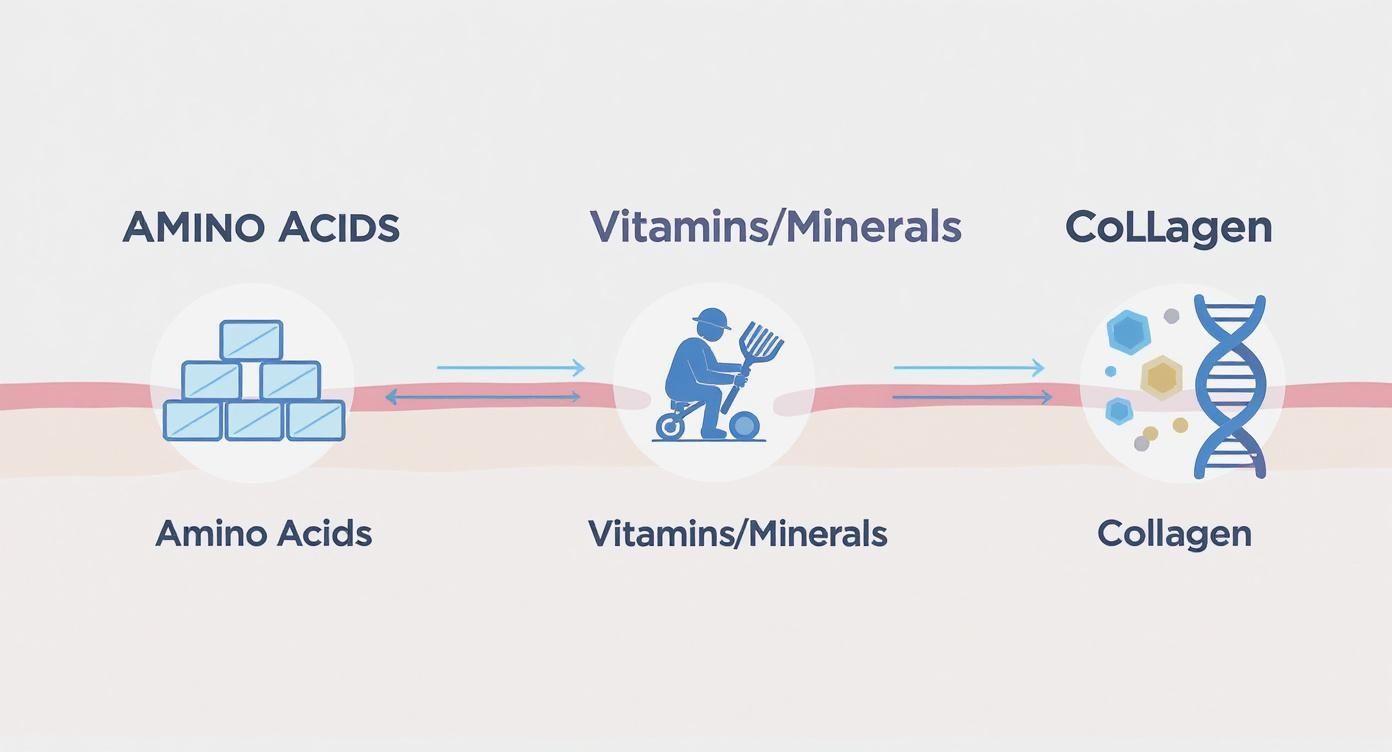
As you can see, a shortage of any one of these nutrients can create a serious bottleneck, preventing your body from making healthy collagen.
Why Every Nutrient Matters
The magic is in the synergy. You can eat all the right amino acids, but without enough Vitamin C, your fibroblasts just can't properly stabilize the procollagen molecules. They’ll remain weak and flimsy, unable to provide any real structural support. This vitamin’s role is so essential that many people look for the best vitamin C for collagen production to make sure they're not falling short.
In essence, your diet doesn't just provide nutrients; it provides a complete set of instructions and tools for your cellular factories. A nutrient-rich diet ensures the assembly line runs smoothly, efficiently producing the high-quality collagen that keeps skin looking youthful and vibrant.
This is exactly why a holistic approach to diet is so powerful. You aren't just eating for energy—you are supplying the specific building blocks and catalysts your body needs to maintain its most important structures from the inside out. A shortage of any single component can compromise the final product, leading to weaker skin that’s more prone to fine lines and sagging.
The Ultimate Grocery List for Collagen Synthesis
Okay, now that we’ve covered the science behind how your body builds collagen, let's get practical. It’s time to turn that knowledge into a real-world shopping list.
Think of your kitchen as a construction site for new, healthy skin. This list is your guide to stocking it with all the essential raw materials and specialized tools your body needs to get the job done right. We'll break down the best foods based on the specific nutrients they bring to the table.
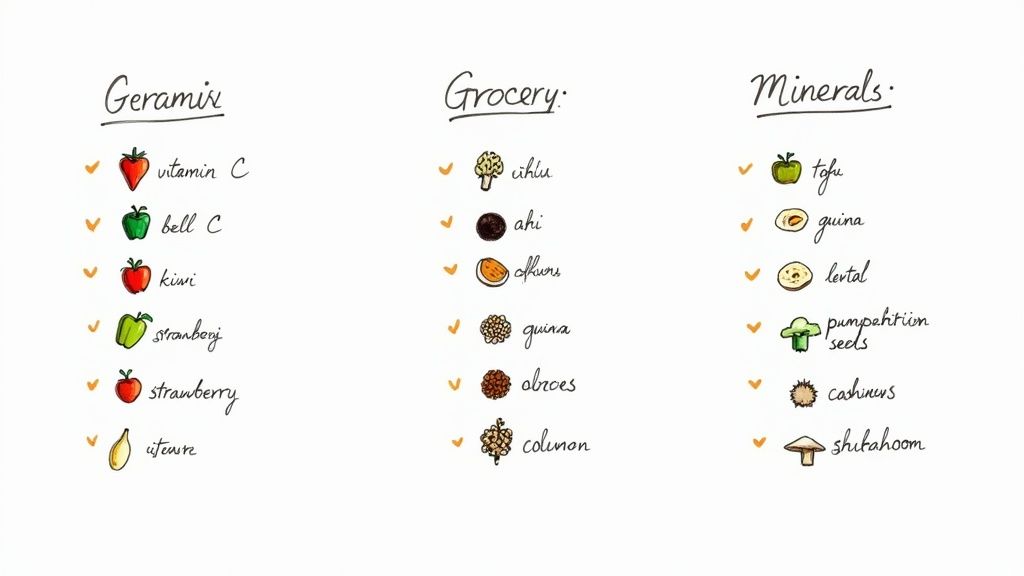
This isn’t about just eating more "healthy" food. It’s about being strategic and choosing ingredients that directly fuel your skin's natural regeneration process from the inside out.
Vitamin C Powerhouses for Production
Vitamin C is the project manager of collagen synthesis. It's absolutely non-negotiable. It’s the spark that helps convert those amino acids into strong, stable collagen fibers. If you don't have enough Vitamin C, the entire production line grinds to a halt.
Luckily, this vitamin is everywhere in delicious plant-based foods. Try to get these vibrant options into your meals every day:
- Bell Peppers: One single medium red bell pepper delivers over 150% of your daily Vitamin C needs. It's a true superstar.
- Kiwis: Just one kiwi fruit can provide almost your entire daily requirement. Easy.
- Strawberries and Citrus: The classics are classic for a reason. Oranges, lemons, and strawberries are loaded with Vitamin C and other protective antioxidants.
Amino Acid Suppliers for Building Blocks
Next, you need the raw materials—specifically the amino acids glycine, proline, and lysine—to actually build the collagen structure. Our bodies can make some of these on their own, but getting them from your diet ensures the supply chain is never broken.
A plant-forward diet has fantastic sources of these foundational amino acids. Keep an eye out for these protein-packed foods:
- Soy and Legumes: Tofu, edamame, lentils, and chickpeas provide a solid profile of the amino acids your body is looking for.
- Quinoa: As a complete protein, quinoa contains all nine essential amino acids, including the lysine that’s critical for this process.
- Hemp and Pumpkin Seeds: These little seeds are not only great sources of amino acids but also come packed with other skin-friendly minerals.
Zinc and Copper for Finishing the Job
Think of zinc and copper as the specialized tools your collagen factory needs for the final assembly. These minerals activate enzymes that are crucial for repairing skin cells and creating the strong cross-links that give collagen its resilience and strength.
A diet rich in these minerals ensures that the collagen your body produces is not only plentiful but also strong, durable, and structurally sound.
To make sure your "toolkit" is fully stocked, start adding these mineral-rich foods to your rotation.
Here's a quick-reference table to help you identify the essential building blocks for collagen and the best whole foods to find them in.
Key Nutrients and Foods for Collagen Production
| Nutrient | Role in Collagen Synthesis | Top Food Sources |
|---|---|---|
| Zinc | Activates enzymes for synthesis & skin cell repair | Lentils, pumpkin seeds, chickpeas, and cashews |
| Copper | Creates strong cross-links for durable collagen | Shiitake mushrooms, cashews, sesame seeds, and dark chocolate |
By consistently including a variety of these foods in your meals, you give your body a steady stream of the exact parts it needs to run its collagen engine efficiently. It’s a much smarter approach than just focusing on one nutrient, because each one plays a distinct and vital role in the team.
Want to learn more about eating for your skin? Check out our guide on anti-aging foods for skin.
Building Your Collagen-Boosting Meal Plan
Alright, so you know which foods can help your body make more collagen. That’s the first step. But the real magic happens when you start turning that knowledge into simple, delicious meals you actually want to eat every day.
The goal isn't to shock your system with a dramatic diet overhaul. It’s all about weaving these nutrient-packed ingredients into your routine in a way that feels natural and enjoyable. After all, sustainable habits are built on simplicity, not stress.
Think of it like watering a plant. You wouldn't dump a month's worth of water on it at once and expect it to thrive, right? Your body is the same. It needs a steady, consistent trickle of nutrients to keep its collagen-building machinery running smoothly day in and day out.
A Day of Collagen-Supportive Eating
Let's walk through what this looks like in practice. These ideas are all about nutrient synergy—making sure the "workers" (like vitamin C) and the "raw materials" (amino acids) show up to the job site at the same time.
Here’s a sample day focused on foods that boost collagen production:
- Sunrise Smoothie: Get your blender out and throw in a handful of strawberries (hello, vitamin C!) with a scoop of hemp seeds (for those crucial amino acids). Add a spoonful of almond butter for healthy fats and a bit of spinach for a dose of antioxidants. This simple mix gives your body the foundational blocks it needs to get started.
- Power Lunch Bowl: Start with a base of quinoa (a fantastic complete protein) and top it with chickpeas (more amino acids, plus zinc), colorful bell peppers (loaded with vitamin C), and a sprinkle of pumpkin seeds (zinc again). A simple lemon-tahini dressing ties it all together beautifully.
Restorative Dinners and Smart Snacking
Your last meal of the day is a great chance to give your body the tools it needs for all that important overnight repair and regeneration. The key is to keep it simple with whole foods that are easy to digest.
A hearty lentil soup or a tofu stir-fry packed with broccoli and shiitake mushrooms (copper) is a perfect choice. This gives you a balanced mix of amino acids and the trace minerals that help put the finishing touches on your new collagen fibers.
And for snacking? A small handful of cashews or even a piece of dark chocolate can curb cravings while delivering a helpful dose of copper.
The most effective approach is always consistency over intensity. A daily intake of these key nutrients keeps your cellular factories humming, leading to more noticeable and lasting results for your skin, hair, and joints.
By focusing on these small, daily habits, you build a powerful foundation for your long-term health. If you feel like you need an extra edge, you can also explore how certain supplements for collagen production can complement your diet, filling in any potential gaps. This combined strategy helps you support your body from every angle.
Lifestyle Habits That Sabotage Collagen Production

Eating all the right foods is a fantastic start, but it's really only half the equation. To truly see a difference in your skin, you also have to play defense—protecting the precious collagen you already have from breaking down too soon.
Think of it this way: you can't fill a leaky bucket. Certain daily habits act like wrecking balls to your skin’s structure, undoing all the good work you’re doing with your diet. By understanding these threats, you can make smarter choices to safeguard your skin and ensure all those amazing nutrients get a chance to work their magic.
The Impact of Sun Exposure
The sun’s ultraviolet (UV) rays are like tiny lasers that penetrate deep into your skin and directly attack your collagen fibers. This process, known as photoaging, is one of the biggest reasons we see premature wrinkles and sagging skin.
Consistent, unprotected time in the sun breaks down your collagen at a much faster rate than natural aging ever would. Even small, daily doses of sun add up over a lifetime, which is why a good broad-spectrum sunscreen isn’t just a beach-day accessory—it’s a non-negotiable for preserving your skin’s firm, youthful structure.
How Sugar Hardens Your Collagen
When you eat a diet high in sugar and refined carbs, you’re kicking off a nasty process in your body called glycation. You can imagine sugar molecules as sticky little troublemakers that latch onto proteins, especially collagen and elastin.
This sticky situation creates harmful new molecules called advanced glycation end products, or AGEs. These AGEs make your once-flexible collagen fibers become rigid, brittle, and weak. The result? Skin that’s less elastic and more likely to sag and form wrinkles. Cutting back on sugary treats is a direct investment in your skin's long-term resilience.
By minimizing these external and internal aggressors, you create an environment where your body can not only produce new collagen but also preserve the existing foundation for lasting skin health.
Other Lifestyle Factors to Consider
Beyond the big two—sun and sugar—a few other common habits can seriously get in the way of your body's ability to maintain healthy collagen.
- Smoking: This is a big one. Smoking constricts your blood vessels, which drastically cuts down on the flow of oxygen and vital nutrients—like vitamin C and amino acids—to your skin. It essentially starves the very factories that produce your collagen.
- Lack of Sleep: Your body does its best repair work while you’re in a deep sleep. This is when it produces hormones that support tissue regeneration, and that includes making new collagen. When you consistently skimp on sleep, you rob your skin of this crucial nightly rebuild.
It’s clear that a multifaceted approach is the most effective. Diet, protection, and healthy habits are the core pillars. On top of that, scientific evidence also points to the benefits of supplementation. Multiple studies have shown that both oral and topical collagen supplements can help improve skin moisture and elasticity. If you’re curious, you can explore the research on collagen and anti-aging to learn more.
Got Questions? We Have Answers.
Let’s be honest, figuring out the right way to support your skin through nutrition can feel a little overwhelming. When you start focusing on foods that boost collagen, questions are bound to pop up. How long does it take? Is one way better than another?
We hear these all the time, so we’ve put together some straightforward answers to the most common questions we get. Let's clear things up so you can move forward with confidence.
How Long Does It Really Take to See Results from My Diet?
This is the big one, isn't it? The honest answer is: it depends. Your results are tied to how consistent you are and where your body is starting from. Think of it this way: your skin cells turn over roughly every 28 to 40 days. That means you need to give your body at least a solid month of nutritional support before you even start looking for changes.
Most people notice the first subtle shifts, like better skin hydration and a bit more of a glow, within the first 4 to 6 weeks. But the more significant changes—that visible improvement in firmness and elasticity—can take 3 to 6 months of dedicated effort. This is because your body is steadily building brand new, stronger collagen structures from the inside out. Patience is your best friend here; this is a long-term strategy, not a weekend fix.
Are Animal Sources Better Than Plant-Based Nutrients?
This is a great question. Animal sources like bone broth or marine collagen contain pre-formed collagen. When you consume them, your body breaks that collagen down into its basic amino acid building blocks.
Plant-based foods work a little differently. They don't contain collagen itself, but they deliver all the specific nutrients—like vitamin C, zinc, copper, and those crucial amino acids—that your body uses as its own toolkit to build collagen from scratch.
It’s not about one being “better” than the other; they’re just two different strategies. The plant-based method is all about empowering your body’s own natural production engine, making sure your internal factories have all the high-quality raw materials they need to do their job right.
Focusing on plant-forward foods that boost collagen production is a powerful and incredibly effective way to support your skin's health from the ground up.
Can I Get Everything I Need on a Vegan Diet?
You absolutely can. A well-planned vegan diet can provide every single nutrient your body needs for robust collagen synthesis. The trick is simply being strategic with your food choices to make sure you're covering all your nutritional bases.
Here’s a quick cheat sheet for optimizing your vegan diet for collagen support:
- Amino Acids: Make sure you're eating complete proteins like quinoa and soy. You can also create them by combining foods, like pairing lentils with brown rice or chickpeas with whole-wheat bread.
- Vitamin C: This one is easy for vegans! Load up on bell peppers, broccoli, kiwis, and citrus fruits.
- Zinc & Copper: You’ll want to prioritize foods like pumpkin seeds, lentils, cashews, and shiitake mushrooms to supply these critical minerals.
By focusing on a diverse rainbow of whole plant foods, you can easily fuel your body's collagen-making machinery without any animal products at all.
Ready to give your body the complete toolkit it needs to build radiant skin from within? The Staye plant-based collagen booster is scientifically formulated with the essential vitamins, minerals, and amino acids to support your natural production. Simplify your routine and nourish your skin, hair, and joints with one easy step. Learn more and start your journey with Staye today.