

It's easy to get lost in the beauty aisle, surrounded by endless creams and serums promising a youthful glow. But the real secret to healthy, resilient skin isn't in a bottle—it starts on your plate. The most powerful anti aging foods for skin are packed with antioxidants, healthy fats, and essential vitamins that help build collagen and fight damage from the inside out. Think vibrant berries, leafy greens, fatty fish, and nuts. These aren't just healthy foods; they're nature's best-kept secrets for skin protection.
How Your Diet Shapes Your Skin Health
Imagine your skin is a brand-new building. In your youth, its foundation—made of firm collagen and springy elastin—is strong, sturdy, and resilient. But over time, things like sun exposure, pollution, and even stress start to act like a slow-moving wrecking crew, chipping away at that foundation. This is what leads to the visible signs of aging we all know: fine lines, wrinkles, and a loss of that firm, bouncy feel.
Topical creams can help patch up the surface, but your diet works as the internal repair crew. It's what rebuilds and reinforces that structure from within, fundamentally changing your skin's health for the long haul.
Understanding the Core Processes of Skin Aging
When it comes to skin aging, there are two main culprits working behind the scenes: oxidative stress and collagen breakdown.
Oxidative stress is caused by unstable molecules called free radicals. You can think of them as tiny sparks flying around inside your body, causing cellular damage wherever they land. Over time, this damage accumulates—much like rust forming on metal—leading to dullness and wrinkles.
Then there's collagen breakdown. Your body's production of this crucial protein naturally slows down as you get older. As that happens, the "scaffolding" that keeps your skin plump and firm starts to weaken and sag.
The good news? The right foods give your body the tools it needs to fight back. Key nutrients can:
- Neutralize Free Radicals: Antioxidants, found in abundance in fruits and vegetables, act like fire extinguishers, putting out the cellular damage caused by those free radical "sparks."
- Support Collagen Synthesis: Certain vitamins and minerals, like Vitamin C and zinc, are essential "helpers" your body needs to produce new, strong collagen fibers.
- Strengthen the Skin Barrier: Healthy fats are crucial for maintaining your skin’s natural moisture barrier, which keeps it hydrated, supple, and protected from the outside world.
By focusing on nutrition, you shift your strategy from just covering up the signs of aging to actively building healthier, more resilient skin from the ground up. It’s a sustainable, inside-out approach that creates the foundation for a lasting, healthy glow that no cream alone can ever replicate.
Here is the rewritten section, designed to match the specified human-written style and tone.
Building Your Anti-Aging Grocery List
Think of your kitchen pantry as your own personal, at-home beauty counter. When you stock it with the right foods, you’re giving your body the exact raw materials it needs to build a stronger, more radiant complexion from the inside out. This isn't about some restrictive diet; it’s about making smart, strategic additions to your grocery list.
The whole idea is to focus on specific nutrients that directly target the main drivers of skin aging. We're talking about powerhouse categories like antioxidants, healthy fats, and essential vitamins that all work together to protect and repair your skin right down to the cellular level.
Load Up on Antioxidant Powerhouses
Antioxidants are your skin's front-line defense against the daily onslaught of damage from things like pollution and UV rays. Foods rich in compounds like polyphenols and flavonols are incredible at neutralizing those nasty free radicals before they get a chance to break down your precious collagen.
Some of the best sources are probably already in your kitchen:
- Dark Chocolate (70% Cacao or Higher): That's right, chocolate! It contains flavonols that actually improve blood flow to the skin, which helps boost hydration and improve texture.
- Berries: Blueberries, strawberries, and raspberries are absolutely loaded with antioxidants that shield your skin cells from damage.
- Green Tea: It’s packed with catechins, which have been shown to help protect your skin against sun damage.
This diagram really brings home how a healthy diet provides the foundational support for both your skin's structure and its protective shield.
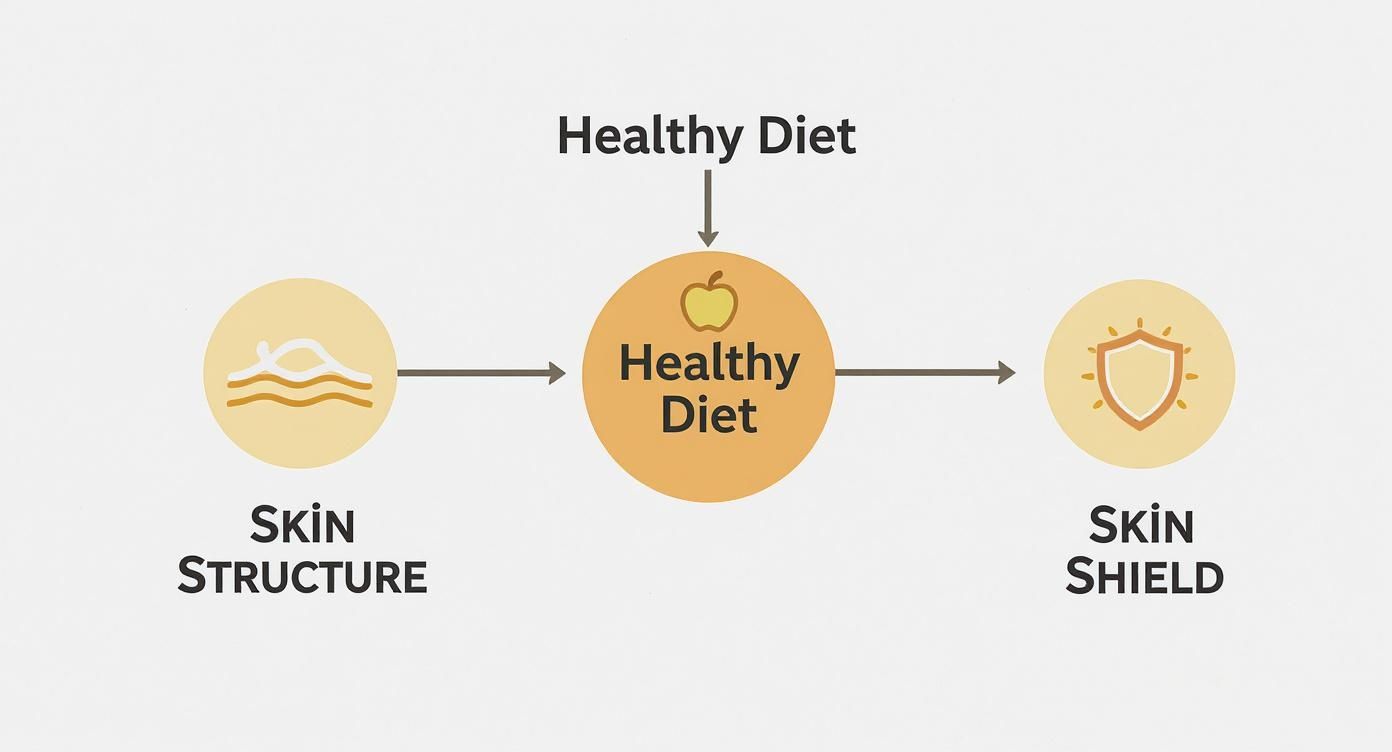
You can see how what you eat directly impacts your skin's resilience and its ability to repair itself.
Embrace Healthy Fats for a Stronger Skin Barrier
Your skin's outermost layer—the moisture barrier—is like a brick wall. It's designed to keep hydration in and all the bad stuff (like irritants) out. The "mortar" holding this wall together is made of lipids, which is just a fancy word for fats. When this barrier gets weak, your skin becomes dry, flaky, and way more prone to damage.
Healthy fats are what fortify this barrier, keeping your skin supple, plump, and hydrated.
Key Insight: A strong moisture barrier is non-negotiable for a youthful appearance. It not only locks in moisture to plump up fine lines but also protects the deeper layers of your skin from environmental stressors that speed up aging.
Look for these amazing sources of skin-supporting fats:
- Avocados: They're rich in monounsaturated fats that help your skin stay moisturized and flexible.
- Fatty Fish: Salmon, mackerel, and herring are high in Omega-3 fatty acids, which are powerful anti-inflammatories that help calm down irritated skin.
- Nuts and Seeds: Walnuts and flaxseeds are fantastic plant-based sources of those same Omega-3s.
The science backs this up, too. A 24-week trial found that a flavonol-rich cocoa drink significantly improved skin elasticity and reduced wrinkles in women. Another 12-week study showed that adding flaxseed to the diet boosted skin hydration and smoothness.
Prioritize Vitamin C for Collagen Synthesis
If there's one nutrient you don't want to skip for youthful skin, it's Vitamin C. Why? Because it’s an absolutely essential cofactor in producing collagen. Without enough Vitamin C, your body simply can't build new collagen effectively, and that's when you start to see sagging and fine lines.
And while oranges get all the glory, plenty of other foods are bursting with this vitamin:
- Bell Peppers: A single red bell pepper can have more than 150% of your daily recommended intake of Vitamin C.
- Broccoli: This is a great source of both Vitamin C and Vitamin K, which helps with skin healing.
- Kiwi: This little fruit is a powerhouse of Vitamin C, supporting skin firmness and brightness.
Adding these foods to your diet is one of the most direct ways to feed your skin's structural foundation. To see how different vitamins work together for the best results, check out our complete guide on the best vitamins for skin health.
To make things even easier, here's a quick cheat sheet for your next grocery run.
Top Anti-Aging Nutrients and Their Food Sources
| Nutrient Category | Primary Skin Benefit | Top Food Sources |
|---|---|---|
| Antioxidants (Polyphenols, Flavonols) | Protects skin from free radical damage, UV rays, and pollution. | Dark chocolate, green tea, blueberries, strawberries, artichokes. |
| Healthy Fats (Omega-3s, Monounsaturated) | Strengthens the skin's moisture barrier, reduces inflammation. | Salmon, avocado, walnuts, flaxseeds, olive oil. |
| Vitamin C | Essential for collagen production, brightens skin tone. | Bell peppers, kiwi, broccoli, oranges, strawberries. |
| Vitamin E | A potent antioxidant that protects cell membranes from damage. | Sunflower seeds, almonds, spinach, avocado. |
| Zinc | Supports skin healing, cell growth, and reduces inflammation. | Oysters, pumpkin seeds, lentils, beef. |
Think of this table as your starting point. By consciously adding these foods to your meals, you’re not just eating—you’re actively building healthier, more resilient skin from the inside out.
Feeding Your Skin's Natural Collagen Production
There’s a common myth that eating collagen goes straight to your skin, plumping it up from the inside. The reality is a bit more complex—and a lot more interesting.
Think of your body as a master builder. If you want it to build a strong, beautiful structure (like firm skin), you don't just hand it a finished wall. You give it the high-quality raw materials: the bricks, the mortar, and the tools. That way, it can build precisely what's needed, where it's needed.
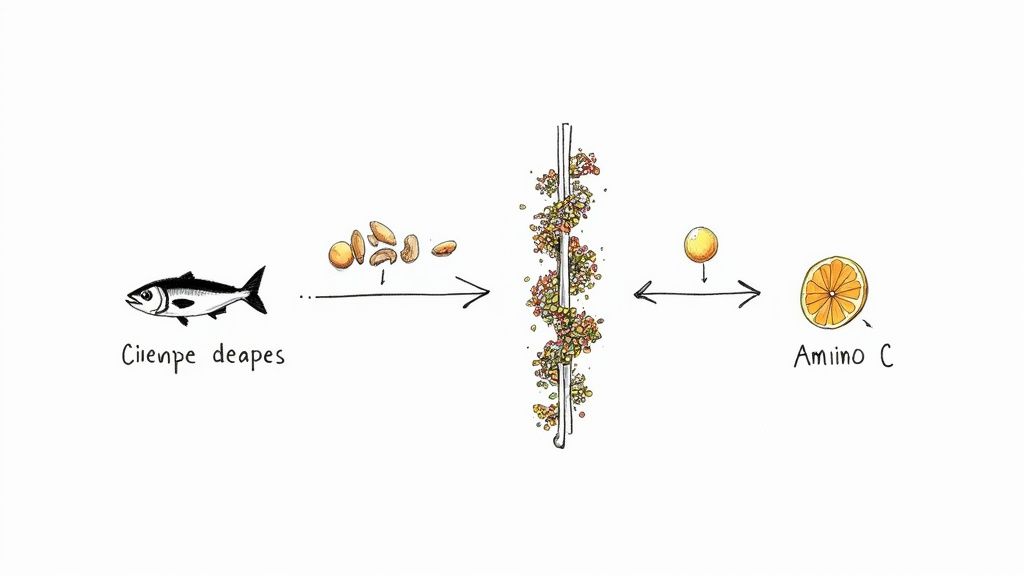
When you eat collagen, your digestive system breaks it down into its basic components: amino acids. Your body then takes these amino acids and uses them as raw materials to synthesize its own collagen. This is why focusing on the building blocks is so much more effective. These are the true anti-aging foods for skin because they fuel your body's own production line.
The Essential Collagen-Building Toolkit
To keep this internal "collagen factory" running smoothly, your body needs a very specific set of nutrients. If even one piece is missing, the whole production line can slow down, and your skin will show it. The three most critical components are amino acids, Vitamin C, and a couple of key minerals.
First up are the amino acids—specifically proline, glycine, and lysine. These are the "bricks" that form the strong, triple-helix structure of a collagen molecule. You’ll find them in high-quality protein.
Next is Vitamin C. Think of it as the project foreman, shouting instructions and making sure everything gets done. It’s a vital cofactor that literally turns on the enzymes responsible for linking amino acids together into strong collagen fibers. Without enough Vitamin C, the entire process grinds to a halt. For a deeper dive, our guide explains what exactly collagen is and why it is important.
Finally, you need minerals like zinc and copper. These are the specialized "power tools" for the construction crew. Zinc helps activate the proteins needed for collagen synthesis, while copper is crucial for creating the cross-links that give collagen its strength and resilience.
Think of it this way: Amino acids are the raw materials, Vitamin C is the project manager giving the instructions, and minerals like zinc and copper are the specialized equipment needed to get the job done right.
Stocking Your Kitchen with Collagen Boosters
The good news is that building a diet to support collagen production is pretty straightforward once you know what you're looking for. It's all about variety.
Try to weave these foods into your meals throughout the week:
- Amino Acid Sources: Bone broth is a classic, but you can also get what you need from lean chicken, fatty fish like salmon, and eggs. For plant-based options, legumes and tofu are excellent sources of the core building blocks.
- Vitamin C Powerhouses: Oranges get all the credit, but bell peppers, kiwi, strawberries, and broccoli are bursting with the Vitamin C your body needs to kickstart collagen synthesis.
- Mineral-Rich Foods: Nuts and seeds (especially pumpkin seeds for zinc!), shellfish, and whole grains deliver the essential minerals that complete the production cycle.
By giving your body this complete nutritional toolkit, you empower it to maintain its own collagen supply. The result is naturally firmer, more youthful-looking skin—built from the inside out.
Unlock the Power of Botanical and Fruit Extracts
While the produce aisle is your foundation for healthy skin, certain botanical and fruit extracts offer a much more concentrated dose of protective compounds.
Think of them as a specialized task force for your skin. They’re equipped with unique tools to defend and repair on a deeper level, going beyond basic nutrition to target specific aging pathways with powerful antioxidants.
These potent ingredients are some of the most effective anti aging foods for skin precisely because they offer such a high concentration of benefits. Green tea, for instance, is famous for its high content of catechins, a type of polyphenol that helps shield your skin from the harmful effects of UV radiation. Regularly sipping on green tea can literally bolster your skin's internal defense system against daily environmental stress.
The Science of Edible Skin Protection
It might sound like science fiction, but some foods work almost like an internal sunscreen, giving your skin a baseline of protection that perfectly complements your daily SPF.
Sweet potatoes are a prime example. They're absolutely packed with a powerful antioxidant called β-carotene. Your body cleverly converts this compound into Vitamin A, which is non-negotiable for healthy skin cell turnover and repair.
And this isn't just theory. One clinical study of women with sun-damaged skin found that daily supplementation with 30 mg of β-carotene for 90 days led to reduced facial wrinkles and better skin elasticity. The full molecular analysis of these skin benefits revealed it actually boosted procollagen production and lowered markers of UV-induced DNA damage.
Advanced Botanical Defenders
Beyond the foods you eat every day, certain extracts have been studied for their remarkable impact on skin structure and resilience. These botanicals offer targeted support for a complexion that looks and feels healthier from the inside out.
- Pomegranate: This vibrant fruit is bursting with punicalagins, antioxidants so potent they can help preserve your existing collagen by blocking the enzymes that break it down.
- Red Ginseng: A staple in traditional medicine for a reason, red ginseng has been shown to boost the synthesis of both collagen and elastic fibers, directly improving the skin's underlying structure and firmness.
- Grape Seed Extract: This powerhouse is rich in proanthocyanidins, compounds that are exceptional at neutralizing a wide range of damaging free radicals. You can learn more about the specific ways grape seed extract benefits the skin in our detailed guide.
By incorporating these powerful extracts into your wellness routine, you're not just eating healthy—you're strategically giving your skin advanced, evidence-based tools to combat the signs of aging from within.
The Foods That Work Against Your Skin
We've talked about what to add to your plate for better skin, but it's just as important to know what to leave off. Some foods don't just fail to help—they actively work against you, fast-tracking the aging process by fueling inflammation and wrecking the very collagen you’re trying to build.
Think about what happens when you caramelize sugar in a pan. It turns brown, hard, and brittle. A similar process, called glycation, happens inside your body when you eat too much sugar. Sugar molecules latch onto proteins like collagen and elastin, creating nasty little compounds called Advanced Glycation End-products (AGEs).
These AGEs are bad news for your skin. They make your once-flexible collagen stiff and rigid, essentially "caramelizing" your skin’s internal support structure. The result? A direct path to lost elasticity, more fine lines, and sagging.
Processed Foods and Unhealthy Fats are Not Your Friend
Sugar isn't the only bad guy here. Highly processed foods are often packed with trans fats and refined carbohydrates that put your body in a constant state of low-grade, chronic inflammation.
A little inflammation is normal—it's how your body heals. But when it’s always simmering in the background, it becomes destructive. This internal fire constantly chips away at your collagen and elastin, sabotaging your efforts to keep your skin looking firm and youthful.
Watch out for these common culprits:
- Refined Carbohydrates: Things like white bread, pastries, and sugary cereals send your blood sugar on a rollercoaster, which only adds more fuel to the glycation fire.
- Trans Fats: Often found lurking in fried foods and packaged snacks, these fats are notorious for promoting inflammation and oxidative stress that directly damage skin cells.
- Processed Meats: Bacon, hot dogs, and deli meats are typically loaded with sodium and preservatives that can dehydrate your skin and ramp up inflammation.
This isn’t about banning foods forever, but about making smarter, more conscious choices. By simply swapping a sugary soda for a glass of green tea or choosing whole-grain bread over white, you dramatically reduce the inflammatory load on your body. These small shifts protect your skin’s vital proteins and make a huge difference in its long-term health and resilience.
Your Sample Anti-Aging Meal Plan
Okay, let's put all this science into practice. Knowing which foods are great for your skin is one thing, but seeing how they can actually fit into your day is where the real magic happens.
This isn’t about some crazy, restrictive diet. It’s about making smart, delicious choices that work with your body. A few simple swaps here and there are all it takes to start feeding your skin from the inside out and supporting that natural glow.
A Day of Skin-Nourishing Meals
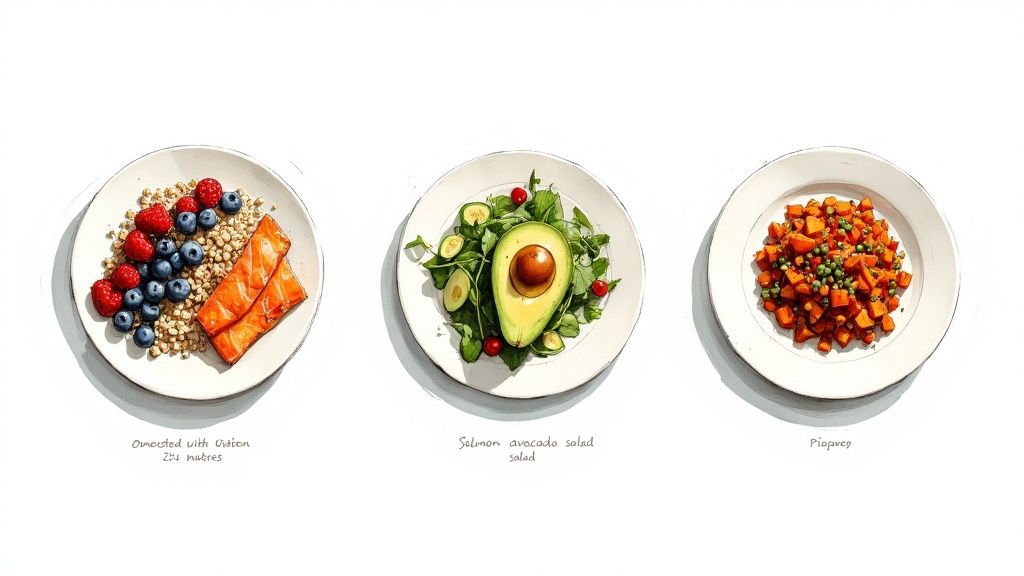
Here’s a little inspiration for what a day of eating for radiant skin could look like. It’s simple, satisfying, and loaded with the good stuff.
-
Breakfast (Antioxidant Power Start): Kick off your morning with a warm bowl of oatmeal. Instead of brown sugar, top it with a handful of mixed berries and a sprinkle of walnuts. The berries bring a serious dose of antioxidants to fight off daily damage, while the walnuts provide those crucial Omega-3 fatty acids.
-
Lunch (Hydration and Healthy Fats): Think vibrant and fresh. A grilled salmon salad with dark leafy greens, a few slices of avocado, and a simple lemon-tahini dressing is perfect. You're getting Omega-3s from the fish, incredible healthy fats from the avocado, and a boost of Vitamin C from the lemon to help with that all-important collagen synthesis.
-
Dinner (Repair and Rebuild): Time to wind down with something hearty that helps your skin repair overnight. A sweet potato and lentil stew is deeply nourishing. Sweet potatoes are packed with β-carotene (which your body converts to Vitamin A), and lentils offer up plant-based protein and zinc—both essential for skin regeneration.
This kind of eating keeps a steady stream of skin-loving nutrients flowing to your cells. In fact, research shows that just eating fruit regularly can significantly improve your skin’s hydration and strengthen its natural protective barrier. If you're curious about the details, you can explore the full scientific review on these fruit benefits and see the data for yourself.
Pro Tip: When you’re eating spinach or lentils, squeeze a little fresh lemon juice over them right before you dig in. The Vitamin C in the lemon dramatically increases how much iron and other minerals your body can absorb from these plant-based powerhouses, making them even better for your skin.
You’ve decided to start eating for your skin—that’s fantastic. But it’s totally normal to have a few questions before you dive in. Knowing what to expect will help you stick with it long enough to see the beautiful results you’re after.
Let's get into some of the most common questions that pop up.
How Long Until I Actually See a Difference?
This is the big one, right? The honest answer is that patience is key. While everyone’s body is a bit different, most people start to notice a change in their skin’s hydration and overall glow within 4 to 6 weeks of consistently eating these nutrient-rich foods.
The deeper changes—like better skin firmness and fewer fine lines—are part of a longer game. Those results come from your body building new collagen and repairing cells from the inside out, a process that really starts to show after about 3 to 6 months of commitment.
Are Supplements Just a Shortcut?
While a targeted supplement can be a great way to fill in any nutritional gaps, it’s a mistake to think of them as a replacement for a good diet. Whole foods contain a complex blend of vitamins, minerals, and other plant compounds that all work together in ways we're still just beginning to understand.
Think about it this way: an orange gives you Vitamin C, but it also delivers flavonoids that help your body use that antioxidant power more effectively. You just don't get that synergistic effect from a simple pill. See food as your foundation and supplements as a targeted boost, not a shortcut.
Do I Have to Break Up With Sugar for Good?
Not at all! The goal here is balance, not total deprivation. The trick is to reframe sugar as an occasional treat instead of a daily go-to. The vast majority of what you eat should be the nourishing, skin-loving foods we’ve been talking about.
And when you do decide to indulge, you can be smart about it. A few squares of high-cacao dark chocolate, for example, is a far better choice than a processed candy bar. It satisfies the craving while also giving you a dose of skin-protecting antioxidants.
Ready to give your skin the building blocks it needs from the inside out? Staye offers a clean, plant-based collagen booster designed to fuel your body's natural production. Support your skin’s firmness and glow by checking out our formula at https://shopstaye.com.