

If you want to know how to make your hair thicker, you have to think bigger than just one product or trick. It’s a combination of internal nutrition, external hair care, and a few smart styling techniques.
There's no single magic bullet, but when you address all three of these areas at once, you get the best of both worlds: immediate volume and genuinely healthier hair in the long run.
Your First Steps to Visibly Thicker Hair
Getting thicker hair is a journey that mixes a little instant gratification with a lot of long-term support from the inside out. While it takes time for nutritional changes to show up in your hair, you can absolutely create the look of more fullness today with the right styling. Understanding this balance is the key to sticking with it.
You can really boil it down to three core strategies:
- Internal Support: This is all about feeding your hair follicles what they need to thrive. Your body needs specific nutrients—like biotin, iron, zinc, and amino acids—to build strong, resilient hair. Think of it as laying a solid foundation for all future growth.
- External Care: This is about protecting the hair you already have and making sure your scalp is a healthy place for hair to grow. Gentle handling, the right topical products, and avoiding harsh chemicals will prevent the kind of breakage that makes hair look thin.
- Instant Volume: These are the styling tricks that give you the look of thicker hair right away. A great blowout, the right volumizing products, and even a strategic haircut can make a huge difference while you wait for the long-term solutions to kick in.
A Three-Pronged Approach to Thicker Hair
To really see a change, you need to come at it from all angles. A nutrient-dense diet gives your body the building blocks for new growth, while a protective hair care routine makes sure those new strands actually stick around.
Many people also find success by adding a supplement that helps the body's natural production of keratin and collagen. If you're curious about how plant-based options can help, you can learn more about the role of plant-based collagen supplements in supporting healthy hair.
The best way to get thicker hair isn’t about picking one strategy over another—it’s about layering them. A good diet supports the follicles, gentle care protects the strands you have, and smart styling gives you that immediate confidence boost.
This timeline shows how you can expect to see results. Some things, like styling, are instant. Others, like nutrition, are a slow and steady game.
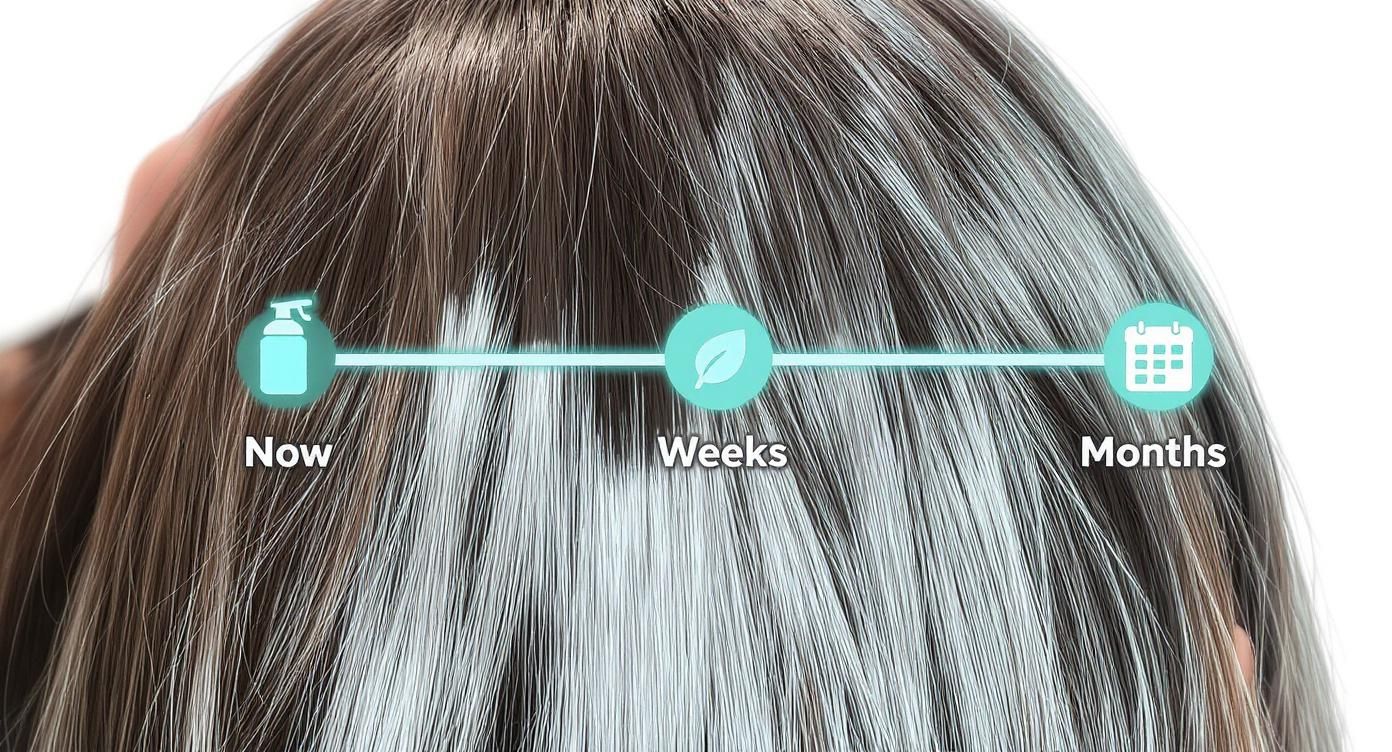
As you can see, getting a fuller look today is totally possible. But the real, foundational work of internal nutrition takes consistent effort over several months before you'll notice a big change in your hair's density and strength.
Here's a quick summary of how these three pillars work together to get you the results you want.
A Holistic Approach to Thicker Hair
| Strategy Pillar | Primary Goal | Key Actions | Time to See Results |
|---|---|---|---|
| Internal Health | Build stronger hair from the inside out | Nutrient-rich diet, hydration, targeted supplements (e.g., Staye) | 3-6 Months |
| External Care | Protect existing strands and support scalp health | Gentle washing, scalp treatments, minimizing heat and chemical damage | 1-3 Months |
| Styling | Create the immediate appearance of fullness | Volumizing products, proper blow-drying techniques, strategic haircuts | Instant |
This table really drives home the point that a comprehensive plan is your best bet. By combining these approaches, you're not just faking it—you're making it, while enjoying a fuller look along the way.
Nourishing Your Hair from the Inside Out
While the perfect shampoo or styling cream can give you a quick lift, the real secret to thicker, healthier hair starts on your plate. It’s a long game, but it’s the one that delivers lasting results. What you eat directly fuels your hair follicles, giving them the essential building blocks they need to construct strong, resilient strands.
Think of your diet as the foundation of a house. If you use cheap, weak materials, everything built on top will eventually suffer.
And this isn't just a wellness trend; it's a massive shift in how we approach hair care. The global market for hair thinning solutions was valued at USD 1.51 billion in 2024 and is expected to hit USD 2.75 billion by 2030. What's really telling is that multivitamins and supplements account for nearly 65% of those sales, proving that people are looking for solutions that work from the inside out.
The Building Blocks of Thicker Hair
At its core, your hair is mostly made of a protein called keratin. To produce it, your body needs a steady stream of amino acids—the molecules that link up to form proteins. If you're not getting enough protein in your diet, your body has to ration it. Since growing hair isn't exactly a life-or-death function, it's one of the first things to get put on the back burner.
Beyond protein, a few key micronutrients are absolutely non-negotiable for happy follicles.
- Iron: This is crucial for producing hemoglobin, which is responsible for carrying oxygen to all your cells for growth and repair—including the cells that kickstart hair growth. It's no surprise that low iron (anemia) is a very common cause of hair shedding.
- Biotin: A B-vitamin that’s essential for producing that all-important keratin. A true deficiency is rare, but getting enough can definitely support hair strength and cut down on brittleness.
- Zinc: This mineral plays a big part in hair tissue growth and repair. It also helps keep the oil glands around your follicles working just right.
- Vitamin C: Not just for colds! This powerful antioxidant helps protect follicles from damage caused by free radicals. Your body also needs it to create collagen, another protein that adds to hair's strength.
Key Takeaway: A balanced diet isn't just for your overall health; it's a targeted strategy for better hair. A shortfall in key nutrients like protein, iron, and zinc can directly slam the brakes on your hair's thickness and growth rate.
Crafting a Hair-Healthy Shopping List
The good news is that you don't need to completely overhaul your life to eat for better hair. It's more about making smart additions and swaps. The goal is to focus on whole, unprocessed foods that are naturally packed with the good stuff your hair craves.
Here’s a simple shopping list to get you started:
- Lean Proteins: Chicken, fish (salmon is a star for its omega-3s), eggs, and Greek yogurt.
- Plant-Based Powerhouses: Lentils, chickpeas, tofu, and quinoa are fantastic sources of protein, iron, and zinc.
- Leafy Greens: Spinach and kale are loaded with iron, vitamin A, and folate.
- Nuts and Seeds: Almonds, walnuts, chia seeds, and flaxseeds deliver zinc, omega-3s, and vitamin E.
- Colorful Fruits & Veggies: Berries, citrus fruits, bell peppers, and sweet potatoes are bursting with vitamin C.
By bringing this kind of variety to your meals, you're covering all your nutritional bases and creating the perfect internal environment for your follicles to get to work.
Supporting Your Body’s Collagen Production
Collagen is the protein that provides structure to your skin and is a key component in strengthening hair. While our bodies produce it naturally, that production starts to slow down as we age.
Instead of taking animal-based collagen, you can give your body the tools it needs to build its own. The magic lies in providing the right plant-based nutrients.
Your body uses amino acids like glycine, L-lysine, and L-proline as the direct precursors to build new collagen. When you combine them with essential co-factors like vitamin C and bamboo extract (a fantastic source of silica), you’re giving your internal collagen factory everything it needs to run smoothly. You can learn more about which foods that support collagen production work best in our detailed guide.
Focusing your diet on these collagen-supporting nutrients is about empowering your body's natural abilities. It’s a sustainable, long-term approach to getting the thick, healthy hair you’re after.
Mastering Scalp Care and Topical Treatments
While what you eat lays the foundation for hair growth from the inside, your scalp is the garden where it all happens. A healthy, well-cared-for scalp is the literal ground from which strong, thick hair can grow. Neglecting it is like trying to grow prize-winning roses in poor, compacted soil—you just won't get the best results.
This is where topical treatments and smart scalp hygiene really shine. By focusing on creating the perfect conditions for your hair follicles, you can seriously influence your hair's density and health.
Why a Clean, Stimulated Scalp Is a Game-Changer
Think of your scalp as an extension of the skin on your face. It gets clogged with product buildup, dead skin cells, and its own natural oils (sebum). When all that gunk accumulates, it can literally suffocate your hair follicles, getting in the way of new growth and making your hair look flat and lifeless.
Regular, gentle cleansing is your first line of defense. But a few extra steps can take your routine to the next level.
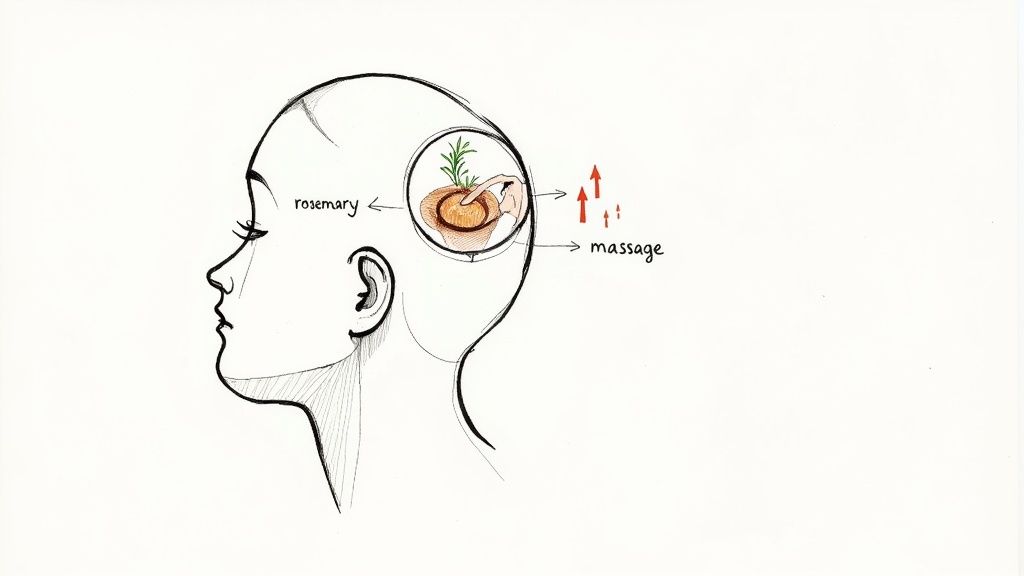
- Scalp Massage: Seriously, don't skip this. Manually stimulating your scalp with your fingertips for a few minutes each day is a fantastic way to boost blood circulation. That increased blood flow delivers more oxygen and nutrients right where they’re needed most—your hair follicles.
- Gentle Exfoliation: Once a week, try using a scalp scrub or a brush designed for exfoliation. This helps slough off all those dead skin cells and break down any stubborn product residue, clearing the runway for healthier growth and giving your roots an instant lift.
A clean, stimulated scalp isn't just a 'nice to have'—it's a non-negotiable part of any serious plan to make hair thicker. Blocked follicles cannot produce strong, healthy hair.
Choosing the Right Ingredients for Hair Thickness
The world of topical hair treatments can feel overwhelming, but a few key ingredients have genuinely proven themselves when it comes to supporting hair density. Knowing how they work helps you cut through the noise and pick what’s right for you.
And it's a booming market. The demand for hair thickener serums is projected to jump from USD 1.4 billion in 2025 to over USD 3.1 billion by 2035. This surge is largely driven by a growing preference for science-backed, bioactive ingredients, a trend you can read more about in these market trends on FutureMarketInsights.com.
This trend points to one thing: people want targeted, effective topicals. Here’s a look at some of the most popular ingredients you’ll find on the shelf.
Comparing Popular Hair Thickening Ingredients
When you're scanning labels, you'll see a few names pop up again and again. Each one works differently and is suited for different hair concerns. This quick comparison should help you narrow down your search.
| Ingredient | How It Works | Best For | Potential Side Effects |
|---|---|---|---|
| Minoxidil | A vasodilator that widens blood vessels to improve follicle function and can extend the hair's growth phase. | Those with androgenetic alopecia (pattern hair loss). | Scalp irritation, dryness, or unwanted hair growth in other areas. |
| Rosemary Oil | Believed to improve circulation to the scalp and may have properties that protect against hair loss, similar to minoxidil. | Individuals looking for a natural alternative to support hair growth. | Can cause scalp irritation if not properly diluted; may be too heavy for very fine hair. |
| Caffeine | Thought to help stimulate the hair shaft and block the effects of DHT, a hormone linked to hair loss. | People experiencing early-stage hair thinning. | High concentrations could potentially dry out the scalp for some users. |
| Ketoconazole | An antifungal agent in some shampoos that can reduce scalp inflammation and combat the effects of DHT. | Those with dandruff or inflammatory scalp conditions alongside thinning hair. | Dryness, irritation, and changes in hair texture. |
Ultimately, the best ingredient is the one that targets your specific cause of thinning without irritating your scalp. Don't be afraid to try a couple of different options to see what your follicles respond to best.
How to Apply Products for Maximum Effect
How you apply your products matters just as much as what’s in them. For serums and oils to actually work, they need to reach the scalp, not just get smeared on your hair.
- Start with a Clean Slate: Always apply treatments to a clean, towel-dried scalp. This ensures there isn't a layer of oil or old product blocking absorption.
- Part Your Hair: Create small sections all over your head to expose the skin. This lets you apply the product directly to the scalp instead of just coating the hair near the root.
- Use the Dropper: Apply the serum or oil directly onto the parted skin. Stick to the recommended amount—drenching your scalp won't speed up results, it'll just lead to greasy roots.
- Massage It In: Once you've applied the product, use your fingertips to gently massage your entire scalp for a minute or two. This not only ensures it’s spread evenly but also gives you that extra circulatory boost.
By mastering your scalp care and choosing the right topicals, you're adding another powerful tool to your hair-thickening arsenal, tackling the problem right at the source.
Styling Techniques for Instant Volume
While you’re busy nourishing your hair from the inside and giving your scalp some much-needed love, sometimes you just need a confidence boost right now. That’s where smart styling comes in.
With a few key techniques and the right products, you can create the illusion of fuller, more voluminous hair in the time it takes to get ready. Think of it as maximizing what you’ve got while your long-term strategies are working their magic behind the scenes.
The Art of the At-Home Blowout
A salon-quality blowout is one of the fastest ways to add incredible body and make hair look thicker. The secret isn't just heat—it's technique. A common mistake is blowing your hair in every direction, which just roughs up the hair cuticle and leads to frizz.
Instead, always point the nozzle of your blow dryer down the hair shaft, from root to tip. This simple shift smooths everything down, tamps down frizz, and adds a ton of shine. Healthier-looking hair automatically looks fuller.
For maximum lift, give this a try:
- Prep Your Roots: After towel-drying, spritz a root-lifting spray or work a lightweight volumizing mousse right at the scalp. This gives your hair a foundation to build on.
- Rough-Dry Upside Down: Flip your head over and rough-dry your hair until it's about 80% dry. This gets most of the moisture out fast and gives your roots an initial lift before you even pick up a brush.
- Section and Style: Flip back up and clip your hair into a few manageable sections. Using a round brush (boar bristle brushes are fantastic for creating smoothness), lift each section at the root and pull it taut as you dry, keeping that airflow pointed downwards.
The real trick stylists use is creating tension with the brush. Gently pulling the hair taut as you dry it smooths the strand and locks in that bouncy volume so it actually lasts.
Choosing Your Volumizing Arsenal
The right products are your best friends for instant body, but the wrong ones can weigh fine hair down in a heartbeat. A light touch is everything.
- Root-Lifting Sprays: These are designed to be applied directly to the scalp on damp hair. They give you lift exactly where you need it, so your style doesn't fall flat by noon.
- Volumizing Mousse: A golf-ball-sized dollop of a modern, airy mousse can add body all over without that crunchy, stiff feeling you might remember from the '90s.
- Dry Shampoo or Texturizing Powder: When your hair is dry, a little of this at the roots can work wonders. It soaks up oil and adds a bit of grit that physically props the hair up from the scalp. It's a lifesaver for second-day hair.
It’s no surprise the market for these products is booming. The global hair thickening spray market is on track to hit around USD 4.5 billion by 2033. This just goes to show how many people are looking for these effective, instant solutions. You can dive deeper into these market insights at DataInsightsMarket.com to see the trends for yourself.
Strategic Cuts and Color
Never underestimate the power of a good haircut. Your style and color can do a lot of heavy lifting to create the illusion of density.
A blunt cut, for instance, creates a clean, solid line at the ends, which instantly makes your hair look thicker and healthier. Layers can be tricky—too many can actually remove weight and make fine hair look stringy. If you want movement, ask your stylist for subtle, "invisible" layers that add shape without sacrificing that precious fullness.
Color is another fantastic tool for creating depth. Techniques like babylights or a soft balayage introduce different dimensions to your hair. The subtle contrast between lighter and darker pieces tricks the eye into seeing more texture and volume, giving your hair an instant boost.
When to Seek Professional Help for Hair Thinning
While diet, scalp care, and smart styling are fantastic first lines of defense, sometimes they just aren't enough to get to the root of the problem. You have to know when it’s time to take your concerns from your bathroom mirror to a doctor's office.
Honestly, thinning hair is often one of the first ways your body signals that something bigger is going on internally. Paying attention to these clues is the first step toward getting a real diagnosis and, more importantly, a treatment plan that actually works.
Red Flags That Point to a Deeper Issue
Your at-home strategies are perfect for boosting general hair health, but certain symptoms really do need a professional eye. If you’re nodding along to any of these, it’s time to book an appointment with your doctor or a dermatologist.
- Sudden, rapid hair loss: Are you suddenly seeing clumps in the shower drain or pulling way more hair from your brush than usual? This could be a sign of something like telogen effluvium, which is often triggered by a major physical or emotional event.
- Patchy hair loss: Finding smooth, round bald spots on your scalp (or anywhere else) is a classic sign of alopecia areata. This is an autoimmune condition, and it absolutely requires a medical diagnosis to manage properly.
- A painful, itchy, or burning scalp: If your scalp is constantly irritated, red, or scaly, you could be dealing with an inflammatory issue like psoriasis, seborrheic dermatitis, or even a fungal infection. All of these can seriously get in the way of healthy hair growth.
- A receding hairline or widening part: A little change over time is normal, but if you're a woman and notice your part getting progressively wider or your temples looking thinner, it could be androgenetic alopecia (pattern baldness). This condition responds best to medical treatments.
Trust your gut. If you feel like something is really wrong, it probably is. Over-the-counter products are made for general, mild thinning—not for hair loss driven by a medical condition. A professional can tell the difference, saving you a ton of time, money, and stress.
What to Expect at Your Appointment
Seeing a doctor about hair loss can feel a little daunting, but it's a pretty straightforward process. The whole point is to figure out exactly why your hair is thinning.
Your doctor will likely start by asking about your medical history, your diet, recent stress levels, and any medications you're taking. Be prepared to talk about your lifestyle—it all matters.
From there, they might do a few simple hands-on tests. A pull test is common, where they gently tug a small section of your hair to see how many strands come loose. They may also use a dermatoscope to get a magnified look at your scalp and hair follicles. In some cases, they'll order blood work to check for things like low iron, vitamin D deficiency, or a thyroid imbalance.
Advanced Medical Treatments for Thicker Hair
Once you have a diagnosis, your doctor can lay out a treatment plan that’s actually built for you. These options go way beyond what you can buy at the store and can deliver much more significant results.
Here are a few of the most common and effective medical treatments out there:
- Prescription Medications: This could mean oral meds like Finasteride (mostly for men) or Spironolactone (often prescribed for women) that target the hormones causing pattern hair loss. Your doctor might also prescribe a more potent topical Minoxidil solution than what's sold over the counter.
- Platelet-Rich Plasma (PRP) Therapy: This is a cool three-step process where your own blood is drawn, spun in a centrifuge to concentrate the platelets, and then injected back into your scalp. The theory is that this concentration of growth factors helps wake up dormant follicles and thicken the hair shaft.
- Low-Level Laser Therapy (LLLT): This is a non-invasive treatment that uses red light to kickstart cellular activity in your follicles. You can get it done in a clinic or even use an at-home device like a cap or comb. The goal is to nudge more of your hair into the active growth phase.
Deciding to see a professional is a huge, empowering step. It takes you out of the guessing game and puts you on a clear path toward getting back the thicker, healthier hair you want.
Common Questions About Making Hair Thicker
As you start working toward fuller, healthier hair, it’s totally normal for questions to pop up. You're putting in the work with your diet, scalp care, and styling, but a few uncertainties can linger. Here, we'll tackle the most common questions we hear, giving you clear, straightforward answers to keep you feeling motivated and confident.
Think of this as your go-to guide for those lingering doubts. We’ll get real about timelines, debunk a few myths around hair washing, and look at whether those popular supplements are actually worth it. Let's clear things up so you can move forward.
How Long Does It Realistically Take to See Thicker Hair?
This is the big one, isn't it? The honest answer is that it really depends on your approach, but any real, structural change takes patience. Hair growth is a slow and steady process—the average strand only grows about half an inch per month.
It helps to think about your results in two different timelines:
- Instant Gratification (Today): With the right styling tricks, you can make your hair look thicker almost immediately. A great blowout, a little root-lifting spray, or a bit of texturizing powder can create the illusion of volume and density in just a few minutes.
- Structural Improvement (3-6 Months): For your hair to become genuinely thicker and stronger from the inside out, you need to give your body time. It takes a while for the nutrients from your diet and supplements to nourish the follicle, build a stronger strand, and for that new hair to grow long enough to actually contribute to your hair's overall density.
Don't get discouraged if you don't see a huge change after a month of eating well. Remember, you're building the foundation for healthier hair. The new growth just starting to emerge from your scalp today is what will give you that fuller look in the months ahead.
Will Washing My Hair Less Often Make It Thicker?
This is a classic myth that needs a bit of unpacking. The thinking behind it is that washing less means less wear and tear on your hair, which is true to an extent. However, an unclean scalp is one of the biggest roadblocks to healthy hair growth.
When you go too long between washes, a mix of oil, dead skin cells, and product residue can build up. This gunk can clog your hair follicles, leading to inflammation that can actually get in the way of new, healthy strands coming through.
The secret isn't washing less—it's washing smarter. You need to find a balance that keeps your scalp clean without stripping your hair of its natural moisture.
- If your hair gets oily quickly, washing every day or every other day with a gentle, sulfate-free shampoo is probably your best bet.
- If you have a drier hair type, washing just two or three times a week might be perfect.
At the end of the day, a clean, balanced scalp is far more important for encouraging thick hair than just stretching out your wash days.
Are Collagen Supplements Really Effective for Hair?
Collagen is the most abundant protein in our bodies and a crucial building block for your hair's structure. As we get older, our natural collagen production slows down, which can make hair look finer or feel more brittle. So, can supplements help? Yes—but the type of supplement you choose really matters.
Instead of just taking animal-based collagen, a more effective strategy is to give your body the raw materials it needs to produce its own. This is where plant-based collagen boosters shine. They supply your body with the essential amino acids—like glycine, L-lysine, and L-proline—that are the direct precursors to collagen synthesis.
When you pair these amino acids with key co-factors, you create a powerful internal support system. For instance, Vitamin C is absolutely essential for the collagen production process to even begin. We dive deeper into this connection in our guide to finding the best Vitamin C for collagen production. By fueling your body's own "collagen factory," you’re not just supporting your hair, but your skin and joints, too.
This approach empowers your body to do what it does best, leading to more sustainable, long-term results for hair strength and vitality.
At Staye, we believe in nourishing your body from within. Our plant-based collagen booster is formulated with the specific amino acids and vitamin co-factors your body needs to support its own natural collagen production for stronger, healthier-looking hair.