

When you're looking for the best supplements for tendon repair, the science is pretty clear: a small group of specific nutrients does most of the heavy lifting. We're talking about evidence-backed players like hydrolyzed collagen, vitamin C, and key amino acids like glycine and proline. These aren't just random ingredients; they are the fundamental raw materials your body desperately needs to rebuild and strengthen damaged tissue.
Unlocking Your Body's Natural Repair Kit
Picture a damaged tendon as a frayed rope. Its once strong, tightly woven fibers have become weak, disorganized, and inflamed. You can't just hope it gets better. To fix it, you need to supply the right materials to meticulously re-weave those fibers, ideally making them even stronger than before. This is where supplements come in—they act as the high-quality thread and lubricant your body's internal repair crew needs to get the job done right.
Now, this isn't about finding some magic pill. The real strategy is to provide the building blocks your body is already hardwired to use. When you combine targeted supplementation with a solid recovery plan—think proper nutrition, strategic rest, and physical therapy—you create the perfect environment for healing. This synergy is what helps you bounce back faster from an acute injury or finally get a handle on the nagging pain of chronic tendinopathy.
The Foundational Supplements for Tendon Health
The most effective game plans for tendon repair all focus on a few key players that work together to rebuild collagen. Collagen is the main protein that gives tendons their incredible strength and flexibility, and supporting it is non-negotiable.
Here’s a quick look at the essentials:
- Hydrolyzed Collagen: This is your direct supply line of amino acid building blocks—specifically glycine, proline, and hydroxyproline—that are needed to construct new, healthy tendon fibers.
- Vitamin C: Think of this as the foreman on the job site. It's an essential co-factor in collagen synthesis, and without enough of it, the entire rebuilding process grinds to a halt.
- Specific Amino Acids: Beyond what's in a basic collagen supplement, amino acids like L-lysine are also crucial for cross-linking collagen fibers, which adds stability and resilience to the repaired tissue.
By understanding how these core nutrients work, you can stop guessing and start making informed choices that actively support your recovery. They give your body the fundamental resources it needs to mend that frayed rope, one strong fiber at a time.
This guide is built to give you clear, practical recommendations based on real science. We'll dive into how each supplement works, what the optimal doses are, and how to spot a high-quality product. The goal is to empower you with the knowledge to support your body’s natural healing power and get you back to moving without pain.
To get us started, here’s a quick summary table of the top supplements we'll be covering.
Top Supplements for Tendon Repair at a Glance
This table breaks down the most effective supplements for tendon health, highlighting their primary role in the healing process and the key benefits they deliver. It’s a great way to see how each piece of the puzzle fits together.
| Supplement | Primary Role in Tendon Repair | Key Benefit |
|---|---|---|
| Hydrolyzed Collagen | Provides essential amino acid building blocks | Directly fuels new collagen fiber synthesis |
| Vitamin C | Acts as a co-factor for collagen production | Enables the chemical reactions for tissue repair |
| Amino Acids | Support collagen structure and stability | Strengthens and organizes new tendon tissue |
| Omega-3s | Help resolve chronic inflammation | Creates a better environment for healing to occur |
Each of these plays a distinct but complementary role. When used together, they create a powerful support system that can significantly improve your body's ability to heal.
How Your Tendons Actually Heal
To pick the right supplements for tendon repair, you first have to get a handle on how your body actually mends these critical tissues. Think of your tendons as the body's high-tension cables, connecting muscle to bone. They’re built mostly from densely packed collagen fibers, which is what gives them their incredible strength and resilience.
When a tendon gets injured, it doesn't just magically get better. It goes through a slow, methodical repair process with very distinct phases.
Understanding this journey is key because different nutrients play bigger roles at different times. The whole thing is a marathon, not a sprint, and supporting it correctly can be the difference between a full recovery and a nagging, chronic problem. This growing awareness is a big reason why the global tendon repair market, valued at USD 2.4 billion, is expected to grow so much in the next few years. You can read more about these market trends and their drivers.
The First Responders: The Inflammation Phase
Right after an injury, your body kicks off the inflammation phase. This is your internal emergency response system springing into action. Specialized cells flood the area to start cleaning up damaged tissue and cellular debris.
While "inflammation" often gets a bad rap, this initial stage is absolutely essential for healing to even begin.
Imagine a road crew showing up to fix a giant pothole. Before they can lay any new asphalt, they have to clear out all the loose gravel, dirt, and broken bits. That’s exactly what’s happening here. This phase usually lasts for a few days and preps the site for the real rebuilding work to come.
The Construction Crew: The Proliferation Phase
Once the area is cleared, the proliferation phase gets underway. This stage can last for several weeks, and it’s when your body starts laying down new raw materials. Cells called fibroblasts arrive on the scene and start producing huge amounts of new, but pretty disorganized, Type III collagen.
Think of this as the road crew just dumping fresh asphalt into the pothole. It’s messy and unstructured, but it fills the gap. This new tissue is weak and immature, which is why tendons are so vulnerable to re-injury during this period. The body is focused on quantity over quality at this point, just trying to bridge the damaged area as fast as it can.
This is where a steady supply of collagen building blocks becomes critical. To get a better handle on the science, check out our guide on what exactly is collagen and why is it important.
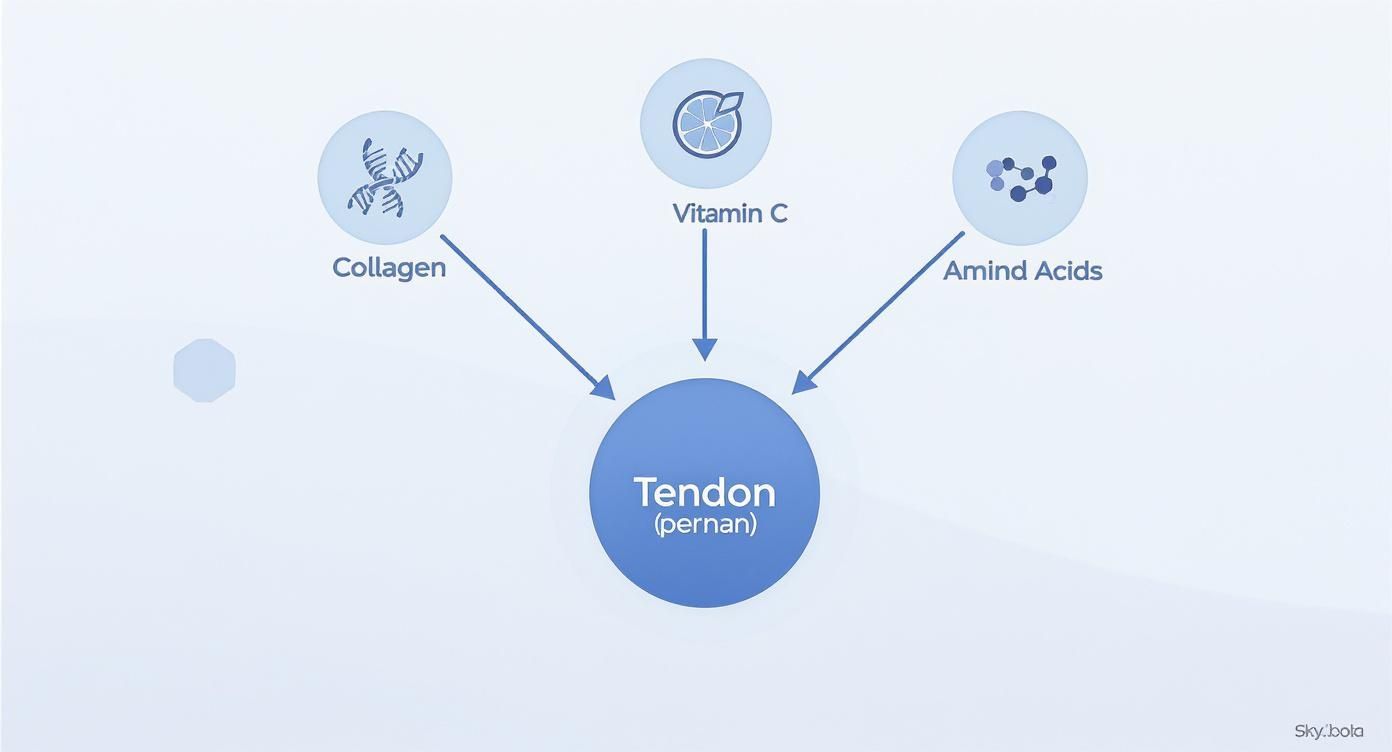
As you can see, tendons are built from collagen, which itself needs specific amino acids and Vitamin C to be made.
The Finishing Touches: The Remodeling Phase
Finally, we hit the longest stage of all: the remodeling phase. This is where the magic really happens. Over many months—and sometimes lasting more than a year—the body works to mature the newly formed tissue. That weak, disorganized Type III collagen is gradually replaced by the much stronger and more durable Type I collagen.
This is like the road crew coming back to smooth, compact, and seal the new asphalt, making it just as strong as the original road. The collagen fibers line themselves up in the direction of stress, giving the tendon back its ability to handle high loads.
Key Takeaway: Tendon healing is a long-term project. The remodeling phase, where the tendon regains its ultimate strength, can last for over a year. Patience and consistent nutritional support are essential for building resilient, healthy tissue.
This methodical, multi-stage process shows why a quick fix just isn't possible. Each phase has unique needs, and giving your body the right nutrients at the right time helps ensure the final repair is strong, flexible, and ready for action.
The Core Building Blocks for Tendon Regeneration

When your body needs to rebuild a tendon, think of it as a microscopic construction project. To get the job done right, your internal work crew needs a steady supply of very specific raw materials.
Without these fundamental building blocks, the entire repair process can grind to a halt. You're left with weak, disorganized tissue that's just waiting to get injured again. This is why certain nutrients aren't just helpful extras—they're non-negotiable for any serious tendon recovery plan.
The two most important players here are hydrolyzed collagen and its essential partner, Vitamin C.
Hydrolyzed Collagen: The Primary Raw Material
Think of hydrolyzed collagen as the stack of bricks delivered directly to your tendon's construction site. Since tendons are made of over 85% Type I collagen, providing the exact amino acids needed to build it is the most direct way to fuel the healing process.
When you take hydrolyzed collagen, it's broken down into its core components—especially glycine, proline, and hydroxyproline.
These amino acids get absorbed into your bloodstream, making them available for your fibroblast cells—the body's "collagen factories"—to get to work. This direct supply gives your body the precise ingredients it needs to spin new, healthy tendon fibers.
Research from UC Davis Health has shown that taking collagen supplements leads to a measurable increase in circulating markers of new collagen synthesis. This provides clear evidence that the building blocks are not only being absorbed but are actively being put to work where they are needed most.
Basically, supplementing with hydrolyzed collagen ensures the supply chain for tendon repair remains unbroken. It’s a foundational piece of the puzzle.
Vitamin C: The Spark Plug for Production
If collagen is the pile of bricks, then Vitamin C is the master mason who puts them all together. This vital vitamin acts as a critical helper molecule in a process called collagen hydroxylation.
Simply put, without enough Vitamin C, your body can't complete the chemical reactions needed to form stable, strong collagen fibers.
It’s like trying to build a brick wall without any mortar. You could have all the bricks in the world, but the structure would be flimsy and fall apart. That's exactly what happens when you try to build new tendon tissue without adequate Vitamin C—the process stalls, and the tissue that forms is poor quality.
This synergy is what makes the combination so powerful. One provides the raw materials, and the other enables the construction. It’s a perfect partnership for tissue regeneration. For a deeper dive into this relationship, check out our guide on supplements for collagen production.
Nutrient Timing: Maximizing Delivery to the Tendon
Knowing what to take is only half the battle. Knowing when to take it can make a massive difference.
Tendons have a notoriously poor blood supply compared to muscles, which makes it tricky to get nutrients directly to the injury site. But we can use a science-backed strategy to get around this.
It's all about nutrient timing. Research shows that a "loading" strategy can dramatically increase how many collagen-building amino acids actually reach your connective tissues.
Here’s how to do it:
- Pre-Load Before Rehab: Take your hydrolyzed collagen and Vitamin C supplement about 30-60 minutes before starting your physical therapy or rehab exercises.
- Stimulate Blood Flow: The light, targeted movements of your exercises will temporarily boost blood flow to the injured tendon.
- Maximize Uptake: This increased circulation acts like a delivery service, transporting those amino acids you just consumed directly to the cells that need them for repair, right when they're being stimulated.
This simple but powerful trick turns your rehab session into a targeted nutrient delivery mission. It ensures the building blocks you consume are shuttled directly to the job site instead of just floating around aimlessly. By timing your intake, you create an environment ripe for healing, helping every stretch and every rep contribute directly to a stronger, more resilient tendon.
Managing Inflammation for Better Healing
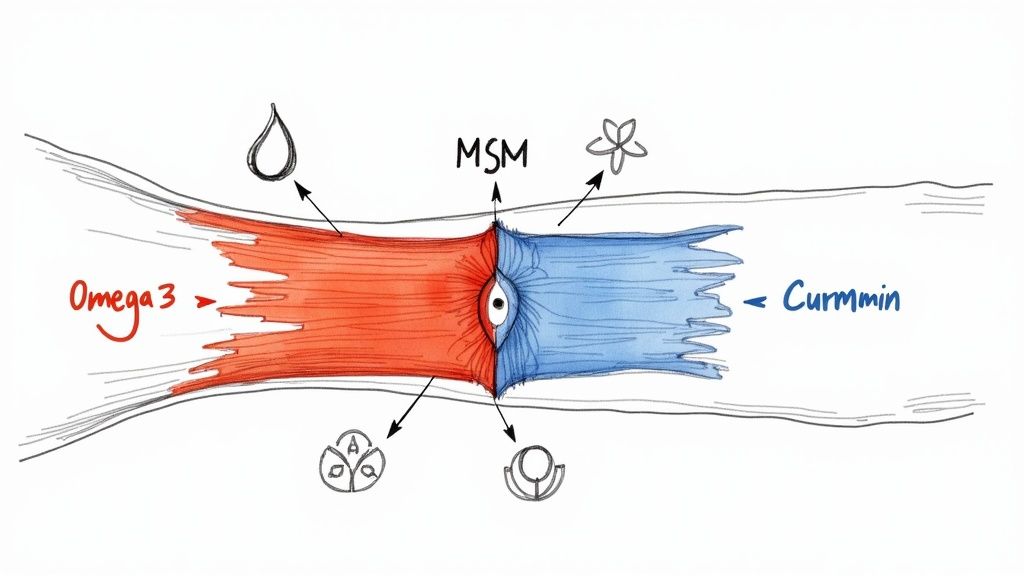
Successfully rebuilding a tendon is about more than just laying down new collagen. You also have to create the right environment for that construction to happen.
If chronic inflammation is raging in the background, it’s like trying to build a house during an earthquake. The entire project is compromised.
While the first burst of inflammation is a necessary part of healing, lingering inflammation can stall your recovery indefinitely. It stops the body from moving on to the crucial rebuilding and remodeling phases. This is where certain supplements really shine—not by shutting down inflammation entirely, but by helping to resolve it and bring things back into balance.
Omega-3 Fatty Acids: The Inflammation Resolvers
Think of Omega-3 fatty acids—specifically EPA and DHA—as your body's diplomatic peacekeepers. Their main job isn't to stop that initial, helpful inflammatory response. It's to guide it toward a peaceful conclusion.
They do this by producing special molecules called pro-resolving mediators (SPMs) that actively signal the end of inflammation. This is what keeps the process from becoming chronic and destructive. For your tendons, it means creating a calmer, more productive healing zone where your fibroblast cells can get to work without interference.
This targeted action helps ensure your body’s natural healing cascade moves smoothly from one stage to the next, which is essential for building strong, healthy new tissue.
MSM: A Dual-Action Support Player
Methylsulfonylmethane (MSM) is a unique compound that plays a fascinating dual role in tendon health. It offers both structural support and anti-inflammatory benefits.
At its core, MSM is a rich, organic source of sulfur, a mineral that's absolutely critical for all your connective tissues. Sulfur helps form the cross-links that give collagen its strength and stability. Think of it as the rivets holding a steel bridge together. Without enough, your new tendon tissue might not have the resilience it needs to handle daily forces.
Beyond its structural role, MSM also helps dial down inflammatory pathways. It can reduce oxidative stress and inhibit the production of pro-inflammatory signals, calming the area around the injured tendon so it can repair more efficiently.
This makes MSM a valuable addition, as it simultaneously provides a key building material while helping to manage the inflammatory "noise" that can disrupt healing.
Natural Compounds: Curcumin and Boswellia
For centuries, natural compounds have been used to manage inflammation and discomfort. Two of the most well-researched options are curcumin (from turmeric) and Boswellia serrata (from frankincense), and they work by gently modulating the body's inflammatory response.
-
Curcumin: This powerful antioxidant is known for influencing multiple inflammatory pathways. Its effects are systemic, helping to lower the overall inflammatory load that can contribute to chronic tendon pain and delayed healing.
-
Boswellia Serrata: This plant extract contains boswellic acids, which have been shown to inhibit a specific pro-inflammatory enzyme. This targeted action can help reduce the pain and swelling linked to tendinopathies, making it easier to do your necessary rehab exercises.
Both of these compounds offer a supportive approach to creating a better healing environment. To explore more about this topic, you can learn about other natural remedies for joint pain in our detailed guide. When combined with foundational building blocks like collagen and Vitamin C, these anti-inflammatory agents help create a holistic strategy that addresses both the structural and environmental needs of a healing tendon.
How to Choose High-Quality Supplements
https://www.youtube.com/embed/aHkXmgay9aI
Walking down the supplement aisle can feel pretty overwhelming, especially when you’re on a mission to find something as specific as support for tendon repair. The market is huge and largely unregulated, which makes it tough to tell which products are the real deal and which are just clever marketing. Making a smart choice is critical if you want to invest in something that’s both safe and actually effective for your recovery.
The interest in this area isn't just in your head; the global market for tendon and ligament support supplements has already hit USD 2.17 billion. That number tells us that countless people are actively looking for nutritional fixes for their aches and pains, making it all the more important to choose wisely. You can dig into more insights on the tendon supplement market to see the trends for yourself.
To cut through the noise, you need a simple checklist.
Look for Third-Party Certifications
The single most important stamp of approval you can find on a supplement is a third-party certification. Because the FDA doesn't pre-approve dietary supplements for safety or effectiveness, this independent verification is your best guarantee that you're getting what you pay for. These certifications confirm that what's on the label is actually in the bottle and that the product is clean from harmful junk.
Think of it as a home inspection for your supplements. When a company gets its products certified by a reputable organization, it means they've voluntarily put their formula through some seriously rigorous testing.
Keep an eye out for these logos on the packaging:
- NSF Certified for Sport: This is the gold standard, especially for athletes. It not only verifies label claims but also tests for over 270 banned substances and ensures there are no unsafe levels of contaminants.
- Informed-Sport: This certification also tests every single batch of a product for prohibited substances before it ever hits the market, giving you an extra layer of confidence.
Choosing a product with one of these certifications is the fastest way to get peace of mind about its purity and potency. It takes the guesswork out of the equation and protects you from wasting money on something ineffective or, worse, contaminated.
Prioritize Bioavailability and Effective Dosing
Once you’ve confirmed a supplement is clean, the next question is: can your body actually use it? The answer comes down to two things: bioavailability and dosing.
Bioavailability is just a fancy word for how well your body can absorb and put a nutrient to work. For instance, hydrolyzed collagen is far better for tendon repair because the protein has already been broken down into smaller, easier-to-absorb peptides. Your body can grab these building blocks and get them to your tendons much more efficiently than it could with clunky, non-hydrolyzed forms.
Dose is just as important. A lot of products will sprinkle in a trendy ingredient but in such a tiny amount that it does absolutely nothing. When you’re looking for supplements to support tendon repair, you need to make sure the key players show up in clinically relevant amounts.
- Hydrolyzed Collagen: The research points to a sweet spot of 10-20 grams per day to really kickstart collagen synthesis in your tendons.
- Vitamin C: Look for at least 50 mg per serving to make sure the collagen has the co-factor it needs to get the job done.
Before you start any new regimen, it's always a good idea to chat with a healthcare professional. They can help you figure out the right approach based on your specific needs and health status, ensuring you have a safe and effective plan to get you back in action.
Quality Checklist for Tendon Support Supplements
To make things even simpler, here’s a quick-glance table to help you vet any supplement you’re considering. Think of this as your cheat sheet for spotting high-quality formulas that are worth your money.
| Quality Factor | What to Look For | Why It Matters |
|---|---|---|
| Third-Party Testing | Logos from NSF Certified for Sport or Informed-Sport on the label. | This is your independent guarantee of purity and potency. It confirms no banned substances or harmful contaminants are present. |
| Bioavailable Ingredients | Clinically-proven forms like hydrolyzed collagen peptides, or specific chelated minerals. | Your body can't use what it can't absorb. Bioavailable forms ensure the nutrients actually get where they need to go. |
| Effective Dosing | Clinically-backed doses, like 10-20g of hydrolyzed collagen and at least 50mg of Vitamin C. | "Fairy dusting" with tiny amounts of an ingredient is useless. The dose must be high enough to produce a therapeutic effect. |
| Transparent Labeling | A clear list of all ingredients and their amounts, without hiding behind "proprietary blends." | You deserve to know exactly what you're putting into your body. Vague labels can hide ineffective dosages. |
| No Unnecessary Fillers | A clean ingredient list without artificial colors, sweeteners, or cheap fillers like magnesium stearate. | Extra junk doesn't help your tendons heal and can sometimes cause unwanted side effects. The focus should be on active ingredients. |
Using this checklist will empower you to look past the flashy marketing and choose a supplement that genuinely supports your body’s healing process. It’s about making an informed decision that helps you recover safely and effectively.
Frequently Asked Questions About Tendon Repair Supplements
Diving into the world of supplements can feel a bit overwhelming, and it's natural to have questions. Let's clear up some of the most common ones about supplements for tendon repair so you know exactly what to expect on your healing journey.
How Long Until I See Results?
This is the big one, and the honest answer is: tendon healing is a marathon, not a sprint. While you might start to feel a little less sore within a few weeks, the real, deep structural repair is happening on a much longer timeline.
You're typically looking at 3 to 6 months of consistent supplementation before you see measurable improvements in tendon strength and integrity. And this isn't a magic pill—it has to be paired with a smart physical therapy program to make sure that new tissue forms correctly. Patience really is your best friend here.
Can't I Just Get These Nutrients From Food?
A healthy, nutrient-packed diet is absolutely the foundation of good recovery, but sometimes it just isn't enough. While you can get many of these key nutrients from food, hitting the high, therapeutic doses needed to repair damaged tissue is incredibly difficult through diet alone.
For instance, to get a 15-gram dose of the specific amino acids needed to build collagen, you'd have to eat a very large amount of bone broth or certain cuts of meat every single day. For most people, that’s just not practical. Supplements give you a concentrated, targeted dose designed to meet the high demands of a healing body.
Key Insight: Think of supplements not as a replacement for a good diet, but as a strategic tool. They deliver a concentrated supply of the exact raw materials your body needs for repair, in quantities that are tough to get from food alone.
Should I Stop Taking Supplements Once My Tendon Feels Better?
Feeling better is a huge milestone, but it doesn't mean the work is done. Once the pain subsides, your tendon enters its most important stage: the remodeling phase. This can last for over a year.
During this critical time, the new, fragile tissue matures and organizes itself into a strong, resilient structure. Continuing with foundational support like collagen-building amino acids and vitamin C gives your body the resources it needs to finish the job properly. This ongoing support helps maximize your tendon's final strength and can dramatically lower your risk of re-injuring it down the line.
For anyone looking for a plant-based way to fuel the body's own collagen production, Staye offers a clean and effective formula. It's designed to provide the essential amino acids and co-factors like Vitamin C that your connective tissues need to rebuild from the inside out. You can learn more and start your journey to stronger tendons at https://shopstaye.com.