

Improving your skin’s elasticity isn’t about finding a single magic potion. It’s a commitment to a smarter, more holistic approach that combines targeted nutrition, a consistent skincare routine, and a few key lifestyle tweaks.
The real goal is to work with your skin—protecting the collagen you already have while nudging your body to produce more. This is how you restore that natural firmness and bounce we all want.
Understanding Your Skin's Firmness
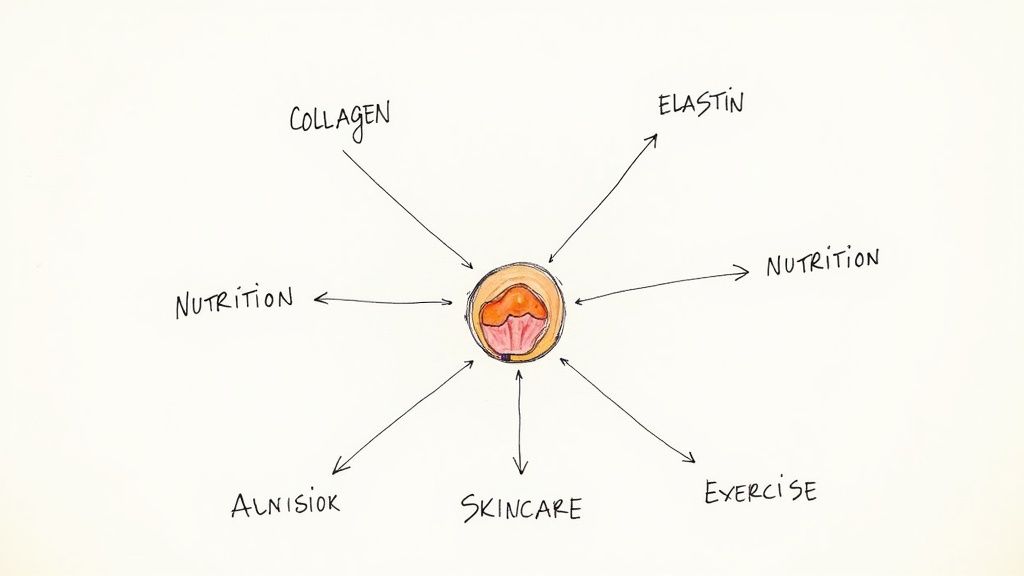
When we talk about skin elasticity, we’re really just describing how well your skin can stretch and snap back into place. Think of it like a brand-new rubber band—it's flexible, strong, and resilient.
This amazing ability comes down to two powerhouse proteins found deep in your skin’s dermal layer: collagen and elastin.
Collagen is the scaffolding. It provides the structural framework that gives your skin its strength and firmness. Meanwhile, elastin, just like its name suggests, is what allows your skin to be flexible and return to its original shape after you smile, squint, or pinch it.
The Key Players In Skin Elasticity
So, what determines the health of these vital proteins? A few key factors are at play, and understanding them is the first step to making a real difference.
- Age: It’s a fact of life. As we get older, our bodies naturally slow down the production of both collagen and elastin. This is the main internal reason our skin becomes looser and thinner over time.
- Sun Exposure: UV radiation is public enemy number one for skin elasticity. It actively breaks down collagen and elastin fibers, speeding up the appearance of sagging and wrinkles in a process called photoaging.
- Lifestyle Factors: Things like smoking, a diet loaded with processed sugar, and not getting enough sleep can all generate free radicals. These are unstable molecules that cause oxidative stress, which in turn damages skin cells and degrades those structural proteins we need.
- Dehydration: When your skin is thirsty, its protective barrier gets weaker. This not only makes fine lines look more obvious but also compromises the overall health and plumpness of your complexion.
In short, any successful plan to improve skin elasticity has to do two things at once: protect the collagen and elastin you already have from damage, and actively encourage your body to make more.
This guide is designed to give you a clear, actionable roadmap that goes beyond generic advice. To give you a bird's-eye view of the core strategies we'll be diving into, the table below breaks down the four pillars of achieving firmer, more resilient skin.
For a deeper dive, you can also explore our article on what exactly is collagen and why is it important.
The Four Pillars of Improving Skin Elasticity
Here's a quick summary of the core strategies this guide covers. Think of it as your cheat sheet for building a comprehensive plan.
| Strategy Pillar | Primary Goal | Key Actions |
|---|---|---|
| Nutrition & Hydration | Build firm skin from within | Prioritize antioxidant-rich foods, amino acids, and vitamin C; ensure adequate water intake. |
| Topical Skincare | Protect and stimulate externally | Use ingredients like retinoids and peptides; apply broad-spectrum SPF daily. |
| Exercise & Movement | Boost circulation and tone | Incorporate resistance training and aerobic exercise; practice facial massage. |
| Professional Support | Accelerate results safely | Consider treatments like microneedling or radiofrequency under expert guidance. |
Each of these pillars plays a crucial role, and when you combine them, you create a powerful system for supporting your skin's long-term health and vitality. Let's get into the details of each one.
The Role of Nutrition and Hydration
While all the creams and serums in the world work on the surface, the real foundation for firm, bouncy skin is built from within. What you eat and drink quite literally becomes the raw material your body uses to build and protect its collagen and elastin supply.
Think of it less like a diet and more like stocking the shelves of your skin's internal repair shop. You can't expect high-quality repairs if you're only supplying subpar materials. Without the right nutrients, even the most expensive skincare routine will never deliver on its promises.
The Building Blocks of Better Skin
Your skin can’t just magically create more collagen. It needs a specific set of ingredients, and your diet is the primary place to get them.
- Vitamin C: This is the absolute non-negotiable for collagen synthesis. Without enough Vitamin C, the whole production line grinds to a halt. It’s the key that helps link amino acids together, forming those strong, resilient collagen fibers.
- Amino Acids: Specifically, you need glycine, proline, and lysine. These are the direct precursors—the actual bricks and mortar—of collagen. A steady supply is essential for building the protein strands that give your skin its structure.
- Zinc and Copper: Think of these trace minerals as the skilled support crew. Zinc is vital for cell repair, while copper helps activate an enzyme that cross-links collagen and elastin, making the whole structure stronger and more durable.
You'll find these nutrients most readily in whole foods. Citrus fruits, bell peppers, and broccoli are packed with Vitamin C. Lean meats, bone broth, and legumes are fantastic sources of those crucial amino acids.
Foods That Fight Back
Building new collagen is only half the battle. You also have to protect what you already have. This is where antioxidants come in. They are your skin's defense force against free radicals—nasty, unstable molecules from things like UV rays and pollution that chew through your skin's support structure.
Your diet can be one of your most powerful defenses against the environmental factors that degrade skin elasticity. Eating a variety of antioxidant-rich foods helps shield your skin from the inside out.
Imagine antioxidants as your skin's internal bodyguards. They patrol your system, neutralizing threats before they can do any real damage to the delicate collagen and elastin network keeping your skin firm.
Your Skin-Firming Shopping List
Making a conscious effort to add these foods to your weekly meals can make a real, visible difference in your skin's health.
| Nutrient Group | Key Foods for Your Shopping List | Why It Helps |
|---|---|---|
| Antioxidants | Blueberries, raspberries, spinach, kale | Protects existing collagen from free radical damage. |
| Healthy Fats | Salmon, avocados, walnuts, chia seeds | Omega-3s reduce inflammation and support the skin's moisture barrier. |
| Amino Acids | Chicken, fish, tofu, bone broth, beans | Provides the direct building blocks for new collagen fibers. |
| Vitamin C | Oranges, strawberries, bell peppers, kiwi | Absolutely essential for the collagen synthesis process. |
A simple rule of thumb? A colorful plate is usually a skin-healthy plate. All those vibrant pigments are a sign you're getting a wide range of supportive phytonutrients.
Don't Forget to Drink Up
This might be the simplest yet most overlooked piece of the puzzle. Your skin cells are desperate for water, and even mild dehydration can instantly make fine lines and sagging look so much worse.
Water is what maintains your skin's turgor—that plump, resilient feeling that comes from well-hydrated cells. When you're running low, your skin just doesn't have that same bounce. Aim for around eight glasses of water a day, but don't forget that water-rich foods like cucumber, watermelon, and celery also count toward your total.
This inside-out approach is powerful, and you can give it an extra boost. To learn more about how certain compounds can help, check out our guide on the best supplements for skin elasticity. Ultimately, combining a nutrient-dense diet with smart supplementation is the most effective way to rebuild your skin from deep within.
Getting Serious With Your Skincare Routine
Beyond what you eat and drink, your daily skincare routine is where you get to work directly on your skin's texture and resilience. A smart regimen does more than just moisturize; it's a way to communicate with your skin cells, nudging them to act younger. The goal is simple: protect the collagen and elastin you have, and kickstart the production of more.
And let's be clear—this isn't about hoarding a cabinet full of expensive jars. It's about consistency and using a handful of ingredients with solid science behind them. When you know what these ingredients do and how they play together, your daily routine becomes a powerful strategy for better skin elasticity.
The Heavy Hitters: Core Ingredients for Firmer Skin
When you’re scanning ingredient labels, there are three categories that really stand out for their ability to rebuild and protect your skin’s foundation. These are the absolute cornerstones of any routine focused on firming and anti-aging.
-
Retinoids (Vitamin A Derivatives): These are the gold standard for a reason. Retinoids, from over-the-counter retinol to prescription-strength tretinoin, speed up cell turnover. This process pushes away dull, old cells to make room for fresh, healthy ones, which leads to smoother texture and, over time, a noticeable boost in collagen.
-
Peptides: Think of peptides as tiny messengers. These short chains of amino acids send signals to your skin cells, telling them to get to work on specific jobs, like making more collagen. Different peptides have different missions, but many are designed specifically to support firmness and soften the look of wrinkles.
-
Hydrators (like Hyaluronic Acid): While it doesn't build collagen directly, hyaluronic acid is a moisture-binding superstar. It can hold up to 1,000 times its weight in water, pulling that moisture into the skin for an instant plumping effect. Keeping your skin hydrated is non-negotiable for a healthy skin barrier and it works wonders to immediately diminish the look of fine lines.
Layering Products for Maximum Impact
The order you apply your skincare in matters. A lot. Applying products in the wrong sequence can make them less effective or even cause irritation. The simplest rule to follow is to go from the thinnest to the thickest consistency.
- Cleanse: Always start with a clean canvas. A gentle cleanser gets rid of impurities without stripping your skin's natural oils, setting it up to absorb all the good stuff that comes next.
- Treat (Actives): This is the slot for your most powerful products. Apply your peptide serum here, or your retinoid (which is best used at night). Give it a minute or two to sink in completely.
- Hydrate: Now, layer on your hyaluronic acid serum or a nourishing moisturizer. This step is all about locking in moisture and supporting your skin's protective barrier.
- Protect (AM Routine): In the morning, this is the final, most crucial step. Always finish with sunscreen.
Sun protection isn't just an afterthought; it's the single most important thing you can do for your skin. UV exposure actively breaks down collagen and elastin, basically undoing all the effort you put in with your other products. A broad-spectrum sunscreen with SPF 30 or higher is non-negotiable. Every. Single. Day.
The Undeniable Power of Sunscreen
If you take only one piece of advice away from this, make it this one: wear sunscreen daily. UVA rays go deep into the dermis, where they unleash enzymes that chew up your skin's structural proteins. This is called photoaging, and it's the number one external cause of sagging, wrinkles, and lost firmness.
Consistent sunscreen use is your best defense. It shields your existing collagen and elastin from that daily assault, giving your skin a fighting chance to repair and rebuild itself.
This simple diagram shows how what you eat directly fuels the building and protection of your skin.
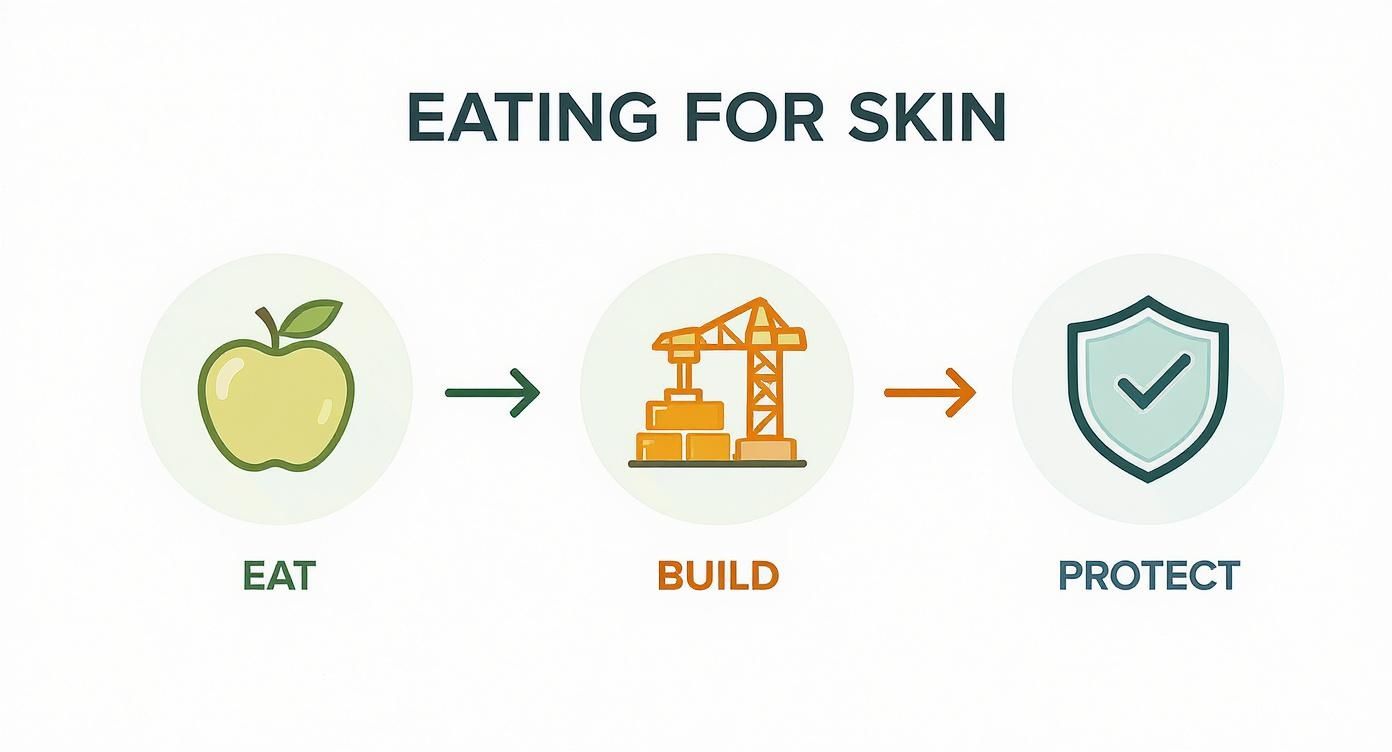
The visual drives home a powerful loop: your food provides both the building blocks and the protective shield your skin needs to maintain its structure.
And the data backs this up. Clinical studies consistently show that targeted topical treatments can significantly improve skin elasticity by boosting hydration and stimulating new collagen growth. In trials with follow-ups at 56 days, people saw real enhancements in skin smoothness and firmness, plus fewer visible wrinkles after using advanced formulas. This often happens because the ingredients immediately ramp up skin moisture—a key factor for elasticity. You can discover more about these effective anti-aging statistics if you want to dive into the data.
This evidence confirms that a well-formulated routine delivers real, measurable results. Your daily skincare isn't just a ritual; it's a direct investment in the long-term health and structural integrity of your skin.
You know that feeling after a great workout? The one where your skin has that healthy, vibrant glow? That’s not just in your head. While we often focus on nutrition and skincare, the way you move your body plays a huge role in your skin's firmness and overall health.
Regular exercise isn't just for your heart and muscles—it's a powerful tool for rejuvenating your skin, right down to the cellular level.
The connection is actually pretty simple. When you get your heart pumping, you dramatically increase blood flow. This supercharged circulation delivers a fresh supply of oxygen and key nutrients to every part of your body, skin included. Think of it as feeding your skin from the inside out.
This process doesn't just nourish your skin cells; it also helps flush out waste products more efficiently. The result is a brighter complexion and an environment that’s perfectly primed for repair and regeneration.
Build a Better Foundation with Strength Training
When it comes to boosting skin elasticity, not all workouts are created equal. While any movement is a good thing, resistance training has some particularly exciting benefits for your skin’s underlying structure.
Lifting weights or doing bodyweight exercises does more than just build muscle. It can actually help thicken the dermal layer of your skin. A stronger, more robust dermis provides better support for the outer layers, leading to a visibly firmer appearance. This works because strength training helps lower systemic inflammation, a major culprit in the breakdown of collagen and elastin.
A fascinating study of 56 women found that a consistent resistance training program didn't just improve skin elasticity—it also thickened the dermis itself. After 16 weeks, the women who strength-trained showed a measurable increase in dermal thickness, which researchers linked to a drop in inflammatory markers that accelerate skin aging. You can read more about how resistance training rejuvenates skin and see the full study details.
This really highlights how hitting the weights goes far beyond just toning up; it can create real, structural improvements in your skin’s foundation.
Your Weekly Skin-Boosting Workout Plan
To get the most out of your efforts, a balanced routine is key. You want to combine the circulation-boosting power of cardio with the structural benefits of strength training.
Here’s a simple, effective structure to aim for each week:
- Strength Training (2-3 sessions per week): Focus on big, compound movements like squats, lunges, push-ups, and rows. These exercises work multiple muscle groups at once, making them the most efficient way to build strength and kickstart those skin-firming benefits.
- Cardiovascular Exercise (2-3 sessions per week): Aim for 30 minutes of moderate-intensity activity. Think brisk walking, jogging, cycling, or dancing—anything that gets your heart rate up and delivers that healthy, post-workout glow.
- Flexibility and Recovery (1-2 sessions per week): Don't forget to incorporate activities like yoga or stretching. Not only do they help prevent injury, but they also reduce stress. Lower stress means lower cortisol, a hormone notorious for degrading collagen.
This well-rounded approach ensures you’re supporting your skin from every possible angle.
The Power of Facial Massage
Beyond your full-body workouts, you can give the skin on your face some direct attention. Just like the muscles in your body, the dozens of tiny muscles in your face benefit from a little stimulation.
Facial massage is a simple technique to boost local circulation, ease tension, and help with lymphatic drainage to reduce puffiness. By gently working the facial muscles, you can improve their tone, which gives the skin above better support.
Here’s a quick 5-minute routine you can easily add to your daily skincare ritual:
- Prep Your Skin: Always start with a clean face. Apply a few drops of your favorite facial oil or serum to create some slip so you’re not pulling or dragging the skin.
- Sculpt the Jawline: Using your knuckles, gently glide from the center of your chin up toward your earlobes. Repeat this 5-7 times on each side to release that tension we all hold in our jaw.
- Lift the Cheekbones: Place your thumbs just under your cheekbones and use your index fingers to gently "pinch" and lift the skin, moving from near your nose out towards your temples. This is great for stimulating blood flow in the mid-face.
- Smooth the Forehead: Make a fist with both hands. Using the knuckles of your index and middle fingers, start between your eyebrows and glide them up toward your hairline, then sweep outwards toward your temples.
- Finish with a Sweep: End by using your fingertips to make long, gentle sweeping motions from the center of your face outwards. This encourages lymphatic drainage and feels amazing.
This simple practice helps deliver that fresh, oxygenated blood directly where you can see it, amplifying all the great work you're doing with your other workouts.
Professional Treatments for Skin Tightening
While a dedicated routine of nutrition, skincare, and exercise builds a strong foundation, sometimes you just want to kick things up a notch. Professional treatments offer a powerful way to significantly boost skin elasticity by working much deeper than any topical product can ever reach. Think of them as a way to kickstart your body’s own collagen and elastin production into high gear.
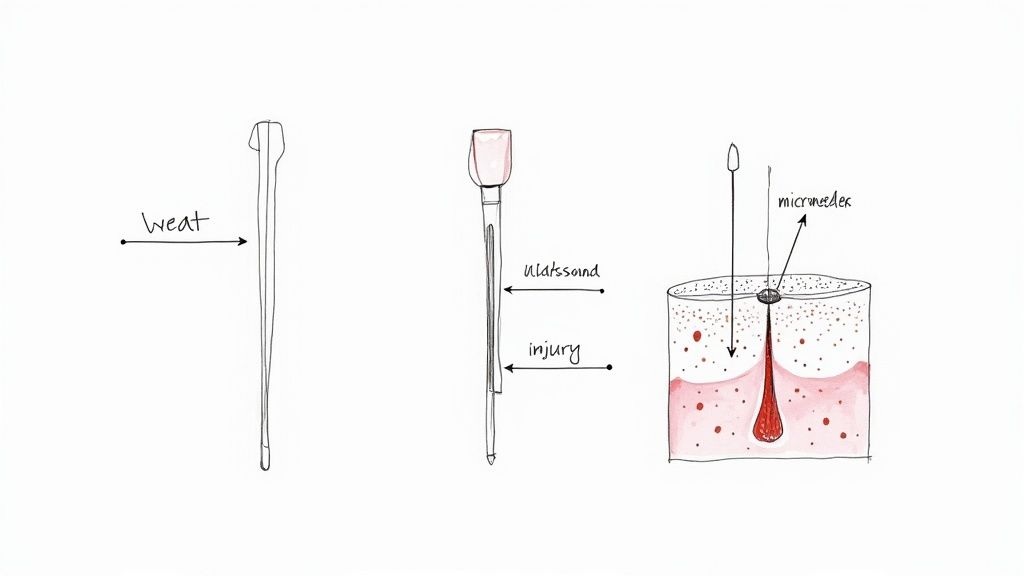
This isn’t about drastically altering your appearance. Instead, these treatments are like a focused, high-impact workout for your skin’s internal support system. By creating a controlled healing response, they remind your cells how to build those firming proteins more efficiently, leading to tighter, smoother, and more resilient skin over time.
Energy-Based Devices for Deep Remodeling
Some of the most popular non-invasive options use targeted energy to gently heat the deeper layers of your skin. This process triggers a natural wound-healing cascade that results in robust new collagen formation.
-
Radiofrequency (RF) Treatments: Devices like Thermage use radiofrequency energy to deliver controlled heat deep into the dermis. This immediately causes existing collagen fibers to contract for a subtle tightening effect while also stimulating new collagen growth over the following months. It's an excellent option for addressing overall skin laxity on the face, jawline, and even parts of the body.
-
Ultrasound Therapy: Treatments such as Ultherapy utilize focused ultrasound energy to reach even deeper than RF, targeting the skin's foundational layers. It’s a game-changer for creating a noticeable lifting and tightening effect, making it particularly effective for sagging around the brows, neck, and under the chin.
The growing interest in these procedures is telling. The global skin tightening market was recently valued at USD 3.82 billion and is projected to more than double to USD 7.69 billion by 2032. This surge reflects a huge demand for effective, non-surgical ways to improve skin elasticity.
Microneedling: The Collagen Induction Therapy
Another incredibly popular and effective method is microneedling, often called collagen induction therapy. This is a minimally invasive procedure where a device with fine, sterile needles creates thousands of tiny micro-injuries in the skin’s surface.
These controlled punctures are just enough to signal your body’s natural repair mechanisms. Your skin responds by flooding the area with growth factors and ramping up the production of new, healthy collagen and elastin. The result? Improved skin texture, reduced fine lines, and a noticeable increase in firmness.
Microneedling is a fantastic option for anyone wanting to improve skin elasticity and texture with minimal downtime. It’s great for a range of concerns, from general laxity to fine lines and even mild scarring, all by tapping into your skin’s own healing power.
For an even bigger impact, many clinics now offer RF Microneedling. This dual-action treatment delivers radiofrequency energy directly into the dermis through the needles, amplifying the collagen-stimulating effects for more dramatic results.
What to Realistically Expect
When you're looking into professional treatments, it's so important to have a clear understanding of what you're signing up for. These aren't one-and-done miracle cures but rather a strategic investment in your skin’s long-term health.
| Treatment Type | Best For | Typical Downtime | Results Timeline |
|---|---|---|---|
| Radiofrequency (RF) | Overall skin laxity, fine lines | Minimal to none (some redness) | Initial tightening in weeks, full results in 3-6 months |
| Ultrasound (Ultherapy) | Deeper lifting, sagging neck & brows | Minimal (some swelling or redness) | Gradual improvement over 2-3 months |
| Microneedling | Texture, fine lines, firmness | 1-3 days of redness | Visible improvement after one session, optimal after 3-6 sessions |
Before committing, a consultation with a board-certified dermatologist or licensed esthetician is a must. They can assess your skin, talk through your goals, and recommend the treatment plan that will deliver the best and safest results for you. While these treatments are highly effective, it's always good to know all your options; check out our guide on natural alternatives to Botox for more ideas.
Of course. Here is the rewritten section, crafted to sound completely human-written and natural, following all the provided guidelines and examples.
Your Skin Elasticity Questions, Answered
As you start getting serious about improving your skin's firmness, a few questions always come up. Getting clear answers is key to setting realistic expectations and staying motivated for the long haul. Let's tackle some of the most common ones I hear.
How Long Until I Actually See a Difference?
This is the big one, isn't it? The truth is, it depends on your approach, but genuine change takes patience and consistency. Think of it as a gradual reveal.
- Changes From Your Diet: Within the first 3 to 4 weeks of really focusing on nutrient-dense foods and proper hydration, you'll likely feel a difference. Your skin might seem more hydrated and have a bit more life to it.
- With Active Skincare: When you're consistently using powerhouse ingredients like retinoids or peptides, you're looking at 3 to 6 months to see real textural improvements. That’s how long it takes for your body to produce new collagen and for it to work its way up to the skin's surface.
- After Professional Treatments: These definitely speed things up. You might see some initial tightening within a few weeks, but the real magic—that deep collagen remodeling—takes a full 3 to 6 months to fully show itself as your skin rebuilds from the inside out.
Can I Get My 20-Year-Old Skin Back?
While you can't literally turn back the clock, you can absolutely make a significant, visible difference at any age. The goal isn't perfection; it’s progress.
A smart strategy is all about playing both offense and defense at the same time. You want to protect the collagen you already have (your daily sunscreen is non-negotiable here) while actively stimulating your body to create new collagen. That powerful combination is what leads to skin that looks and feels measurably firmer and healthier.
Do Collagen Supplements Even Work?
The science here has gotten pretty compelling. More and more research shows that hydrolyzed collagen peptides—which are just smaller, more absorbable bits of collagen—can genuinely improve skin hydration, density, and elasticity.
If you go this route, look for a high-quality supplement that's been third-party tested for purity. A pro tip? Make sure you're getting plenty of Vitamin C in your diet, too. It's a crucial nutrient your body absolutely needs to synthesize its own collagen, so it helps the supplement work even better.
The single worst thing for your skin's elasticity is, without a doubt, unprotected sun exposure. UVA rays go deep into the dermis and just shred the collagen and elastin fibers that keep your skin firm. Making a broad-spectrum SPF 30+ a daily habit is the most powerful preventative move you can make.
What's the Absolute Worst Habit for Skin Elasticity?
If you quit just one thing, make it skipping sunscreen. Unprotected sun exposure is the number one cause of premature aging, a process dermatologists call photoaging.
UVA rays are especially destructive. They break down your skin's entire support structure, leading directly to sagging, fine lines, and that loss of bounce. A broad-spectrum sunscreen, applied every single day, is your best defense against this damage. It's that simple.
Giving your body the right building blocks is a non-negotiable part of any skin health strategy. Staye offers a clean, plant-based collagen booster designed to provide your body with the essential amino acids and cofactors it needs for its own collagen production. See how a plant-powered approach can support your skin's firmness and resilience at https://shopstaye.com.