

When you’re looking for the best supplements for skin elasticity, you’ll want ingredients that help your body produce its own collagen and elastin. Think things like hydrolyzed collagen peptides, hyaluronic acid, and essential helpers like Vitamin C and zinc. These ingredients give your skin the raw materials and cellular support it needs to stay firm and bouncy.
What Is Skin Elasticity and Why Does It Decline?
Imagine a brand-new, high-quality rubber band. When you stretch it, it snaps right back to its original shape, no sagging or distortion. That’s exactly how youthful, healthy skin behaves—it’s resilient, firm, and springs back easily after you pull or press on it.
This incredible "snap-back" quality comes from a complex network deep inside your skin's dermal layer. This network is like a scaffold, giving your skin both strength and flexibility. Two key proteins are the real superstars here.
The Dynamic Duo of Youthful Skin
The first hero of this story is collagen. Think of collagen as the steel framework of a building. It makes up a whopping 80% of your skin's dry weight and provides the underlying structure and durability that keeps your skin firm and strong.
The second hero is elastin. If collagen is the framework, elastin is the web of elastic fibers woven all through it. Elastin is what allows your skin to stretch when you smile or frown, then return to its resting state without leaving a line behind. It's the protein that gives your skin that all-important bounce.
Together, collagen and elastin are a powerful team. Collagen builds the strong, stable foundation, while elastin provides the flexibility to handle all of life's daily movements and pressures.
Why Your Skin Loses Its Bounce
Just like a rubber band left out in the sun, your skin’s elasticity naturally wears down over time. This happens because of a mix of internal and external factors that weaken the collagen and elastin framework. Figuring out what these factors are is the first step to really supporting your skin.
A few of the main culprits behind declining elasticity include:
- Natural Aging: Once we hit our mid-20s, our bodies start producing about 1% less collagen every single year. At the same time, the elastin we already have starts to lose its spring.
- Sun Exposure: UV radiation is, without a doubt, the biggest external factor that destroys collagen and elastin. This process, known as photoaging, leads to premature sagging and wrinkles.
- Lifestyle Choices: Things like smoking, eating a high-sugar diet (which can cause glycation, a process that hardens collagen fibers), and not getting enough sleep can all sabotage your skin’s structural integrity.
This slow decline is why taking a proactive approach with the best supplements for skin elasticity has become so popular. The global market for skin care supplements was valued at an impressive USD 3.87 billion in 2024, with collagen-based products leading the charge. It's a clear signal that more and more people are looking to support their skin health from the inside out. You can dive deeper into the skin supplement market trends to learn more.
The Top Science-Backed Supplements for Skin Firmness
Walking down the supplement aisle can feel overwhelming. When it comes to firmer skin, though, the science points to a few key players that consistently get the job done.
These aren't magic pills. Think of them as targeted nutritional tools that work from the inside out. They either provide the raw building blocks your skin needs or they fire up your body's own natural production of essential proteins.
It’s a bit like tending a garden. You can't just hope for the best; you need to provide the right nutrients and protection for plants to thrive. These supplements give your skin the specific resources it needs to rebuild, stay hydrated, and defend against damage.
This visual shows the journey of our skin’s elasticity—from its youthful, springy state to the factors that cause it to decline over time.
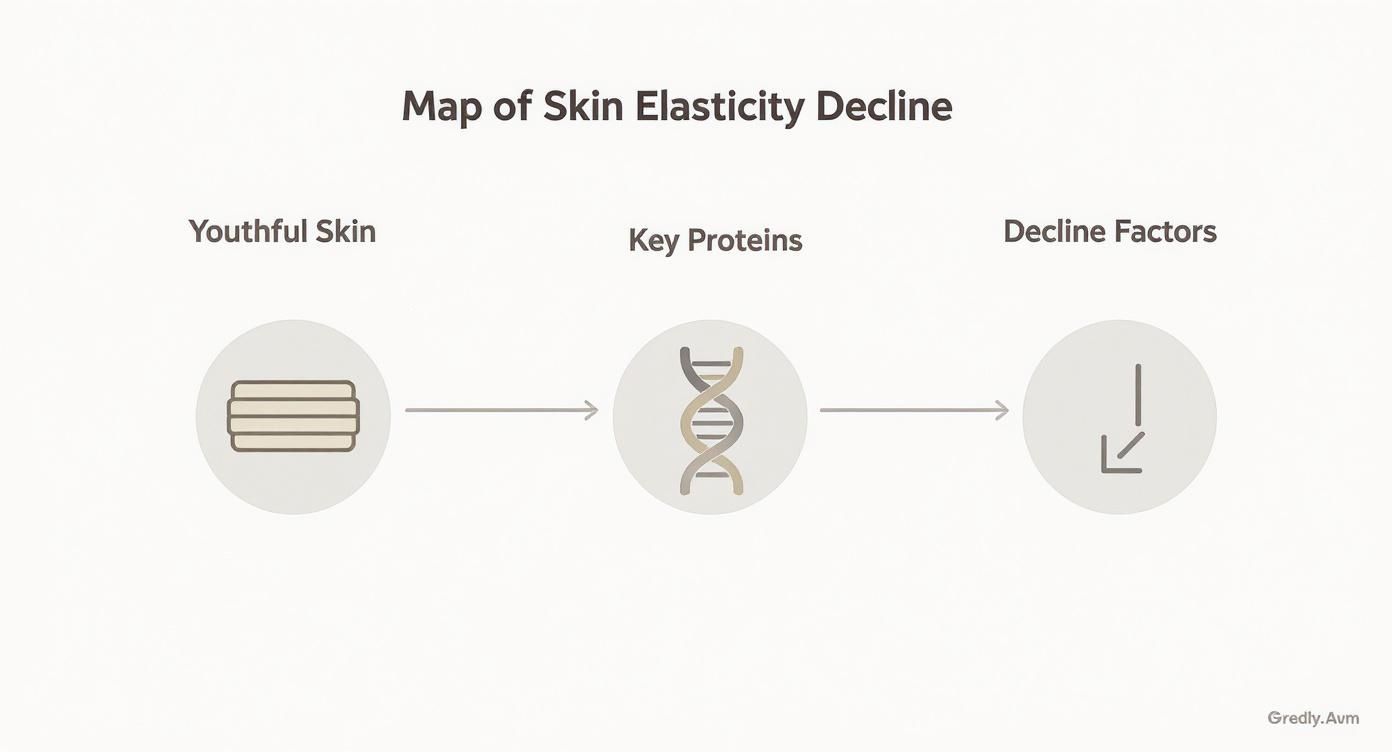
As you can see, our skin’s vital proteins are the bridge between youthful resilience and the wear and tear caused by aging and the environment.
Collagen Peptides: The Direct Rebuilders
Collagen is the celebrity of skin supplements, and for good reason—it’s the main structural protein that keeps your skin firm and plump. But here’s the catch: just eating whole collagen isn't very effective. Your body needs a version it can actually absorb and put to work.
That’s where hydrolyzed collagen peptides come in. "Hydrolyzed" is just a fancy way of saying the large collagen molecules have been broken down into tiny, easy-to-digest chains of amino acids.
These smaller peptides are easily absorbed into your bloodstream. Once they’re there, they act like little messengers, telling your skin cells (called fibroblasts) to ramp up production of new collagen, elastin, and hyaluronic acid. So, it's less about directly adding collagen and more about kickstarting your skin's own natural regeneration.
Research has repeatedly shown that daily collagen peptide supplements can lead to significant improvements in skin hydration, elasticity, and even a visible reduction in wrinkle depth within just 8 to 12 weeks.
Hyaluronic Acid: The Ultimate Hydrator
If collagen is the scaffolding of your skin, hyaluronic acid (HA) is the moisture-retaining cushion that fills in the gaps. This incredible molecule can hold up to 1,000 times its weight in water, acting like a microscopic sponge inside your skin.
When your skin is well-hydrated from within, it looks plumper, smoother, and feels more supple. This internal moisture directly supports elasticity by keeping the collagen and elastin fibers nicely lubricated so they can stretch and snap back properly.
Taking HA orally helps replenish your body's natural levels, which—just like collagen—start to decline as we age. That internal hydration boost translates to more resilient skin and that coveted dewy glow.
Vitamin C: The Essential Co-Factor
Vitamin C is so much more than an immune booster; it’s a non-negotiable partner in making collagen. Your body literally cannot synthesize collagen without it.
Think of Vitamin C as the foreman on a construction site. You can have all the raw materials (amino acids from your diet or collagen peptides), but without the foreman directing the work, nothing gets built. Vitamin C is essential for linking those amino acids together to form strong, stable collagen fibers.
On top of that, Vitamin C is a rockstar antioxidant. It helps protect the collagen you already have from being broken down by free radicals from sun exposure and pollution. This dual role—building the new and protecting the old—makes it one of the absolute best supplements for skin elasticity. To learn more, check out our guide to the best vitamin C for collagen production.
Vitamin E and CoQ10: The Protective Antioxidants
While Vitamin C is a water-soluble antioxidant, Vitamin E is fat-soluble. This means it works inside the lipid-rich cell membranes of your skin, acting as a shield to neutralize free radicals before they can cause damage.
Coenzyme Q10 (CoQ10) is another powerful antioxidant your body makes on its own, but production slows down with age. CoQ10 is vital for cellular energy, helping your skin cells repair themselves and regenerate more effectively.
Together, Vitamin E and CoQ10 form a powerful defensive team. They help preserve your skin's structural integrity, making sure your efforts to build new collagen aren't being undone by daily oxidative stress.
Zinc: The Master of Repair
Zinc is a humble trace mineral that often flies under the radar, but it’s absolutely essential for skin health. It acts as a helper for countless enzymes involved in making proteins and dividing cells—two processes that are crucial for maintaining healthy skin.
More specifically, zinc is needed for collagen production and plays a key role in wound healing and tamping down inflammation. If you’re low on zinc, your skin’s ability to repair itself can suffer, leading to a weaker structure and less elasticity over time.
Keeping your zinc levels topped up is an important, if less glamorous, part of any smart supplement plan for firm skin.
The growing understanding of these ingredients has fueled some serious market growth. Collagen supplements are leading the charge, with the collagen gummy market alone projected to grow from USD 422.2 million in 2025 to USD 579.4 million by 2032. This boom is driven by people looking for easy and tasty ways to combat the natural collagen loss that comes with aging.
To make things easier, here’s a quick-reference table summarizing the key functions and typical dosages for these top-tier skin supplements.
Key Supplements for Skin Elasticity at a Glance
This table breaks down what each key supplement does for your skin, how much is typically recommended in studies, and which forms are best for your body to actually use.
| Supplement | Primary Role in Skin Elasticity | Typical Daily Dosage Range | Best Form for Absorption |
|---|---|---|---|
| Collagen Peptides | Provides amino acids and signals the body to produce more of its own collagen. | 2.5g – 15g | Hydrolyzed peptides for maximum bioavailability. |
| Hyaluronic Acid | Binds to water, deeply hydrating the skin from within for a plumper appearance. | 120mg – 240mg | Look for low molecular weight forms for better absorption. |
| Vitamin C | Essential for collagen synthesis and provides powerful antioxidant protection. | 500mg – 1,000mg | Ascorbic acid is highly effective; buffered forms can be gentler. |
| Zinc | Supports skin repair, protein synthesis, and acts as an anti-inflammatory agent. | 15mg – 30mg | Zinc picolinate or gluconate are well-absorbed forms. |
| Vitamin E & CoQ10 | Protects cell membranes and existing collagen from oxidative damage. | Vitamin E: 15mg (22.4 IU) CoQ10: 100mg – 200mg | Natural d-alpha-tocopherol for Vitamin E; Ubiquinol for CoQ10. |
Ultimately, choosing the right supplement means looking for products that combine these synergistic ingredients in effective, bioavailable forms. This teamwork ensures your body can make the most of each nutrient, leading to real, visible improvements in your skin's health and resilience.
How Plant-Based Nutrients Build Better Collagen

If you've browsed the wellness aisle, you’ve probably seen the term “vegan collagen” and maybe scratched your head. Let's clear up one of the biggest myths in skincare: true collagen, by definition, comes from animals. It's the protein that forms the very structure of skin, and it just doesn't exist in plants.
So, how can a plant-based supplement help with skin elasticity? The strategy isn't about replacing collagen, it's about helping your body build more of it. Instead of consuming pre-made animal collagen, you give your body the exact plant-based tools it needs to kick its own production into high gear.
Think of it this way: you could buy a pre-fab house (animal collagen), or you could supply a master architect (your body) with premium blueprints and all the best materials to build a stronger, custom house from the ground up. The plant-based approach does the latter.
The Plant-Powered Construction Crew
To build anything great, you need two things: the right materials and a skilled crew. When it comes to making new collagen, the raw materials are a few specific amino acids—namely glycine, proline, and lysine. These are the fundamental bricks for your skin's foundation.
But a pile of bricks won’t build itself. You need a crew to put it all together. This is where vitamins and minerals come in. They act as the essential co-factors and enzymes that assemble those amino acids into strong, functional collagen fibers.
The best plant-based supplements aren’t just a random mix of greens. They’re intelligently designed "collagen-builder" kits, delivering the precise amino acids and crucial co-factors your body needs to do its job right.
Key Players in a Vegan Collagen Booster
A thoughtfully designed formula contains specific ingredients that work together in synergy. This teamwork is what makes the plant-based strategy so effective for supporting skin firmness from within.
Here are the critical players you should always look for on the label:
- Amino Acids (Glycine, Proline, Lysine): These three make up the bulk of your natural collagen. Supplying them directly gives your body the exact materials it's looking for, ready to be used immediately.
- Vitamin C: As we've covered, Vitamin C is the non-negotiable foreman of the construction site. It's responsible for activating the enzymes that weave amino acids into the strong, helical chains of collagen. Without it, the whole production line grinds to a halt.
- Zinc: This mineral is a key helper for an enzyme called collagenase, which helps with collagen turnover. Zinc ensures your skin can effectively clear out old, damaged fibers to make space for fresh, healthy ones.
- Silica (from sources like Bamboo Extract): Think of silica as the high-tech mortar holding the bricks together. This trace mineral helps stabilize the collagen matrix, making the entire structure stronger and more resilient.
When you combine these elements, you’re creating a holistic support system that fuels your body's own ability to maintain a firm, youthful complexion. It’s a clean and highly effective approach that works with your biology. You can dive deeper into this in our guide on plant-based collagen supplements.
This method is all about nourishing your internal factory so it can run at peak performance, producing the high-quality collagen that keeps your skin looking and feeling its absolute best.
How to Choose a High-Quality Skin Supplement
Walking down the supplement aisle can feel overwhelming. With bottle after bottle promising youthful, glowing skin, how do you sort through the noise and find something that actually delivers?
Choosing the best supplements for skin elasticity isn't about falling for flashy marketing—it’s about understanding what’s inside the bottle and why it’s there. A top-tier supplement is built for results, focusing on ingredients your body can actually use, is backed by safety checks, and comes in a form you'll genuinely stick with.
Check for Bioavailability and Smart Ingredients
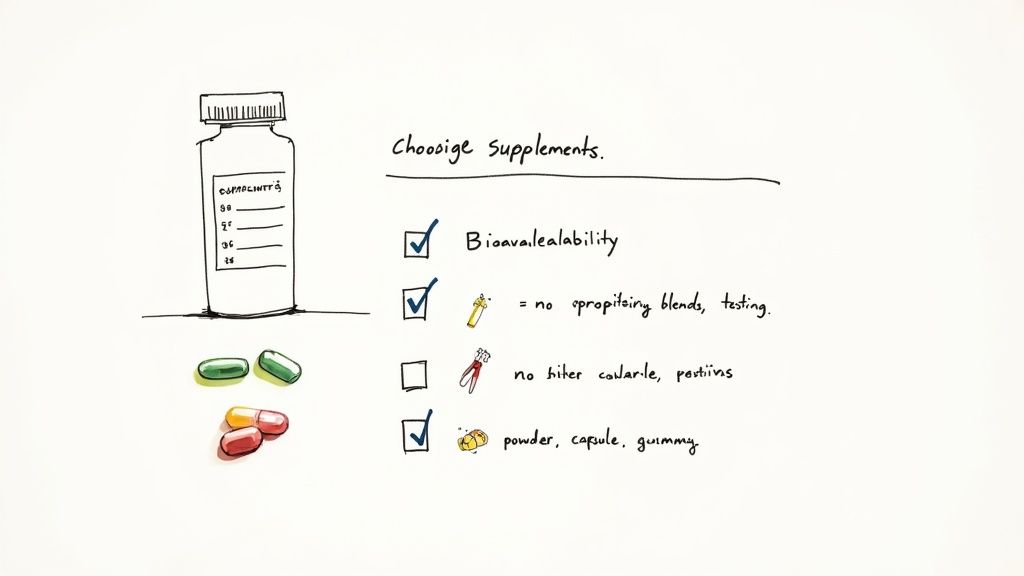
First thing’s first: look for bioavailability. It’s a science-y term, but the concept is simple: how well can your body absorb and use a nutrient? A massive dose of an ingredient is useless if your body can't access it.
Take collagen, for instance. You’ll want to see hydrolyzed collagen peptides on the label, not just plain gelatin. The hydrolysis process essentially pre-digests the large collagen molecules, breaking them down into tiny, usable pieces your body can easily absorb and put to work.
A thoughtfully designed formula will also include synergistic ingredients—partners that work together. Seeing collagen-building amino acids alongside essentials like Vitamin C and Zinc is a great sign. These nutrients are crucial co-factors in the body's natural collagen-building process, meaning they help the star ingredients perform even better.
Demand Transparency and Third-Party Testing
In the largely unregulated world of supplements, trust has to be earned. You need to look for proof that what's on the label is what's in the bottle. This is where independent verification is a non-negotiable.
Keep an eye out for seals from reputable third-party testing organizations on the packaging. These seals mean an independent lab has verified the product for purity and potency.
- NSF International: This seal confirms the product contains what the label claims and is free of harmful contaminants.
- USP (U.S. Pharmacopeia): This indicates the supplement meets strict standards for identity, purity, strength, and performance.
A third-party seal is your assurance that you're getting a safe, high-quality product. If a brand doesn't invest in this verification, it's fair to question what they might be hiding.
Another major red flag to watch for is the "proprietary blend." This is a sneaky way for companies to list a mix of ingredients without revealing the exact amount of each one. This lack of transparency makes it impossible to know if you're getting an effective dose of the key nutrients you're paying for. Always opt for products with clear, straightforward labels.
Choose the Right Format for You
Even the most scientifically advanced supplement is worthless if you don't take it consistently. The format you choose—powder, capsule, or gummy—can make all the difference in building a lasting habit.
Each one has its own vibe, so think about what fits your daily life.
Supplement Formats Compared:
| Format | Pros | Cons |
|---|---|---|
| Powders | Easy to mix into drinks; allows for higher doses and often has fewer additives. | Can have a noticeable taste or texture; requires a moment of prep. |
| Capsules | Tasteless and super convenient for on-the-go use; precise, pre-measured doses. | Can be difficult to swallow for some; limited by capsule size for dosage. |
| Gummies | Easy and enjoyable to take, feels like a little treat. | Often contain added sugars and fillers; may offer lower potency. |
At the end of the day, the best format is the one you’ll actually look forward to taking. By prioritizing ingredients your body can use, demanding proof of quality, and choosing a format that feels effortless, you can confidently pick a supplement that will truly support your skin’s health from the inside out.
Lifestyle Habits That Boost Skin Elasticity
While the right supplements give your skin targeted support, they can't do it alone. For the best results, you need to pair them with a healthy lifestyle.
Think of it this way: your supplements are like an expert renovation crew for your skin. But even the best crew needs high-quality materials and a solid foundation to work with. Your daily habits are those materials.
True skin health starts from the inside out, built on a foundation of smart, consistent choices. These habits create the perfect environment for collagen to thrive, amplifying your results and building more resilient, vibrant skin for the long haul.
Nourish From Within With a Skin-Smart Diet
What you put on your plate shows up on your face. It's that simple. A diet packed with specific nutrients provides the raw materials your body needs to constantly repair and regenerate skin tissue.
To get started, focus on whole foods that are loaded with skin-supporting compounds:
- Antioxidant-Rich Foods: Think berries, leafy greens, and colorful veggies. These are bursting with antioxidants that neutralize free radical damage, protecting the collagen and elastin you already have from breaking down.
- Healthy Fats: Foods like avocados, nuts, and olive oil are full of omega fatty acids. These fats are crucial for maintaining a strong skin barrier, which keeps your skin hydrated and supple from within.
- Lean Protein: Your body can't build strong collagen fibers without the necessary amino acids, and lean protein is the best place to get them.
By prioritizing these foods, you're not just eating for your overall health—you're eating for your skin's very structure. To dive deeper, check out our guide on foods that support collagen production.
Defend and Hydrate Your Skin
Beyond your diet, two daily habits are completely non-negotiable for preserving skin elasticity: hydration and sun protection. If you neglect either one, you can quickly undermine all your other efforts.
Staying well-hydrated is key to keeping your skin cells plump and resilient. When you're dehydrated, your skin can look dull, and fine lines become much more obvious. Aim for plenty of water throughout the day to support that internal moisture.
Sun protection is your number one defense against premature aging. UV radiation is the primary external culprit that actively destroys collagen and elastin fibers, leading directly to sagging and wrinkles.
Making a broad-spectrum sunscreen with at least SPF 30 a non-negotiable part of your daily routine is the single most effective thing you can do to protect your skin's structural integrity.
Avoid These Elasticity Saboteurs
Just as important as what you do is what you don't do. Certain lifestyle factors can actively sabotage your skin's firmness by causing inflammation and damaging its structural proteins.
Keep an eye out for these common culprits:
- Excess Sugar: A high-sugar diet can trigger a process called glycation. This is where sugar molecules attach themselves to collagen and elastin, making them rigid, brittle, and weak.
- Smoking: This habit restricts blood flow to the skin, starving it of the oxygen and nutrients it needs to stay healthy. It also unleashes a flood of free radicals that accelerate the aging process.
- Chronic Stress: When you're constantly stressed, your body produces high levels of cortisol, a hormone that has been shown to break down collagen and elastin over time.
Think of these as wrecking balls to your skin’s framework. By keeping them to a minimum, you allow your body—and your supplements—to focus on building your skin up, not just playing constant defense.
Common Questions About Skin Elasticity Supplements
Starting any new supplement routine can feel like a big step, and it's totally normal to have questions before you jump in. It's one thing to know what ingredients work, but it's just as important to understand the practical side of things—like when you'll actually see changes and how to combine products safely.
Think of this section as your go-to guide for those lingering doubts. We'll give you straight, practical answers to the most common questions people ask when they're looking for the best supplements for skin elasticity.
How Long Until I See Results from Skin Supplements?
When it comes to your skin, patience and consistency are your two best friends. While some people notice better skin hydration in just a few weeks, the real magic is happening on a much deeper, structural level. Think of it like this: you're rebuilding your skin's foundational framework from the inside out, and that takes a steady supply of nutrients over time.
Most clinical studies show noticeable improvements in skin elasticity, firmness, and the look of fine lines after about 8 to 12 weeks of consistent, daily use. Just remember, your own results will depend on factors like your age, diet, sun exposure, and the quality of your supplement. Sticking with it every single day is what truly makes the difference.
Can I Combine Different Supplements for My Skin?
Absolutely! In fact, a lot of skin supplements are designed to work even better together. Taking Vitamin C alongside collagen peptides is a classic example. Vitamin C is essential for your body to actually synthesize new collagen, so pairing them can seriously boost your results.
The key is to be smart about it. Always read the labels on all your supplements to make sure you aren't accidentally taking too much of any single nutrient. This is especially important for fat-soluble vitamins like Vitamin E and minerals like zinc, since they can build up in your system.
When in doubt, a quick chat with your doctor or a registered dietitian is always a good idea. They can help you build a safe and effective supplement stack that’s tailored to your specific needs and goals.
Are There Side Effects to Taking These Supplements?
For the vast majority of people, the core skin supplements like collagen peptides and hyaluronic acid are considered very safe, as long as you stick to the recommended dosages. The global market for hyaluronic acid supplements alone was valued at around USD 2.36 billion in 2025 and is still growing, mostly because it has such a strong safety profile and is so effective. If you're curious, you can read more about hyaluronic acid market trends and see how consumer interest is climbing.
Occasionally, some people might experience mild digestive upset, like bloating or a feeling of fullness. It's also wise to check for potential allergens. For example, if you have a shellfish allergy, you'll want to steer clear of marine-sourced collagen. To play it safe, always start with the suggested dose on the package and look for brands that use third-party testing to verify their purity.
When Is the Best Age to Start Taking Skin Supplements?
There’s no single "right" age, but a great time to start thinking proactively is in your mid-to-late 20s. This is the decade when our body’s natural collagen production begins its slow decline—by about 1% each year. Starting a supportive routine at this stage is a fantastic preventative strategy to maintain your skin's youthful foundation for longer.
But honestly? It is never too late to start. People in their 30s, 40s, 50s, and beyond can still see significant, visible benefits in their skin’s hydration, firmness, and overall texture. The most important thing isn’t the year you were born, but the day you decide to start giving your skin the nutritional backup it deserves.
Ready to fuel your skin from within? Staye offers a clean, plant-based collagen booster designed to provide your body with the essential building blocks it needs for vibrant skin, resilient joints, and strong hair and nails.
Discover the power of plant-based collagen support with Staye today.