

When people think about improving their bone density, they often picture a complicated medical plan. But the truth is, it really comes down to making small, consistent shifts in how you eat, move, and live. It's a proactive approach that combines the right nutrients with specific exercises to build a stronger skeleton from the inside out.
Why Building Stronger Bones Is a Lifelong Project
Most of us don't worry about our bones until we're older, but our skeletal health is something we build over a lifetime. Think of it like a retirement account for your bones—the deposits you make today will pay off for decades, giving you a strong, resilient frame for the future.
Building and maintaining bone is a dynamic, ongoing process, and the good news is you have a lot of control over it at every age.
This guide is designed to empower you, not scare you. We'll show you exactly how to improve your bone health naturally by focusing on the powerful synergy between nutrition, strategic exercise, and supportive daily habits. Forget the overwhelming medical jargon; we’re breaking it down into simple, consistent actions that deliver real results.
The Growing Need for Proactive Bone Care
Taking a proactive approach has never been more critical. Without a change, fracture rates in the U.S. are projected to climb from 1.9 million per year in 2018 to a staggering 3.2 million by 2040. That’s a 68% increase.
These numbers aren't just statistics; they represent real people whose lives are impacted. This is exactly why a natural, lifestyle-based strategy for prevention is so crucial.
A Holistic Framework for Bone Health
To really understand how to build stronger bones, you have to see them for what they are: complex, living tissues. They aren't just inert scaffolding. Your bones are constantly being broken down and rebuilt in a process called remodeling.
This guide gives you a clear roadmap to support that process:
- Nutrition as the Foundation: We'll dive into how specific nutrients work as a team. Calcium is the raw material, but other vitamins and minerals are the crew that puts it all together.
- Exercise as the Catalyst: The right kind of physical stress is a signal to your body, telling it to build denser, stronger bones in response.
- Lifestyle as the Support System: Your daily habits around sleep, stress, and what you consume can either help your progress or hold it back.
Your skeleton is fundamentally a protein matrix—mostly made of collagen—that's hardened by minerals like calcium. The secret to creating bones that are not just dense, but also flexible and less prone to fracture, is nurturing both parts of that equation.
This comprehensive view shifts the focus from just one nutrient to a complete, bone-supportive lifestyle. You can learn more about the role of collagen in our detailed guide on what exactly collagen is and why it's important.
Fueling Your Frame: The Ultimate Bone-Building Diet
When we talk about improving bone density naturally, the conversation has to start with what’s on your plate. Your diet provides the essential raw materials your body needs to build and maintain a strong, resilient skeleton. It isn't about one magic nutrient, but rather a team of vitamins and minerals working together.
I like to think of it like building a sturdy brick wall. Calcium is the brick—the fundamental building block. But you can't just have a pile of bricks. You need a worker to get them to the job site, and that's your Vitamin D. Then you need a foreman to direct the workers to place those bricks perfectly into the structure—that’s Vitamin K2. If any part of that team is missing, the wall just won't be strong.
This is all about a food-first approach, creating a sustainable, enjoyable eating plan that fuels your frame for the long haul.
This infographic breaks down the key pillars of bone health, showing just how interconnected your nutrition, exercise, and daily habits really are.
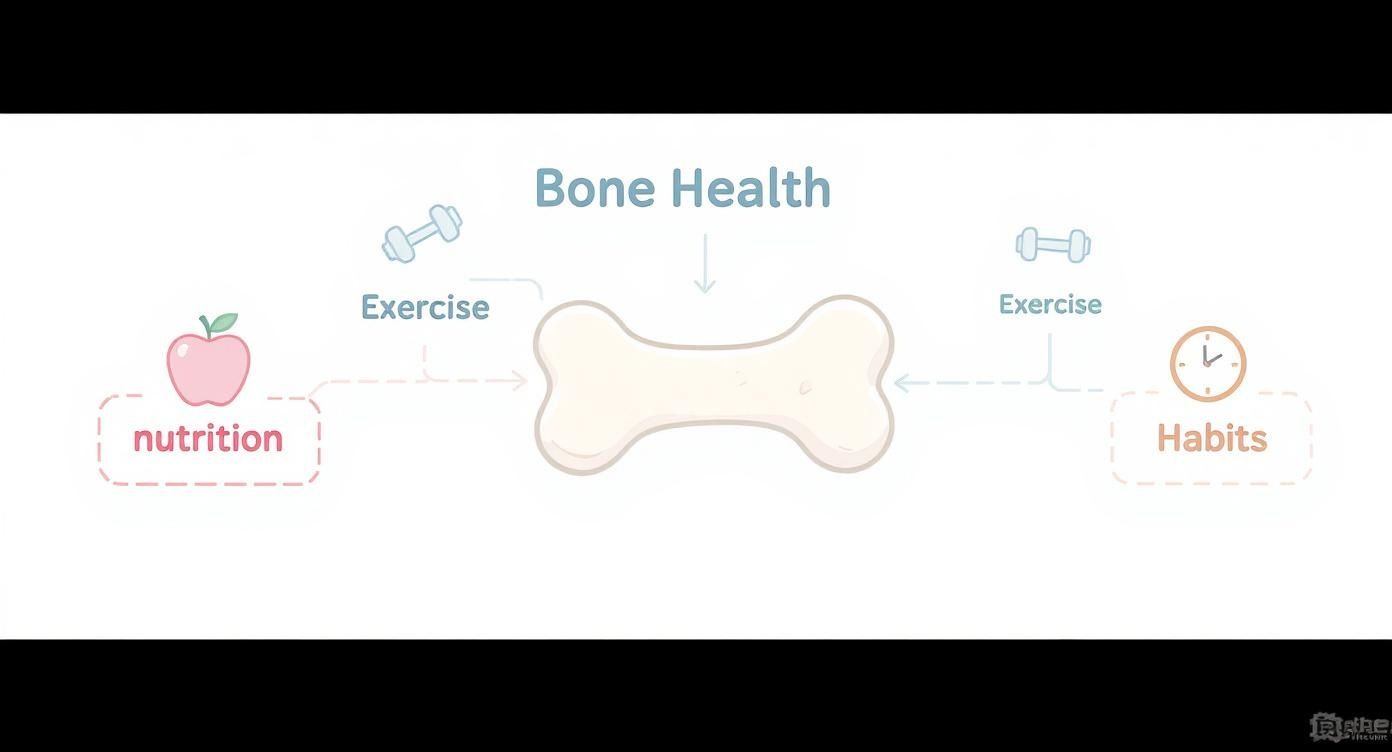
As you can see, a balanced strategy is always the most effective way to build and maintain strong bones for life.
Your Shopping List for Stronger Bones
To make this simple, I've put together a quick-reference guide. Think of this table as your shopping list for the essential nutrients that build bone, what they do, and where to find them in the grocery store.
| Nutrient | Its Role in Bone Health | Top Food Sources |
|---|---|---|
| Calcium | The primary mineral that provides hardness and structure to your bones. | Dairy (yogurt, cheese), leafy greens (kale, collards), sardines with bones, fortified tofu & plant milks. |
| Vitamin D | Unlocks calcium absorption from your gut, making it available to your body. | Fatty fish (salmon, mackerel), egg yolks, fortified cereals, and moderate, safe sun exposure. |
| Vitamin K2 | Directs calcium into your bones and teeth, keeping it out of arteries and soft tissues. | Fermented foods (natto), certain cheeses (Gouda, Brie), egg yolks, and dark meat chicken. |
| Protein | Forms the flexible collagen matrix that minerals are deposited onto—about 50% of bone volume. | Lean meats, poultry, fish, legumes, tofu, and nuts. |
| Magnesium | Helps convert Vitamin D to its active form and supports calcium regulation. | Almonds, spinach, black beans, avocados, and dark chocolate. |
| Vitamin C | An essential co-factor for creating the collagen framework within your bones. | Citrus fruits, bell peppers, strawberries, broccoli, and kiwi. |
Focusing on incorporating these whole foods into your regular meals is a powerful and delicious way to invest in your skeletal health.
The Foundational Players
Calcium: The Core Mineral
It's no secret that calcium is king. A whopping 99% of your body's calcium is stored in your bones and teeth, giving your skeleton its strength. If your diet doesn't provide enough, your body will actually pull it from your bones to keep blood levels stable for critical nerve and muscle function.
While dairy is a classic source, there are tons of fantastic non-dairy options:
- Leafy Greens: Collard greens and kale are calcium powerhouses.
- Fortified Foods: Check the labels on plant-based milks (almond, soy, oat), orange juice, and tofu. Many are fortified with easily absorbable calcium.
- Other Gems: Canned sardines and salmon (with the soft bones!), figs, and almonds pack a solid punch.
Most adults should be aiming for 1,000 to 1,200 milligrams of calcium per day, and it's always best to get it from food first.
Vitamin D: The Sunshine Vitamin
Vitamin D is calcium's essential partner. Its main job is to help your body absorb calcium from your diet. Without enough vitamin D, you could eat calcium-rich foods all day long, but your body wouldn't be able to put it to good use.
Your skin naturally produces vitamin D from sunlight, but things like the season you're in, where you live, and even your skin tone can limit production. That's why food sources are so crucial.
Fatty fish like salmon, mackerel, and sardines are excellent sources. For those on a plant-based diet, look for fortified cereals and plant milks, or mushrooms that have been exposed to UV light.
Think of Vitamin D as the gatekeeper. It unlocks the door that lets calcium pass from your gut into your bloodstream, where it can be transported to your bones.
Given how tough it can be to get enough from food and sun alone, many experts now recommend a vitamin D supplement, especially in the winter months.
Vitamin K2: The Traffic Cop
Vitamin K2 is the unsung hero of bone health. While Vitamin D gets calcium into your blood, Vitamin K2 tells that calcium where to go. It activates key proteins that direct calcium straight to your bones and teeth, preventing it from ending up in places it shouldn't be, like your arteries.
This nutrient can be a little trickier to find in the typical Western diet. The best sources include:
- Fermented foods like natto (a traditional Japanese dish of fermented soybeans).
- Certain aged cheeses like Gouda and Brie.
- Grass-fed butter, egg yolks, and dark chicken meat.
Getting enough K2 is the final, critical step in making sure the calcium you eat actually strengthens your skeleton.
The Structural Team
Protein and Collagen: The Framework
Your bones aren't just rocks; they're living tissue. About 50% of your bone's volume is actually protein, mostly in the form of a flexible collagen matrix. This matrix is the scaffolding that minerals like calcium and phosphorus are laid upon. A diet low in protein can seriously reduce calcium absorption and slow down bone formation.
Make sure you're getting high-quality protein from sources like lean meats, poultry, fish, beans, lentils, and tofu. These provide the amino acids your body needs to build and repair that collagen framework.
You can also eat to support your body's own collagen-building machinery. Nutrients like Vitamin C are absolutely essential for collagen synthesis. You can learn more about the best foods that support collagen production here. Pairing a protein-rich meal with vitamin C-rich foods—like chicken with a side of bell peppers or fish with a squeeze of lemon—is a smart strategy.
Magnesium: The Key Facilitator
While the big three get most of the attention, other minerals play vital supporting roles. Magnesium is a perfect example. It helps convert vitamin D into its active form and also stimulates a hormone that helps pull calcium out of the blood and into the bones. You’ll find it in almonds, spinach, black beans, and avocados.
It's also worth remembering that the foundation for bone health is built early. Research shows that we acquire 85-90% of our adult bone mass by age 18 for girls and 20 for boys. This makes those younger years an absolutely critical window for building a strong skeletal "bank account" for life.
The Right Kind of Exercise for Stronger Bones
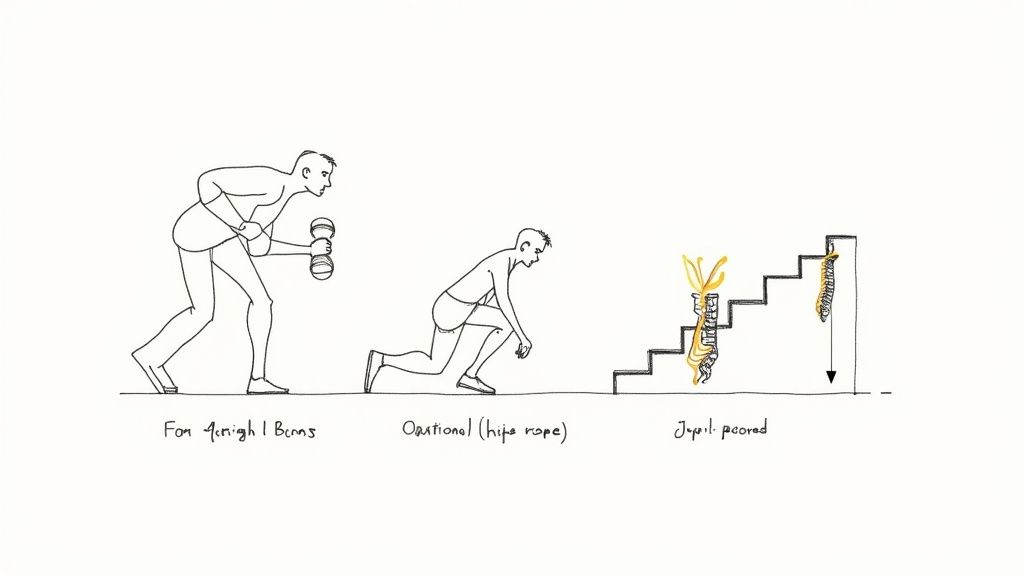
While your diet provides the raw building blocks, it’s movement that flips the switch and tells your body to actually build stronger, denser bones. But it’s not about just being active; it’s about being strategic. The right kind of exercise creates a mechanical load on your skeleton, which stimulates your bone-forming cells to get to work.
Think of it this way: your bones are smart. They adapt to the demands you place on them. When you consistently apply force through specific exercises, your body responds by reinforcing its own frame to better handle that stress in the future. Let’s get past the generic advice and into a real blueprint for the two most effective types of exercise for your bones.
Building Your Foundation with Weight-Bearing Exercises
Weight-bearing exercises are simply any activity you do on your feet, where your bones and muscles have to work against gravity. This force is the exact stimulus your bones crave. The impact of your feet hitting the ground sends a powerful message up through your skeleton: "get stronger."
But "impact" doesn't have to mean jarring or painful. There's a whole spectrum of options here, so you can choose what feels right for your body and fitness level.
High-Impact Options (For those with healthy joints):
- Jogging or Running: Each stride creates a significant bone-building jolt.
- Jumping Rope: A fantastic, high-intensity way to load the bones in your lower body and spine.
- Dancing or High-Intensity Aerobics: Activities like Zumba or step classes are fun and incredibly effective.
- Tennis or Basketball: The quick starts, stops, and jumps provide dynamic, varied stress on your skeleton.
These activities send the strongest signal for bone growth. But if high-impact moves aren't for you due to joint pain or other issues, you can still get excellent results with gentler alternatives.
Low-Impact Alternatives (Gentle yet effective):
- Brisk Walking or Hiking: This is especially powerful when you’re on varied terrain or walking uphill.
- Stair Climbing: A simple but mighty low-impact exercise you can do almost anywhere.
- Using an Elliptical Machine: It keeps your feet on the pedals, reducing impact while still forcing you to bear your own weight.
It's worth pointing out that activities like swimming and cycling, while great for your heart, are not weight-bearing. Since the water or bike is supporting your body, your skeleton just doesn't receive that same bone-building signal.
The key here is consistency. Aim for at least 30 minutes of weight-bearing activity on most days of the week. You can even break this up into shorter, 10-minute sessions if that fits your schedule better.
Adding Strength with Resistance Training
If weight-bearing exercise is the general memo, resistance training is the targeted directive. This is any exercise where you move your body against some form of resistance—think weights, bands, or even your own bodyweight. This action creates a pulling and tugging on the bones via your muscles and tendons, which is a powerful trigger for your bone-building cells (osteoblasts).
Strength training is critical because it allows you to zero in on specific areas that are more vulnerable to fractures, like the hips, spine, and wrists. You don't need a gym membership or fancy equipment to get started.
Examples of Effective Resistance Exercises:
- Squats and Lunges: These are foundational movements for strengthening the big muscles in your legs and glutes, which attach directly to your hip bones. Start with just your bodyweight and add dumbbells as you get stronger.
- Push-ups: An excellent exercise for the wrists, arms, and shoulders. If a full push-up is too much, start by doing them against a wall or on your knees.
- Lifting Weights: Using free weights (dumbbells) or machines to do exercises like bicep curls, overhead presses, and rows strengthens the bones in your arms, shoulders, and upper back.
Aim for two to three resistance training sessions per week. Be sure to rest a day in between to let your muscles and bones recover and rebuild. Start with lighter weights, focusing on good form, and gradually increase the resistance as you get stronger. Many people find that strengthening their muscles also provides welcome relief from joint discomfort. For more ideas on managing soreness, check out our guide on natural remedies for joint pain.
The Critical Role of Balance and Flexibility
Building dense bones is only half the battle. Preventing the falls that cause fractures is the other, equally important half. As we get older, our sense of balance can decline, which increases the risk of a fall that could lead to a serious injury.
This is where exercises focused on balance and stability come in. They may not build bone mass in the same way as impact or resistance training, but they are absolutely essential for fracture prevention.
Practices to Improve Your Balance:
- Tai Chi: This gentle, slow-moving martial art has been proven in studies to improve balance and coordination, significantly reducing fall risk.
- Yoga: Many yoga poses challenge your stability and improve your flexibility, making you less susceptible to sudden trips or stumbles.
- Simple Balance Drills: Just practice standing on one foot for 30 seconds at a time, using a chair or wall for support if you need it. Once that feels easy, try it with your eyes closed to kick it up a notch.
Incorporating just 10-15 minutes of balance work into your routine a few times a week can make a profound difference in your stability and confidence. You're not just building strong bones; you're creating a safer environment for them to thrive in.
Lifestyle Habits That Secretly Harm Your Bones
You can have the perfect diet and the most targeted exercise plan, but some daily habits can quietly undo all your hard work. When you're trying to figure out how to improve bone density naturally, it’s just as much about what you remove as what you add.
Let’s pull back the curtain on the lifestyle factors that can secretly sabotage your skeleton.
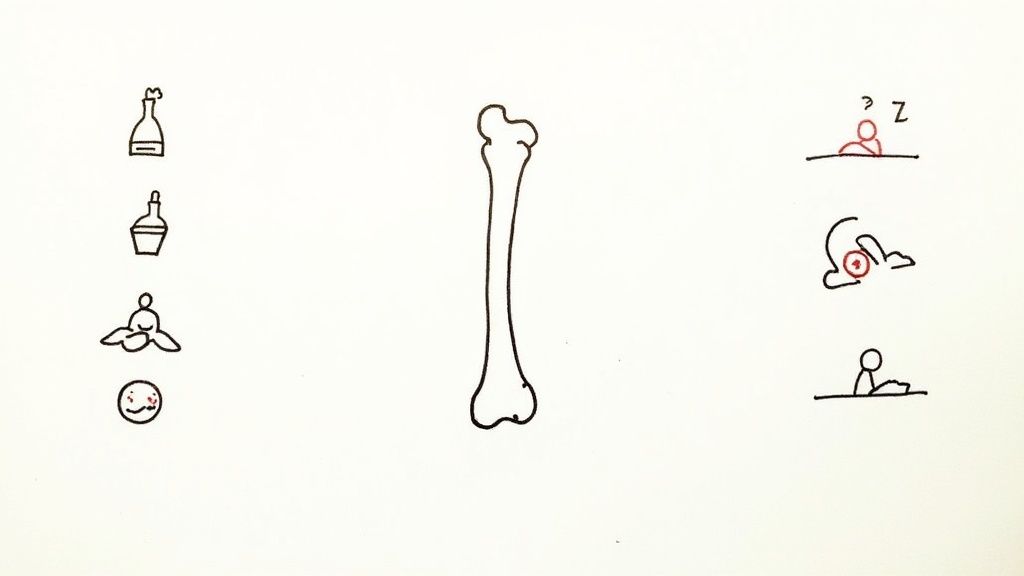
So many people are surprised to learn how much these day-to-day choices matter. We aren't talking about dramatic, one-time events. It’s the small, consistent patterns that can either fortify your frame or slowly weaken it from the inside out.
The Impact of Smoking and Alcohol
It’s no secret that smoking and excessive alcohol are bad for you, but they are particularly destructive to your bones. Think of them as internal thieves, robbing your skeleton of the resources it needs to stay strong.
How Smoking Affects Bone Cells
Nicotine is a direct enemy of your bones. It physically gets in the way of your body's ability to absorb calcium from your diet. At the same time, it throws a wrench in your bone-remodeling cycle by slowing down the work of your osteoblasts—the critical bone-building cells. This double-whammy means less raw material is getting in, and the construction crew is working half-speed.
How Alcohol Weakens Your Skeleton
Chronic heavy drinking also seriously compromises bone health. Alcohol can interfere with how the pancreas absorbs calcium and vitamin D. It also appears to spike your levels of cortisol, a stress hormone that is well-known to decrease bone formation and speed up bone breakdown.
The takeaway is simple: If building stronger bones is your goal, quitting smoking is one of the most powerful moves you can make. And when it comes to alcohol, moderating your intake to no more than one drink per day for women and two for men can dramatically reduce its negative impact.
The Surprising Link Between Stress and Bone Loss
Chronic stress is another silent enemy of bone density. When you're constantly frazzled, your body pumps out high levels of the hormone cortisol. While useful in short bursts for a "fight or flight" response, persistently elevated cortisol can wreak havoc on your skeleton.
Here’s the breakdown: high cortisol levels can suppress your bone-building osteoblasts. At the same time, it fires up your osteoclasts—the cells responsible for breaking down old bone. This creates an imbalance where bone is being dismantled faster than it's being rebuilt, leading to a net loss over time.
Building stress-management techniques into your life is non-negotiable for bone health. This could include things like:
- Mindfulness Meditation: Just 10-15 minutes a day can help lower cortisol.
- Deep Breathing Exercises: A simple practice like box breathing can calm your nervous system in minutes.
- Spending Time in Nature: Even a short walk outdoors has a profound stress-reducing effect.
The Critical Need for Restorative Sleep
Finally, never underestimate the power of a good night's sleep. Sleep isn't just a passive state; it's when your body does its most important repair and regeneration work. This absolutely includes your bones.
During the deep stages of sleep, your body releases growth hormone, which is vital for repairing and building all tissues, bone included. When you consistently get less than seven hours of quality sleep, you're shortchanging this essential rebuilding process.
To really support your bones, you need to prioritize sleep hygiene. This means creating a dark, quiet, and cool bedroom, establishing a consistent sleep schedule, and avoiding screens right before bed. By addressing these lifestyle factors, you create a foundation that allows your nutrition and exercise efforts to truly work.
Tracking Your Bone Health and When It's Time to See a Doctor
Taking charge of your bone health starts with knowing your numbers. You can't improve what you don't measure, and this is where a conversation with your doctor becomes a crucial part of your natural bone-building plan. A bone density test gives you that critical baseline to see if what you're doing is actually working.
This isn't about waiting for something to go wrong; it’s about being proactive. Catching bone density issues early is one of the most powerful things you can do to prevent fractures down the road. The gold standard here is a DEXA scan, which is a simple and totally painless procedure. You can learn more about why early diagnosis is so important from this bone health research from the PMC.
Decoding Your DEXA Scan Results
When you get your DEXA scan report, the scores can look a bit like a foreign language at first. The test, officially a dual-energy X-ray absorptiometry (DXA) scan, measures your bone mineral density and gives you two key numbers: a T-score and a Z-score. Getting a handle on what they mean will help you have a much more productive chat with your doctor.
-
T-score: This is the big one. It compares your bone density to that of a healthy 30-year-old. A score of -1.0 or higher is considered normal. If your score is between -1.0 and -2.5, it means you have osteopenia (low bone mass). A score of -2.5 or lower is a diagnosis of osteoporosis.
-
Z-score: This number compares your bone density to what’s typical for someone your age, sex, and size. It's especially useful for looking at bone health in premenopausal women or men under 50.
Think of your first DEXA scan as dropping a pin on a map—it shows you exactly where you are right now. Any future scans will show you how far you’ve come. Generally, a follow-up test is done every two years to track how well your natural strategies are working.
When Natural Methods Need a Medical Partner
While this guide is all about building stronger bones naturally, it's so important to recognize when you need to bring in a medical professional. Certain risk factors and red flags are a clear sign that it's time to partner with a doctor for a full evaluation.
Your lifestyle choices are incredibly powerful, but they work best when you have a clear picture of your unique health profile. A doctor can help you put all the pieces together, ensuring your natural efforts are both safe and effective for your specific situation.
Knowing when to ask for help isn't a sign of failure—it's a sign that you're truly taking your health seriously.
Red Flags That Warrant a Doctor's Visit
Don't wait until you have a fracture to take action. If any of the following sound familiar, it’s a strong signal to book an appointment for a bone health check-up.
Key Risk Factors to Discuss:
- A family history of osteoporosis or hip fractures, especially in your mother.
- A personal history of breaking a bone easily as an adult.
- Early menopause (before the age of 45).
- Long-term use of certain medications, particularly steroids like prednisone.
- Having a small, thin frame, as lower body weight can be a risk factor.
- Certain medical conditions, like rheumatoid arthritis, celiac disease, or an overactive thyroid.
Having one of these risk factors doesn't mean you're destined for bone problems, but it does mean you need to be more vigilant. Your doctor can look at your complete health picture and recommend the right screening schedule, giving you the peace of mind to move forward with confidence.
Got Questions About Building Stronger Bones? We Have Answers.
When you decide to take charge of your bone health, a lot of questions pop up. It's only natural. You want to know what to expect, how your diet really plays a role, and when you'll actually see the fruits of your labor. Let's dig into some of the most common questions I hear from people on this journey.
How Long Does It Realistically Take to See a Difference?
This is the big one, and the honest answer is that it requires patience. Bone remodeling is a slow and steady process—it's definitely a marathon, not a sprint. You'll probably feel the benefits of your new routine, like better balance and stronger muscles, within just a few weeks. That’s a great motivator.
But when it comes to seeing a measurable change on a DEXA scan, you need to think longer-term. It typically takes at least one to two years of consistent effort to see a significant, positive shift in your T-score. The keyword here is consistency. Think of every bone-healthy meal and targeted workout as a deposit into your skeletal bank account. You're building long-term, resilient strength.
Can a Plant-Based Diet Really Support Strong Bones?
Absolutely. The idea that you need dairy for strong bones is one of the most persistent myths out there. A well-planned plant-based or vegan diet can be fantastic for your skeleton; you just need to know where to find the key nutrients.
You can get plenty of calcium from plant-based sources, including:
- Fortified Foods: Tofu, soy milk, and almond milk are often packed with easily absorbable calcium.
- Leafy Greens: Don't skip your greens! Collard greens, kale, and bok choy are calcium powerhouses.
- Nuts and Seeds: Almonds and sesame seeds (which means tahini is on the menu) are excellent sources.
Of course, it's not just about calcium. You also need to make sure you’re getting enough protein from sources like legumes and nuts, magnesium from seeds and whole grains, and—just like everyone else—sufficient vitamin D, which usually means taking a supplement.
Is It Possible to Rebuild Bone After Menopause?
Yes, and I want to be very clear about this: it's a hopeful and realistic "yes." While the natural drop in estrogen during menopause certainly speeds up bone loss, it is absolutely possible to slow that process way down and even regain some lost density with a dedicated plan.
This is the stage where your strategies become even more critical. Resistance training is non-negotiable now, as the pull of your muscles on your bones sends a powerful signal to rebuild. Hitting your daily targets for protein, calcium, and Vitamin D is also essential to help counteract the hormonal shifts that are working against your skeleton.
Think of it as giving your body extra support when its natural defenses are a bit lower. Your diet and exercise habits become your most powerful allies for maintaining a strong frame through menopause and for all the years that follow.
Should I Worry About Getting Too Much Calcium?
This question gets at a really important distinction: getting nutrients from food versus from pills. It is incredibly difficult—I'd say nearly impossible—to get a dangerous amount of calcium from your diet alone. Your body has a pretty smart system for regulating how much it absorbs from whole foods.
The concern is much more valid when we're talking about high-dose supplements. Popping large amounts of calcium pills without a doctor’s guidance isn't a great idea, as it can sometimes lead to other health issues. This is why a "food-first" approach is always the safest and most effective way to go.
At Staye, we believe in supporting your body from the inside out. Our plant-based collagen booster is formulated with key nutrients like Vitamin C, bamboo extract, and essential amino acids that give your body the building blocks it needs for its own natural collagen production. Since collagen forms the very framework of your bones, this is a crucial piece of the puzzle. Explore how you can support your skeletal foundation at https://shopstaye.com.