

Alright, let's get right to the question on everyone's mind. Most people start seeing real, noticeable changes from taking collagen supplements daily within 4 to 12 weeks. The truly significant, lasting benefits? Those build up over time with consistent use.
Your Collagen Results Timeline: What to Expect
Think of it like planting a garden. You won't see a flower pop up the next day, but from the moment you start, you're laying the groundwork for future growth. Your body needs time to absorb the building blocks—the amino acids—and signal its own collagen-making machinery to ramp up production.
The first changes are usually subtle. You might just feel that your skin is a bit more hydrated or has a little more bounce to it. That's your body rebuilding its internal support structure and moisture barrier from the inside out.
This visual timeline gives a great overview of how different benefits tend to show up in stages.
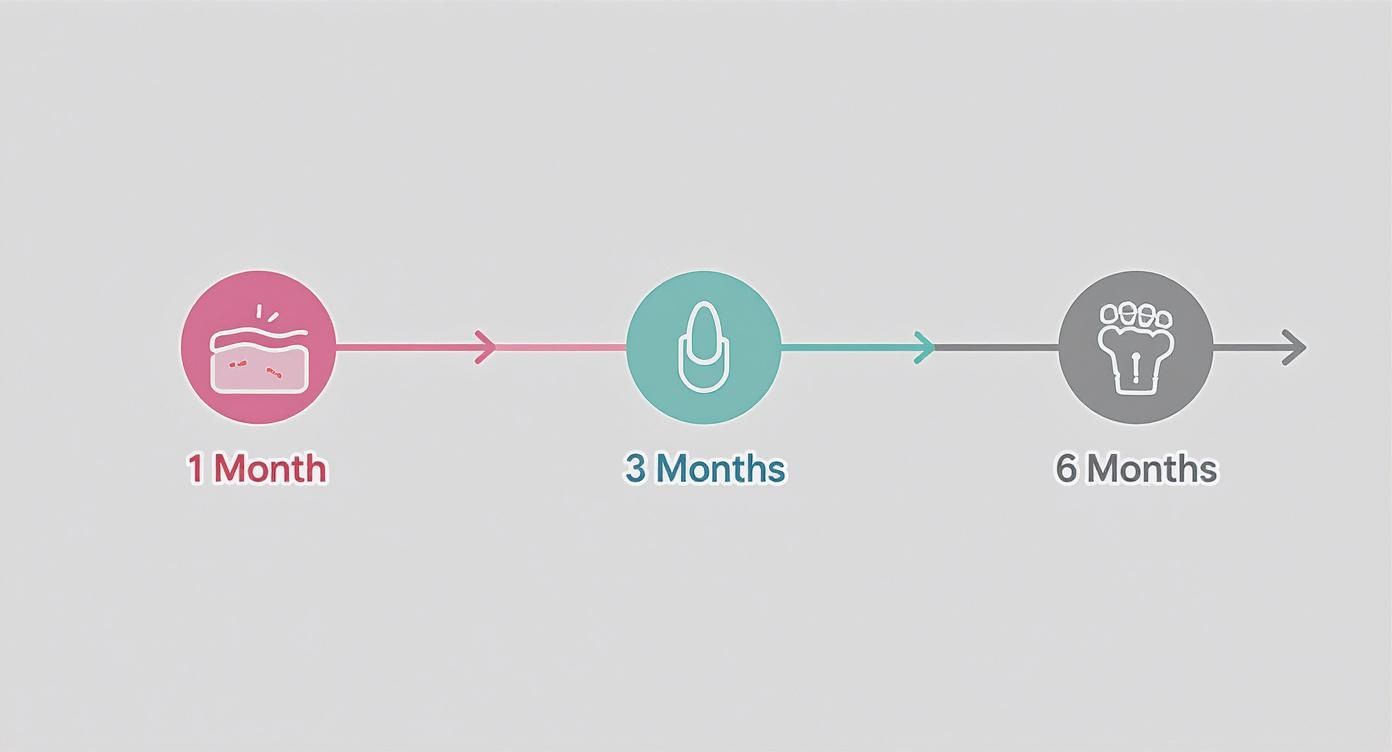
As you can see, the skin benefits are often the first to arrive, followed by improvements in slower-growing tissues like your nails and joints.
Setting Realistic Expectations
Patience is key here. Consistency is your best friend. This isn't an overnight fix; it's a gradual rebuilding process. That 4 to 12-week window is a solid benchmark, backed by plenty of clinical research.
For example, a 2021 study found that people taking 2.5 grams of collagen peptides every day for 12 weeks saw significant improvements in their skin's hydration and elasticity.
How significant? The study noted that skin hydration shot up by as much as 28%, while elasticity improved by about 19% compared to those who didn't take collagen. These numbers prove that measurable changes are happening within that initial three-month window. You can dive into the full study on these skin improvements on NCBI's digital library.
To help you map out your own journey, we've put together a table summarizing what you can generally expect and when.
Expected Timeline for Collagen Supplement Results
This table outlines the typical timeframe for seeing specific benefits when you're taking a collagen supplement consistently every day.
| Benefit | Typical Timeframe | What to Look For |
|---|---|---|
| Skin Hydration & Plumpness | 1-2 Months | Skin feels softer, looks more dewy, and has a subtle glow. |
| Fine Lines & Elasticity | 3-4 Months | A visible reduction in fine lines and improved "bounce-back." |
| Nail Strength | 3-6 Months | Nails feel less brittle and may grow faster and stronger. |
| Hair Health | 3-6 Months | Reduced breakage and a healthier sheen. |
| Joint Comfort & Mobility | 4-6 Months | Less everyday stiffness and improved comfort during movement. |
Keep in mind, this is a general guide. Everyone's body is different, so your personal timeline might vary a bit, but this roadmap gives you a great idea of what to watch for as you go.
How Your Body Puts Collagen to Work
So, you've taken your daily collagen booster. What happens next? It’s not like the collagen goes on a direct flight to your fine lines. A better way to think about it is sending a specialized repair crew throughout your body, armed with both the raw materials and the blueprints for a rebuild.

The journey starts in your gut. When you take a hydrolyzed collagen supplement or a plant-based collagen booster, your body gets to work breaking it down into tiny units called peptides and amino acids. These are the essential building blocks for pretty much every protein in your body.
These little components are small enough to pass through your intestinal wall and into your bloodstream. From there, they hitch a ride to every corner of your body, ready to be put to work wherever they’re needed most.
Igniting Your Natural Collagen Engine
Here’s where it gets really interesting. Those absorbed peptides and amino acids do more than just supply spare parts. They also act as powerful signals, essentially sending a memo to your fibroblast cells—the tiny “factories” responsible for making new collagen.
This kicks off a powerful one-two punch:
- Supplying Building Blocks: Your body gets a fresh supply of the specific amino acids, like glycine and proline, it needs to weave new collagen fibers.
- Stimulating Production: The peptides nudge your fibroblasts to wake up and ramp up their own natural collagen production, helping to counteract what we lose to age and stress.
This signaling part is key. It’s why taking collagen isn't just about topping off your tank; it’s about reminding your body how to make its own. It also explains why consistency is so important for seeing real results.
Your body doesn't just use the collagen you consume directly. It uses the components to repair existing tissue and, more importantly, to stimulate a fresh wave of natural collagen synthesis.
From Bloodstream to Benefits
Once these building blocks and signals are circulating, your body’s internal wisdom takes over, sending them to the areas that need a little extra love. That could be the dermal layer of your skin to help with firmness, the connective tissues in your joints to support flexibility, or the roots of your hair and nails to build strength from the inside out.
You can't really tell your body where to send the collagen first—it has its own priority list. But with consistent, daily supplementation, all of these areas eventually get the support they need to rebuild and rejuvenate. This whole internal process is at the heart of what exactly collagen is and why it's important for feeling your best.
The Journey to Healthier Skin
If you’re starting a collagen-boosting routine, chances are you’re most excited about seeing changes in your skin. The good news is, your skin is often the first place the benefits really start to show. This isn't an overnight fix, of course—it’s more like a gradual rebuilding of your skin’s foundation from the inside out.
The first hints that things are working usually show up around the 4-week mark. You might not see a dramatic difference in the mirror just yet, but you'll likely feel it. Your skin might seem softer, look a bit more "dewy," or just feel more hydrated throughout the day. This initial shift is your body putting those new building blocks to work, reinforcing the deep dermal layer that keeps your skin plump and supple.

This isn’t just wishful thinking; it's backed by a growing body of clinical evidence. Researchers are seeing measurable improvements in key markers of skin health, confirming what so many people experience firsthand.
Seeing More Significant Changes
Once you get past that first month, the real magic starts to happen. Between weeks 8 and 12, the changes often become much more noticeable. This is when many people report seeing a visible softening of fine lines and a real improvement in their skin’s elasticity—that youthful “bounce” that we all miss.
These timelines come from solid science. A major meta-analysis pooling the results of 19 different studies found that people taking hydrolyzed collagen for 90 days saw some impressive results. On average, their skin elasticity shot up by 15-20%, and hydration improved by a whopping 25-30%. What's great is that these studies included people from all over the world, showing that these results are pretty consistent. You can dig into some of these research findings at Ohio State Health & Discovery.
The takeaway here is simple: lasting results come from commitment. You’re not just putting a band-aid on the problem. You’re giving your body the raw materials it needs to support its own natural, ongoing skin renewal process.
Your Skin’s Transformation Timeline
To help you know what to look for and when, here’s a rough roadmap of what the journey to healthier skin usually looks like when you're consistently supporting your body's collagen production:
- Weeks 1-4: This is the hydration phase. Your skin starts to feel softer and look more radiant as its ability to hold onto moisture improves.
- Weeks 4-12: Now for the structural stuff. Fine lines may appear less noticeable, and your skin should feel firmer as its elasticity gets a boost.
- Months 3+: This is all about maintenance and resilience. With continued support, your skin’s deeper layers become healthier, making them better at standing up to daily stressors.
Just remember, everyone’s body is a little different. This is a general guide, but it gives you a reliable idea of what to expect as you invest in your skin’s long-term health.
Beyond the Skin: Unlocking Benefits for Hair, Nails, and Joints
While glowing skin often steals the spotlight, collagen's rebuilding work doesn't stop there. It extends to every corner of your body. When you consistently support your system, the benefits gradually ripple out to your hair, nails, and joints—though these areas follow a different, more patient timeline.
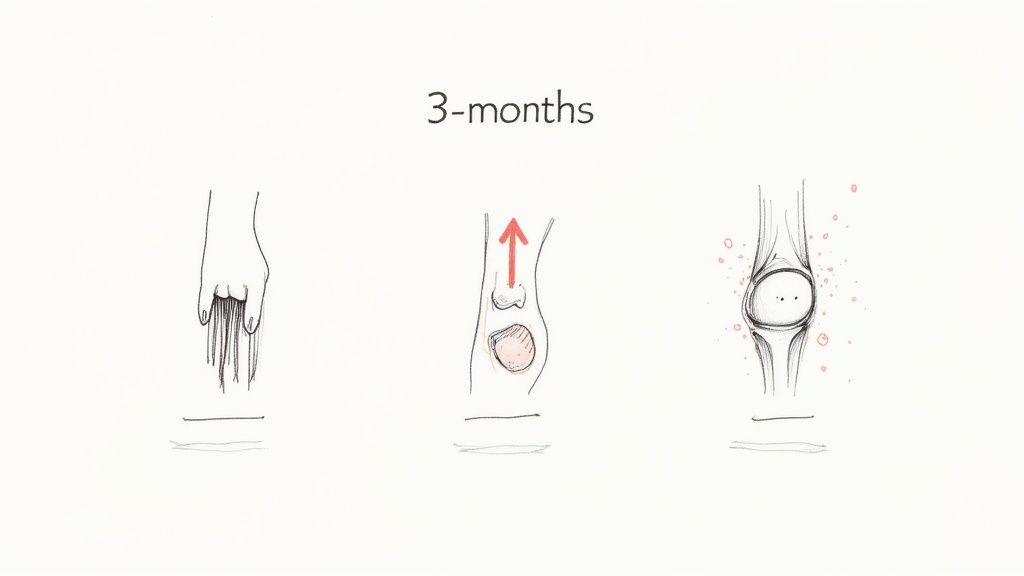
Think of it like this: your body is renovating a house, room by room. It prioritizes different areas based on need and how quickly tissues turn over. Since hair and nails have slower growth cycles, you'll need to adjust your expectations accordingly.
The Longer Road to Stronger Hair and Nails
Don't get discouraged if your hair and nails don't transform overnight. These structures grow from the root and the nail bed, so any improvements happening on the inside need time to physically grow out.
You'll typically start to notice stronger, less brittle nails and potentially healthier-looking hair around the 3 to 6-month mark.
To support this process from all angles, you can check out our guide on how to strengthen hair and nails. It's a great reminder that true strength is built from the inside out, over time.
A major 2022 review confirmed that while skin benefits can pop up within six weeks, the long-haul advantages for tissues like joints often surface after three to six months of consistent use.
This same review pulled data from multiple international studies and found that older adults saw up to a 30% improvement in joint mobility and a 20% reduction in joint discomfort after six months. Those are significant numbers, and they really underscore why patience is a virtue when it comes to whole-body benefits. You can read more about these findings on collagen supplementation at Cleveland Clinic.
Supporting Joint Health and Mobility
When it comes to your joints, the timeline stretches out even further. Cartilage and other connective tissues are dense and have a very slow rate of regeneration. That’s why it often takes 3 to 6 months of dedicated support to feel a noticeable difference in comfort and mobility.
The goal here isn't a quick fix; it's systemic, long-term support. By sticking with it, you’re supplying the essential building blocks for not just skin, but also for the resilient, flexible tissues that keep you moving comfortably every day. This holistic approach is key to understanding how long it really takes for collagen to work its magic across your entire body.
What Speeds Up (or Slows Down) Your Results?
Ever wondered why your friend started a new supplement and saw changes in a month, while you're still waiting? It's a super common experience, and the same thing happens with collagen boosters. How long it takes to see results isn't just about what's in the bottle; it’s a unique mix of personal factors that can either put your progress in the fast lane or slow it way down.
Getting a handle on these variables is actually pretty empowering. It helps you figure out what’s going on if you’re not seeing the benefits you hoped for and puts you back in the driver's seat.
Let's break down what really makes a difference.
Supplement Quality and Dosage
Let’s be real: not all supplements are created equal. The real magic happens when you get two things right: the formulation and the dosage.
A top-notch, plant-friendly collagen booster won't just give you the amino acid building blocks—like glycine, L-lysine, and L-proline. It will also pack in the essential sidekicks that help your body actually use them.
Think of it like trying to build a brick wall. You can have a whole pile of bricks (the amino acids), but without mortar and a bricklayer (supportive nutrients), you're not going to get a wall.
A smart formula will always include key players like:
- Vitamin C: This is an absolute must-have. Your body literally cannot produce strong, stable collagen fibers without enough Vitamin C.
- Zinc: This is another critical mineral that acts as a helper in the production line, helping your cells build and repair tissues effectively.
- Antioxidants: Think of ingredients like grape seed extract as your collagen's personal bodyguards, protecting it from damage caused by pesky free radicals.
Dosage is the other half of the equation. Most of the clinical studies that show real, noticeable results use daily doses somewhere between 2.5 and 15 grams of collagen peptides. If your dose is too low, you're just not giving your body enough raw material to make a meaningful impact.
Your Age and Baseline Health
Where you're starting from plays a huge role in how quickly you'll see a change. Someone in their late 20s who still has a pretty solid collagen foundation will probably respond differently than someone in their 50s, whose natural production has already dropped off significantly.
Your body is incredibly smart—it always prioritizes the most urgent repairs first. If you have a lot of collagen depletion in your joints or internal connective tissues, your system will likely send the new building blocks there before you start seeing those glowing changes in your skin.
Your overall health also sets the stage. If your body is constantly fighting off inflammation or trying to make up for nutritional gaps, it has a lot more on its to-do list before it can focus on aesthetic upgrades. A healthier starting point almost always means faster, more visible results.
Those Crucial Lifestyle Choices
Your daily habits can either supercharge your supplement's power or completely cancel it out. The hard truth is, you can’t out-supplement a lifestyle that’s actively destroying collagen.
A few habits are famous collagen-killers:
- Sun Exposure: UV radiation is collagen’s public enemy number one. It directly attacks and damages collagen fibers while slowing down the production of new ones. Using sunscreen diligently isn't just a suggestion; it's essential.
- Smoking: This habit is terrible for your skin. It restricts blood flow, starving your skin of the oxygen and nutrients it needs to stay healthy. It also unleashes a flood of free radicals that weaken your collagen.
- Too Much Sugar: A diet loaded with refined sugar can lead to something called glycation. This is where sugar molecules attach themselves to your collagen, making it stiff, brittle, and weak.
By managing these negative influences and focusing on a supportive, antioxidant-rich diet, you create the perfect internal environment for your collagen booster to work its magic and deliver the results you're looking for.
Key Factors That Speed Up or Slow Down Collagen Results
To give you a clearer picture, here's a quick comparison of the lifestyle and dietary habits that can either help or hinder your progress.
| Factor | Speeds Up Results (Positive Impact) | Slows Down Results (Negative Impact) |
|---|---|---|
| Diet | Eating a diet rich in antioxidants (berries, leafy greens) and protein. | Consuming a diet high in refined sugar and processed foods. |
| Sun | Consistent use of broad-spectrum SPF 30+ sunscreen daily. | Frequent, unprotected sun exposure or use of tanning beds. |
| Hydration | Drinking plenty of water throughout the day to support skin health. | Chronic dehydration, which can make skin look dull and dry. |
| Lifestyle | Getting 7-9 hours of quality sleep per night for optimal repair. | Smoking, which damages existing collagen and restricts blood flow. |
| Stress | Managing stress with practices like meditation, yoga, or exercise. | High levels of chronic stress, which increases cortisol and inflammation. |
| Nutrients | Ensuring adequate intake of Vitamin C and Zinc to support synthesis. | Nutritional deficiencies that prevent your body from making new collagen. |
Ultimately, think of your supplement as a powerful tool. When you combine it with healthy habits, you create a synergistic effect that gives you the best possible chance of seeing fantastic results, faster.
How to Maximize Your Collagen Benefits
Just taking a daily supplement is a fantastic start, but you can really amplify your results with a few smart habits. Think of it as creating the perfect environment inside your body for it to get to work rebuilding and rejuvenating. It’s not just about adding the building blocks; it’s about making sure every single scoop counts.
The number one rule? Consistency. This is non-negotiable. Taking your supplement every single day ensures your body has a steady supply of the essential amino acids it needs. If you start skipping days, you create gaps in that supply chain, which can slow down your body’s momentum and delay the results you’re working so hard for.
Create a Supportive Routine
What you do every day matters just as much as your supplement. It all starts with hydration. Collagen thrives in a water-rich environment, so drinking plenty of water throughout the day helps keep your skin plump and your tissues functioning at their best.
Next up is defense. You have to protect the collagen you already have. The biggest enemy here is the sun. UV radiation actively breaks down your collagen, so a good broad-spectrum sunscreen isn’t just an option—it’s your best defense against premature aging.
Protecting your existing collagen is just as crucial as building new collagen. A great offense is nothing without a solid defense, and that means shielding your skin from sun damage and providing it with antioxidant support.
Fuel Your Body with the Right Nutrients
Your supplement can’t do its job in a vacuum. It works best when it has the right nutritional partners. A diet packed with antioxidant-rich fruits and vegetables helps your body fight off the free radicals that love to degrade collagen fibers.
Certain nutrients are also absolutely essential for synthesis. Our guide on supplements for collagen production dives into how key vitamins and minerals act as catalysts in this process, making sure your body can actually use the building blocks you’re giving it.
To really get the most out of your investment, here's a simple checklist:
- Be Consistent: Take your supplement daily, no excuses.
- Stay Hydrated: Drink plenty of water to support healthy tissues.
- Protect Your Skin: Make a daily broad-spectrum sunscreen a habit.
- Eat Antioxidants: Fill your plate with colorful fruits and veggies.
When you pair your supplement with these supportive habits, you create a powerful synergy that helps you see better, faster results.
A Few Common Questions About Collagen
As you get started, it’s natural for a few questions to come up. Getting clear on the details helps you feel confident and stick with your new routine. Let’s walk through some of the things people often ask.
What’s the Best Time of Day to Take It?
Honestly, there isn’t one magic time that works for everyone. The most important thing is consistency.
The best time is simply whenever you’re most likely to remember to take it. Some people love adding it to their morning coffee or smoothie to start the day off right. Others find it easier to remember in the evening as part of their wind-down routine. Just pick a time that fits your life and make it a daily habit.
Can You Take Too Much?
While collagen boosters are generally very safe, it’s always smart to stick with the recommended dose on the label. Taking way more than you need won’t speed up your results.
Following the suggested serving size ensures you’re giving your body an effective amount of key nutrients without going overboard.
The goal is to provide a steady, reliable supply of collagen-building blocks and supportive nutrients. Consistency is far more important than quantity when it comes to seeing real, lasting benefits.
What Happens If I Stop Taking It?
If you stop taking your supplement, the benefits won’t just vanish overnight. Instead, your body will gradually return to its baseline rate of collagen production.
Over a few months, you might start to notice your skin losing some of that bouncy feel or your nails becoming a bit more brittle again. Think of it less like a quick fix and more like a long-term maintenance plan for your body's natural scaffolding.
Animal Collagen vs. Plant-Based Boosters
This is a great question. Animal-based collagen comes directly from sources like cowhides or fish scales.
Plant-based collagen boosters, on the other hand, work a bit differently. Instead of giving your body a dose of animal collagen, they supply it with the specific plant-derived amino acids (like glycine and L-proline), vitamins (like C and A), and minerals it needs to fire up its own natural collagen production. It's all about giving your body the right tools for the job.
Ready to support your body's natural collagen production from the inside out? Staye offers a clean, plant-based formula designed to give your system the exact building blocks and nutrients it needs for healthier skin, hair, nails, and joints. Discover the difference at https://shopstaye.com.