

When it comes to muscle recovery, some supplements are tried-and-true powerhouses. We're talking about proven performers like whey protein for serious muscle repair, creatine for refueling your energy stores, and tart cherry for dialing down that post-workout soreness. These aren't just hype; they give your body the essential building blocks it needs to come back stronger after you've pushed your limits.
Why Effective Muscle Recovery Matters

Every time you grind through a tough workout, you're actually creating thousands of microscopic tears in your muscle fibers. Don't worry, this is a good thing. It's the very signal that tells your body it's time to build muscle and get stronger.
But the real magic doesn’t happen while you’re lifting, running, or cycling. It happens in the quiet hours and days that follow.
This crucial period is what we call muscle recovery. Think of your muscles as a road that's just been through rush hour. The workout leaves behind little cracks and potholes. Recovery is the expert repair crew that comes in not just to patch the damage but to reinforce the road, making it tougher and more resilient for the next time. Without that crew, the road would eventually crumble.
The Science of Rebuilding Stronger
Your body's natural repair process is pretty amazing. It starts by clearing out damaged cells and then kicks off Muscle Protein Synthesis (MPS)—the process that uses amino acids from protein to build brand-new muscle tissue.
This whole operation demands a ton of resources, mainly energy and the right nutritional building blocks. If those resources are in short supply, your recovery hits a major slowdown. You end up with lingering soreness, fatigue, and a frustrating plateau in your fitness journey.
This is where strategic nutritional support completely changes the game. The best supplements for muscle recovery act like a priority delivery service, giving your body the exact materials it needs, right when it needs them most. It’s a targeted approach that makes the whole repair process faster and far more effective.
"Effective recovery isn't just about reducing soreness; it's about optimizing the physiological adaptations that lead to strength, endurance, and overall performance gains. What you do after your workout is just as important as the workout itself."
By fueling your body the right way, you get some major wins:
- Faster Repair: Key nutrients like protein and amino acids provide the raw materials to mend those muscle micro-tears quickly.
- Reduced Soreness: Anti-inflammatory compounds help take the edge off post-workout aches, getting you back to training sooner.
- Enhanced Growth: Giving your body a surplus of building blocks ensures your muscles don't just repair—they rebuild bigger and stronger than before.
Top Muscle Recovery Supplements At a Glance
To make it simple, here's a quick look at some of the most effective supplements that can kickstart your recovery process.
| Supplement | Primary Function | Best Time to Take |
|---|---|---|
| Whey Protein | Fast-acting muscle repair & synthesis | Within 30-60 mins post-workout |
| Creatine | ATP energy replenishment & strength | Pre- or post-workout |
| Tart Cherry | Reduces inflammation & soreness | Daily, or post-workout |
| BCAAs | Reduces muscle breakdown & fatigue | Intra-workout or post-workout |
| Collagen Peptides | Supports connective tissue & joints | Daily, anytime |
This table is just a starting point, of course. The key is finding what works for your body and your specific training goals.
A Growing Focus on Recovery
The importance of this post-workout window isn't just locker room talk; it's a massive, growing industry. The global market for muscle recovery powders is on track to hit around $13.34 billion by 2025, which shows just how many athletes and everyday fitness enthusiasts are catching on. People are finally realizing that smart recovery is the secret to unlocking consistent, long-term performance.
Think of this guide as your roadmap. We'll break down how specific supplements work, help you figure out which ones are right for you, and show you how to build them into a complete recovery plan for the best possible results. We’ll cover everything from the protein foundations to the support structures for your joints and connective tissues, even explaining what collagen is and why it's important for a truly complete approach to fitness.
The Foundational Role of Protein and Amino Acids
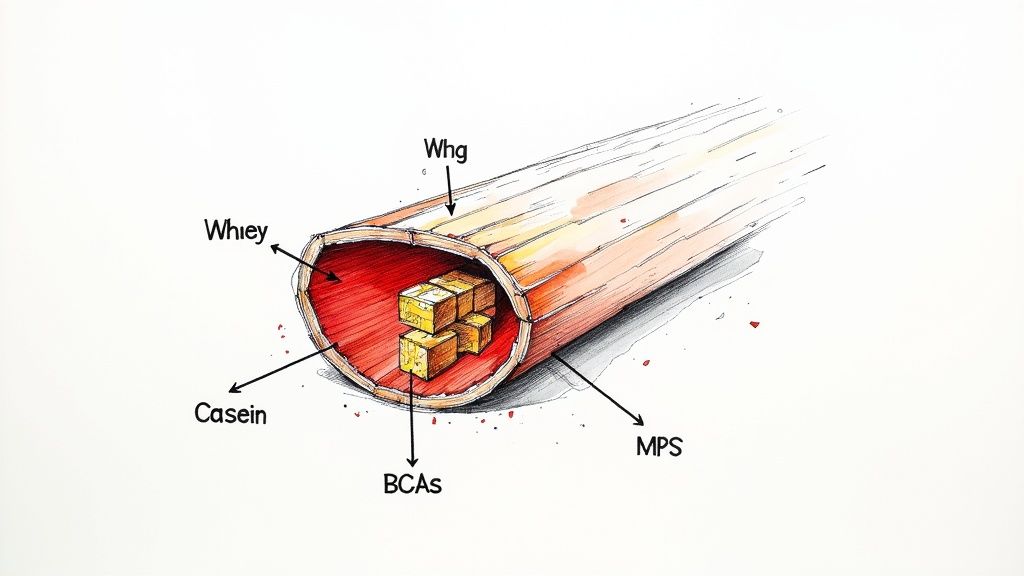
If muscle recovery were a construction project, protein would be the truckloads of bricks and mortar arriving on-site. Without it, the entire rebuilding effort grinds to a halt. Protein and its building blocks, amino acids, are the non-negotiable raw materials your body needs to repair, rebuild, and strengthen muscle tissue after a tough workout.
Think of each muscle fiber like a brick wall. Exercise creates tiny, microscopic tears—little cracks and chips in that wall. Your body’s internal repair crew is ready to get to work, but they can't do anything without supplies. That’s where protein comes in. It delivers the amino acids (the individual bricks) needed to not only patch the damage but also add new layers, making the wall stronger than it was before.
This whole process is called Muscle Protein Synthesis (MPS). It’s basically the biological switch that turns on your body's internal muscle-building factory. A hard workout flips this switch to "ON," but the factory can’t produce anything without materials. Consuming enough protein provides those essential supplies, kicking the MPS response into high gear for real recovery and growth.
Choosing Your Protein Source
Not all protein supplements are created equal. They work differently based on what they're made of and how quickly your body can use them. Figuring out these differences helps you pick the best tool for the job.
- Whey Protein: This is the fast-acting sprinter of the protein world. Since it’s derived from milk, whey is digested and absorbed rapidly, flooding your muscles with amino acids almost immediately. This makes it a go-to choice for that post-workout window when your muscles are screaming for nutrients.
- Casein Protein: If whey is the sprinter, casein is the marathon runner. Also from milk, casein forms a gel-like substance in the stomach, which leads to a much slower, more sustained release of amino acids over several hours. It’s perfect before bed, giving your body a steady drip of building blocks to support recovery while you sleep.
- Plant-Based Protein Blends: Modern plant-based proteins—often combining sources like pea, rice, and hemp—are smartly engineered to provide a complete amino acid profile, just like their animal-based counterparts. They are fantastic options for anyone living a vegan lifestyle or dealing with dairy sensitivities.
Protein is so central to fitness that it completely dominates the global sports nutrition market. In fact, by 2025, protein supplements are projected to make up about 67.4% of the entire sports supplement market share. That's a huge number, and it speaks volumes about its proven role in muscle repair.
The Specialized Roles of Amino Acids
While protein is the whole package, certain amino acids play starring roles in the recovery drama. They’re like the specialists on the construction crew, each with a critical job to do. The two groups you’ll hear about most are EAAs and BCAAs.
Essential Amino Acids (EAAs) are the nine amino acids your body can't make on its own; you have to get them from food or supplements. Think of them as the nine essential tools you absolutely must have in your toolbox to build anything.
Branched-Chain Amino Acids (BCAAs) are a special subgroup of three EAAs—leucine, isoleucine, and valine—that are particularly crucial for muscle health.
- Leucine: This is the master switch for MPS. It directly signals your body to fire up the muscle-building process.
- Isoleucine: Helps your muscles pull in glucose for energy, fueling the repair work.
- Valine: Works to reduce that feeling of fatigue from exercise, helping you feel less wiped out after a tough session.
While any complete protein source gives you all the EAAs (including the BCAAs), supplementing with them directly can offer targeted benefits, like cutting down on muscle soreness and kick-starting recovery even faster.
How Much and When to Supplement
Getting the timing and dosage right is key to making your protein and amino acid supplements work for you. The main goal is to keep your body in a state of positive protein balance, where muscle building happens faster than muscle breakdown.
For the best results, most research points to consuming 20-40 grams of high-quality protein within an hour or two after your workout. This is often called the "anabolic window" because it’s when your muscles are most receptive to nutrients.
But what’s arguably even more important is your total daily protein intake. If you're active, aim for 1.6 to 2.2 grams of protein per kilogram of body weight, spread out across your meals. This ensures a steady supply of amino acids is always available for ongoing repair.
It's also worth remembering that some amino acids are crucial for building more than just muscle. Proline and glycine, for instance, are key components of collagen—the protein that forms your connective tissues. Supporting your body’s natural collagen production is a smart move for long-term joint and tissue health. Including nutrients like vitamin C can be a big help here, as you can see in our guide on the best vitamin C for collagen production. By focusing on both muscle and connective tissue, you're building a more resilient, robust body from the ground up.
Accelerating Recovery with Performance Supplements
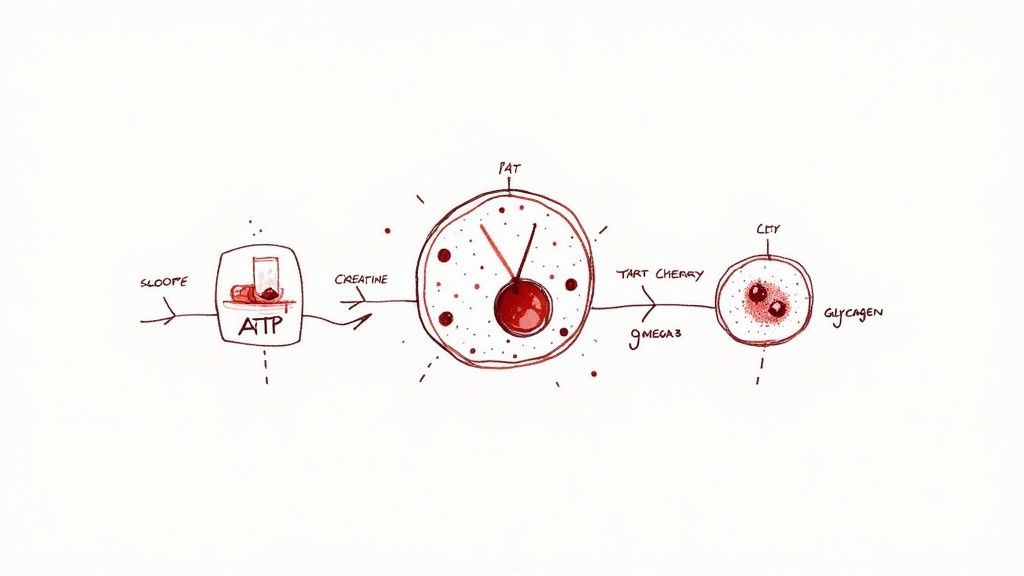
While protein is the master builder for muscle repair, a few other key players can seriously speed up the process. These performance supplements don’t just rebuild; they refuel your energy systems, calm inflammation, and restock what your workout took out. Adding them to your routine can turn recovery from a passive waiting game into an active, strategic advantage.
Think of your muscle cells as having tiny, rechargeable batteries that power every single contraction. The energy they run on is called adenosine triphosphate (ATP). During a tough workout, you drain these batteries at an astonishing rate, which is a big reason why you start to feel fatigued and weak.
This is where creatine monohydrate comes in. It’s not just for building strength; it’s a master of energy recycling and one of the best-researched supplements for muscle recovery out there.
Refill Your Energy Tanks with Creatine
Creatine works by boosting your body’s supply of phosphocreatine, a molecule that can instantly donate its phosphate to "recharge" depleted ATP. When you have more phosphocreatine on hand, your muscles can regenerate that critical ATP energy much faster, both between sets and between workouts.
This rapid energy top-up means your muscles get back to full functional capacity more quickly. The result? You can train harder and more often without feeling completely wiped out. Study after study confirms that creatine supplementation doesn't just improve strength but also helps you produce more force in the days following a grueling session.
Key Takeaway: Creatine speeds up muscle recovery by refilling your muscles' primary energy source (ATP). This helps restore strength and performance faster, preparing you for your next training session sooner.
For the best results, the gold standard is a daily dose of 3-5 grams of creatine monohydrate. You can take it before or after your workout—what matters most is taking it consistently every day.
Soothe Inflammation and Reduce Soreness
Intense exercise naturally kicks off an inflammatory response. This is a normal, necessary part of the repair process. But when that inflammation gets out of hand or sticks around too long, it leads to that crippling soreness we all know as Delayed Onset Muscle Soreness (DOMS), which can really slow you down.
Thankfully, certain supplements are fantastic at keeping this response in check.
- Tart Cherry Juice: This isn't just a tasty drink; it's loaded with powerful antioxidants and anti-inflammatory compounds called anthocyanins. Research shows that tart cherry juice can significantly dial down muscle pain and soreness after tough workouts by taming inflammation and oxidative stress.
- Omega-3 Fatty Acids: These healthy fats, found in fish oil, are potent anti-inflammatory agents. They help balance your body’s inflammatory signals, leading to less muscle stiffness and better joint health over time.
These supplements don't just put a band-aid on the pain; they target the underlying inflammation that’s causing it. By getting a handle on soreness, you can maintain your training quality and stay consistent. Since joint health is just as important as muscle repair, you might also want to check out our guide on the best supplements for joint recovery.
Don't Forget the Fuel Source: Carbohydrates
If protein is the bricklayer, then carbohydrates are the fuel that powers the entire construction crew. After you train, your muscles' main fuel tank—glycogen—is running on empty. Filling it back up is an absolutely critical step in the recovery process.
Eating carbs after your workout accomplishes two vital things:
- Restocks Glycogen: It refills the energy reserves inside your muscle cells, which is non-negotiable for performing your best in the next session.
- Spikes Insulin: This natural insulin response acts like an unlock key, helping shuttle nutrients—including all those important amino acids from your protein—into your muscle cells more efficiently to get the repair process started.
For a powerful recovery one-two punch, pair your post-workout protein with a source of fast-digesting carbs like a banana, some white rice, or a dextrose powder. This combination gives your muscles both the building blocks and the energy they need to rebuild better than before. Aim for a carb-to-protein ratio of around 3:1 or 4:1 to really maximize glycogen replenishment and muscle repair.
By strategically using these performance supplements, you can attack recovery from every angle—energy, inflammation, and fuel—creating a complete system that helps you bounce back faster and stronger every time.
What's Next in Muscle Recovery?
The world of muscle recovery is evolving far beyond just scooping protein powder into a shaker. As our understanding of the human body gets more sophisticated, so does the science behind the supplements we use. We're seeing a major shift towards smarter, more complete formulas that tackle recovery from every angle, designed for a new generation of health-conscious people who want clean, effective, and sustainable options.
This isn't just about cramming more ingredients into a single product. It’s about synergy—finding combinations of compounds that actually work together to boost absorption, support your entire system, and deliver more precise results. Think of it like this: instead of calling a general handyman to patch a hole in the wall, you're bringing in a team of specialized engineers who not only fix the damage but also reinforce the building's foundation for the long haul.
The Rise of Specialized Formulas
Walk down the supplement aisle today, and you'll see products that do so much more than just rebuild torn muscle fibers. These next-generation formulas are built to support the entire ecosystem behind recovery, from your gut health all the way down to your cellular energy.
This change is happening because we, as consumers, are getting smarter. We now understand that real recovery is more than just protein synthesis. It demands a healthy gut to actually absorb nutrients, a well-regulated inflammatory response to manage soreness, and strong connective tissues to support powerful muscles. This holistic mindset is what’s driving the creation of these new multi-ingredient blends.
- Advanced Peptides: These are essentially "pre-digested" short chains of amino acids. They're incredibly easy for the body to absorb, putting them to work almost immediately for repair.
- Prebiotics and Probiotics: You can't use what you can't absorb. A healthy gut is the gateway to nutrient utilization, and adding these ensures your body makes the most of the protein and aminos you’re feeding it.
The market for muscle recovery supplements is expanding to meet these new demands. We're seeing a clear trend toward formulas that blend old-school staples like BCAAs with advanced peptides, probiotics, and even certain cannabinoid-related compounds where regulations allow. These products are designed to streamline recovery while matching consumer values around functionality and sustainability. You can dig deeper into these market shifts by exploring the full research on muscle recovery supplement trends.
The Plant-Based Recovery Revolution
One of the biggest waves to hit the supplement industry is the unstoppable rise of plant-based nutrition. For a long time, plant-based athletes had limited, and frankly, subpar options. Not anymore. Today, the innovation in vegan-friendly recovery is incredible, with high-quality plant proteins from pea, rice, and hemp offering complete amino acid profiles that go toe-to-toe with their animal-based counterparts.
But the real game-changer isn't just protein. A huge area of growth is in supporting the body's connective tissues—all the tendons, ligaments, and cartilage that take a beating during exercise. This has sparked an entirely new category of supplements: plant-based collagen boosters.
Instead of giving your body pre-made animal collagen, these boosters provide the raw materials your own body needs to produce its collagen naturally. It’s the difference between buying a prefab house and being handed the premium lumber, blueprints, and tools to build a custom one yourself.
These formulas are intelligently designed, usually combining key vitamins and minerals with the specific amino acid building blocks.
- Vitamin C: This is a non-negotiable co-factor in the collagen-making process. Without enough Vitamin C, your body simply can't create new collagen.
- Silica: Often sourced from bamboo, this mineral is crucial for giving connective tissues their strength and elasticity.
- Key Amino Acids: Glycine, lysine, and proline are the "big three" amino acids that make up the collagen structure, so they are essential ingredients for any effective booster.
By focusing on stimulating your body’s own internal factory, products like Staye provide a clean, effective, and sustainable path to supporting joint health and tissue repair. This approach fits perfectly with the modern wellness philosophy of working with your body’s natural systems to get the best results. It's a clear sign that the market is finally delivering more thoughtful, science-backed, and holistic solutions for total body recovery.
How to Build Your Personalized Recovery Stack
When it comes to muscle recovery supplements, there’s no magic formula that fits everyone. The right approach for a pro athlete training twice a day is worlds apart from what a weekend warrior needs to bounce back from a tough spin class.
Building a smart recovery stack is all about matching your strategy to your specific goals, training load, and lifestyle.
Think of it like packing for a trip. You wouldn't throw the same gear in your bag for a casual weekend at the beach as you would for a multi-day mountain trek. Your supplement "suitcase" needs to be packed with the same intention, filled only with what serves your unique journey. Let’s break down how to create a plan that works for you.
The Competitive Athlete Maximizing Performance
For anyone pushing their body to the absolute limit, recovery isn't just a nice-to-have—it's a non-negotiable part of the training cycle. The main goal here is lightning-fast repair and glycogen replenishment to get you ready for the next session, which might only be a few hours away.
This stack is built for speed, delivering nutrients precisely when your body is primed to absorb them.
- Post-Workout (within 30 minutes): A shake with 30-40g of Whey Isolate and 60-80g of fast-acting carbs (like dextrose or maltodextrin). This combo rushes amino acids to your muscles and rapidly tops off depleted energy stores.
- Daily Staple: 5g of Creatine Monohydrate every single day. You can toss it in your post-workout shake or take it anytime that's convenient, as long as you're consistent. This keeps your energy reserves full for sustained power.
- Before Bed: 20-30g of Casein Protein. Think of this as a slow-release protein drip that feeds your muscles overnight, preventing breakdown while you sleep.
- Anti-Inflammatory Support: 500mg of Tart Cherry Extract twice a day helps manage exercise-induced inflammation and can take the edge off severe muscle soreness.
The Weekend Warrior Reducing Soreness
The weekend warrior goes all out on Saturday and Sunday but might be less active during the week. For them, the biggest goal is to minimize that dreaded DOMS (Delayed Onset Muscle Soreness) so they can walk down the stairs on Monday morning without wincing.
This stack focuses less on immediate fuel replacement and more on taming inflammation and supporting repair, without the need for super-strict timing.
- Post-Workout: 25-30g of Whey or a Plant-Based Protein Blend to get the muscle repair process started.
- Daily Support: 3-5g of Creatine Monohydrate taken daily helps you maintain strength for those intense weekend sessions and can reduce overall fatigue.
- Soreness Management: 1-2g of Omega-3s (EPA/DHA) each day works behind the scenes to help control the inflammatory response that leads to stiffness and pain.
This infographic gives a great visual of how different recovery trends are aligning with specific wellness goals, from overall health to specialized plant-based needs.
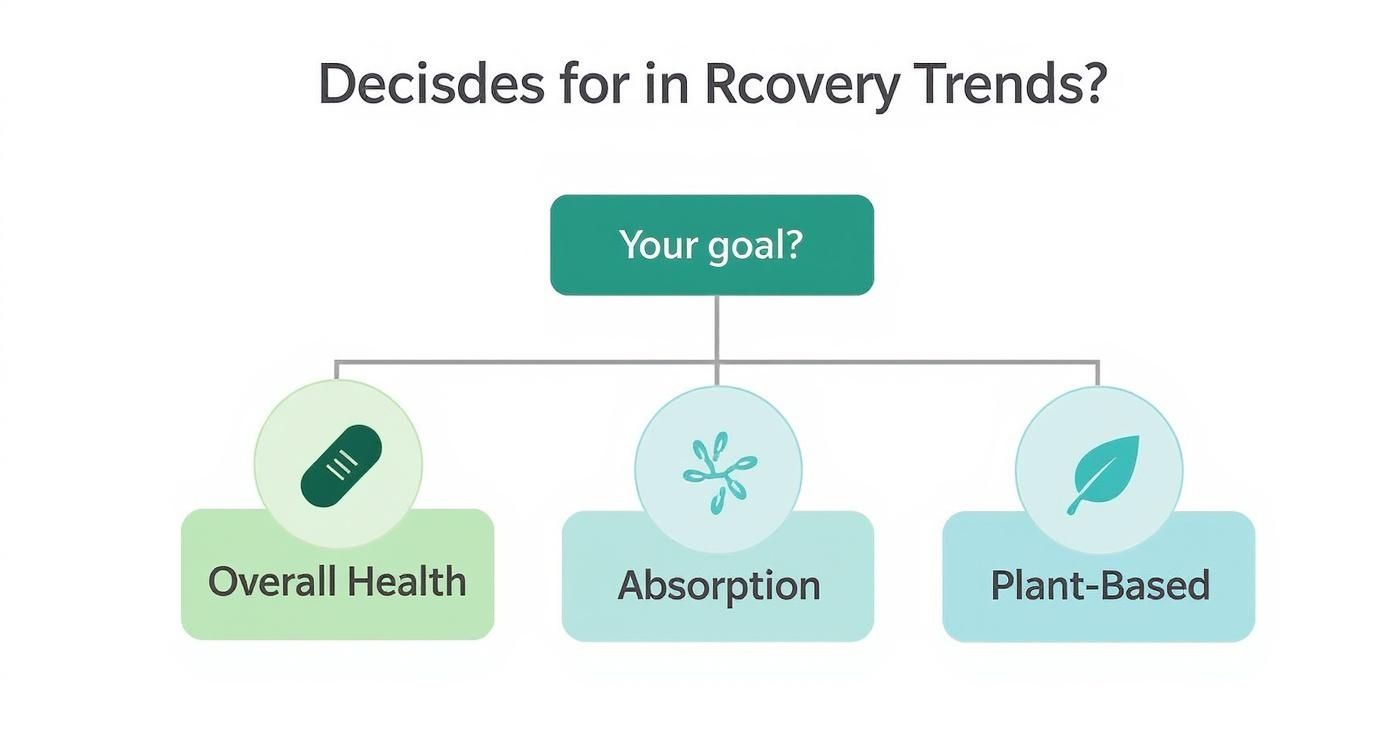
As you can see, the trend is moving toward tailoring supplements for specific outcomes, whether that means using peptides for better absorption or choosing sustainable, plant-based options.
The Active Adult Preserving Muscle
For active adults, the game changes. The focus shifts from peak performance to preserving lean muscle, supporting joint health, and ensuring you can stay mobile and active for the long haul. It's all about consistency and foundational support.
- Daily Protein: Aim for 1.6-2.0g of protein per kg of body weight, spread throughout the day. A high-quality protein powder is an easy way to help hit this target.
- Joint and Tissue Support: This is where a plant-based collagen booster like Staye fits in perfectly. Taken daily, it provides vitamin C, silica, and key amino acids your body needs to produce its own collagen, supporting the connective tissues that are so vital for joint health.
- Bone Health: A daily Vitamin D supplement (2,000-4,000 IU) is crucial. It not only helps with calcium absorption for strong bones but also plays a key role in maintaining muscle function.
The Plant-Based Athlete Optimizing Nutrition
Plant-based athletes have to be a bit more strategic to ensure they get a complete amino acid profile and certain nutrients that are harder to come by without animal products. This stack is designed to fill those potential gaps and maximize recovery on a vegan diet.
- Post-Workout: 25-30g of a high-quality Plant-Based Protein Blend (think pea, rice, or hemp) to make sure you’re getting the full spectrum of essential amino acids.
- Daily Essentials: 5g of Creatine Monohydrate. This is especially important since the main dietary sources of creatine are meat and fish.
- Amino Acid Insurance: Adding 5-10g of BCAAs during or after a workout can provide targeted fuel for muscle protein synthesis, giving your body an extra edge.
- Connective Tissue Care: A plant-based collagen booster is an ideal fit here. It provides the building blocks for collagen production without any animal ingredients, aligning perfectly with a plant-based lifestyle.
Putting it all together can feel overwhelming, so here’s a simple table to help you visualize what these different stacks look like in practice.
Sample Recovery Stacks for Different Fitness Goals
| User Profile | Primary Goal | Recommended Supplements | Notes on Timing |
|---|---|---|---|
| Competitive Athlete | Maximize performance & rapid recovery | Whey Isolate + Carbs, Creatine, Casein, Tart Cherry | Protein/carbs immediately post-workout. Casein at night. Others daily. |
| Weekend Warrior | Reduce soreness & support repair | Whey/Plant Protein, Creatine, Omega-3s | Protein post-workout. Creatine and Omega-3s can be taken anytime daily. |
| Active Adult | Preserve muscle & support joints | High Protein Intake, Plant-Based Collagen Booster, Vitamin D | Spread protein throughout the day. Collagen booster & Vitamin D daily. |
| Plant-Based Athlete | Optimize nutrition & fill nutrient gaps | Plant Protein Blend, Creatine, BCAAs, Collagen Booster | Protein/BCAAs post-workout. Creatine & collagen booster daily. |
Ultimately, the best stack is the one you can stick with consistently. Start with the basics that align with your profile, listen to your body, and don't be afraid to adjust as your goals and training evolve.
Common Questions About Recovery Supplements
Walking down the supplement aisle can feel like navigating a maze. With so much information—and misinformation—out there, it’s easy to get overwhelmed. Let's cut through the noise and answer some of the most common questions we hear.
Think of this as your no-nonsense guide to making smarter decisions for your recovery. We'll tackle the big questions to help you figure out what you really need.
Can You Get Everything You Need from Food Alone?
In a perfect world, a perfectly balanced diet would give your body everything it needs. But for anyone who's active, "perfect" isn't always realistic. Whole foods are, and always will be, the foundation of good health. Supplements, however, offer a targeted, convenient, and efficient way to fill in the gaps—especially right after a workout.
For instance, getting 30 grams of protein from a whey or plant-based shake is a lot easier and faster for your body to absorb than eating a whole chicken breast right after you train. This speed and convenience are where supplements really shine, making sure your muscles get those critical nutrients right when they need them most.
How Long Does It Take for Recovery Supplements to Work?
This really depends on the supplement and what you're hoping to achieve. Some benefits kick in almost immediately, while others are more of a long game, building up over time.
- Short-Term Effects (Hours to Days): You can feel the impact of a post-workout protein and carb shake within hours. They get to work right away, kicking off muscle repair and taking the edge off your fatigue. Something like tart cherry extract can also help dial down muscle soreness within 24-48 hours of a tough session.
- Long-Term Effects (Weeks to Months): Other supplements, like creatine monohydrate, need to build up in your system. You’ll need to take it consistently for about 2-4 weeks to fully saturate your muscles. Once you do, you'll start noticing real improvements in strength, power, and how quickly you bounce back between workouts.
If You Could Only Choose One Supplement, What Would It Be?
If we had to pick just one, the undisputed champion of muscle recovery is a high-quality protein powder. It doesn't matter if it's whey, casein, or a complete plant-based blend—nothing is more fundamental to the repair process.
Protein provides the essential amino acids that act as the literal building blocks for your muscles. Your body absolutely must have them to repair damaged muscle fibers and build new, stronger tissue. Without enough protein, everything else you do for recovery just won't be as effective.
The Bottom Line: While other supplements can optimize your recovery, protein is the non-negotiable foundation. It directly fuels muscle protein synthesis, which is the engine driving all muscle repair and growth.
Are More Expensive Supplements Always Better?
A higher price tag doesn't automatically mean you're getting a better product. Sure, sometimes premium ingredients cost more, but other times you’re just paying for flashy marketing or a celebrity endorsement. The single most important thing to look for is third-party testing.
Keep an eye out for certifications from organizations like NSF International or Informed-Sport. These seals of approval are your guarantee that the product actually contains what the label says it does—and nothing it shouldn't. A third-party tested, affordable creatine will always be a smarter choice than some expensive, untested "proprietary blend."
Your body's ability to repair itself is deeply tied to its collagen framework. To support this vital system from the inside out, Staye offers a clean, plant-based way to help your body produce its own collagen. This ensures your joints and connective tissues get the support they need to keep up with your active life. Discover the plant-based advantage at https://shopstaye.com.