

If you've ever found yourself wondering, "Why are my nails so weak?" you're not alone. The answer is usually a mix of different things. Nails that constantly split, peel, or break are often a sign of nutritional gaps, daily habits like too much exposure to water and chemicals, or even just the natural aging process.
These factors can throw a wrench in your body's ability to produce keratin, the tough protein that makes up your nails.
Decoding the Causes of Weak and Brittle Nails
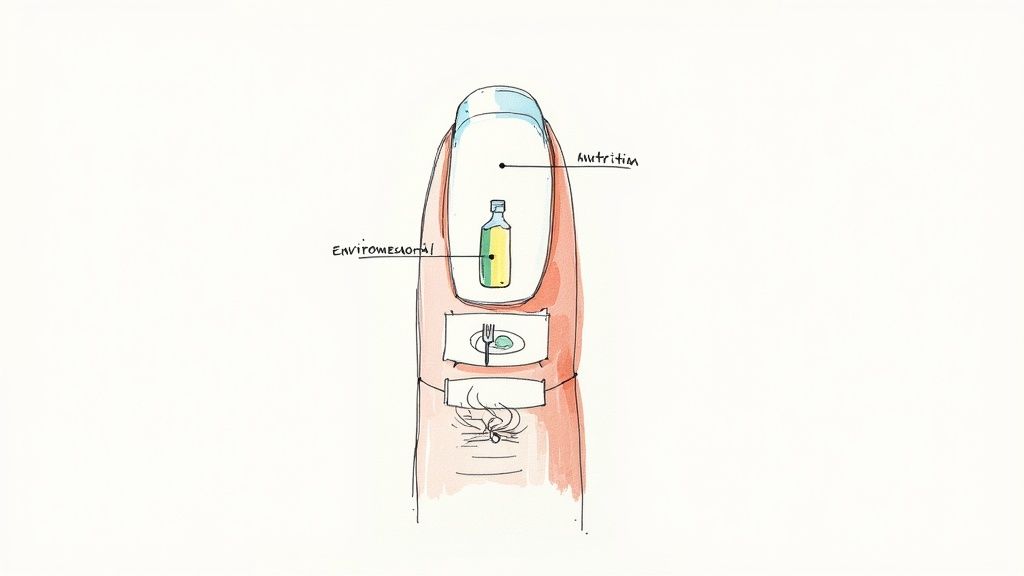
Think of your nails as tiny shields protecting your fingertips. When those shields start to weaken, it's a clear signal that their structure is compromised. It’s a common frustration—in fact, up to 20% of women deal with brittle nails, a condition where the nail plate is so weak that it leads to constant peeling and breaking.
This isn't just a cosmetic issue. It can be genuinely uncomfortable and often points to a deeper imbalance in your body.
The causes usually fall into a few key categories, each affecting your nails in its own unique way. Getting to know them is the first step toward creating a plan for stronger, healthier nails that can actually stand up to daily life.
To make it easier to see how these factors connect, here's a quick breakdown of the most common culprits.
Quick Guide to Common Causes of Weak Nails
| Cause Category | Common Examples | Effect on Nails |
|---|---|---|
| Nutritional Gaps | Low iron, biotin, or zinc | Hinders keratin production, leading to thinness and splitting. |
| Environmental Stress | Frequent hand washing, cleaning without gloves, acetone polish removers | Strips natural oils and moisture, causing dehydration and brittleness. |
| Internal Health | Aging, thyroid conditions, hormonal shifts | Slows cell turnover and reduces natural lipids, making nails fragile. |
As you can see, the path to weak nails can start from the inside with your diet or be triggered by your daily routines. Often, it's a combination of these factors that creates a frustrating cycle.
The Primary Culprits Behind Nail Weakness
Your nail health is a mirror reflecting both your internal wellness and your external environment. The reasons behind weak nails often overlap, making it feel like a constant battle of damage and slow, fragile regrowth. Let's dig into the main areas where things tend to go wrong.
- Nutritional Shortfalls: Your body needs a steady supply of specific vitamins and minerals to build strong keratin. When your diet is lacking in nutrients like biotin, iron, or zinc, it directly slows down this process, leaving you with nails that are thin and prone to splitting.
- Environmental Stressors: Life can be hard on your hands. Things like constant handwashing, scrubbing dishes without gloves, or using harsh, acetone-based removers strip your nails of their protective oils. This leaves them dehydrated, brittle, and vulnerable to damage.
- Internal Health and Aging: Just like our skin and hair, our nails change as we get older. Cell turnover slows down, and the natural moisture content in the nail plate drops, which is why nails often become more fragile with age. On top of that, underlying health issues like thyroid problems can also disrupt the normal nail growth cycle.
Weak nails are often your body's way of signaling that something is out of balance. By paying attention to these signs, you can start addressing the root cause rather than just treating the symptom.
To build strong, resilient nails, your body relies heavily on proteins like keratin and collagen. To get a better sense of how these building blocks work, you can explore our detailed guide on what collagen is and why it's important. Addressing these foundational needs is the key to seeing real, lasting improvement.
How Your Diet Shapes Nail Strength and Health
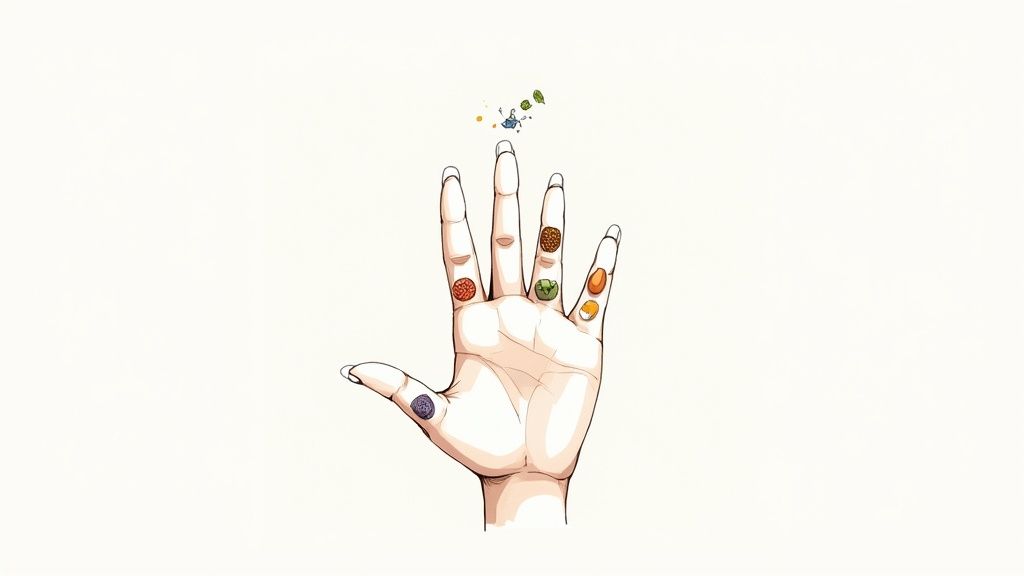
When you ask, "Why are my nails so weak?" the answer often starts right on your plate.
Think of your nails as a little construction project your body is constantly working on. The main building material is a tough protein called keratin. And just like any real construction site, if you run out of essential supplies, the whole project grinds to a halt.
What you eat directly provides the raw materials and energy needed to produce that keratin. A diet missing key vitamins and minerals is like trying to build a brick wall without enough mortar—the final structure is going to be fragile, unstable, and ready to crumble under the slightest pressure. This is why nourishing your body from the inside out is the most important step you can take toward strong, resilient nails.
The Nutritional Blueprint for Strong Nails
Certain nutrients play a starring role in nail formation. If you're running low on any of them, it can quickly show up as brittleness, peeling, or slow growth. Getting to know these key players can help you pinpoint what might be missing from your diet.
- Biotin (Vitamin B7): This is probably the most famous nutrient for nail health, and for good reason. Biotin is a powerhouse for keratin production, directly helping to build up the nail plate's thickness and hardness.
- Iron: This mineral is essential for carrying oxygen to all your cells. It makes sure your nail matrix—the area under your cuticle where new nail growth starts—gets the oxygen it needs to thrive. Without enough iron, you might see pale, brittle, or even spoon-shaped nails.
- Zinc: Think of zinc as a jack-of-all-trades, crucial for cell division and making proteins. Since nail growth is just a rapid process of cell division, a zinc deficiency can bring everything to a grinding halt.
- Protein: This one is non-negotiable. Nails are literally made of protein, so getting enough in your diet is a must. The amino acids from protein are the direct building blocks your body uses to construct keratin.
A balanced diet packed with these nutrients lays the foundation for nails that can actually stand up to daily life.
Biotin and Its Impact on Nail Thickness
The link between biotin and nail strength is especially strong and well-documented. As a vital coenzyme in protein synthesis, it’s absolutely central to building a tough keratin structure.
It's estimated that 20% to 50% of people with brittle nails have some kind of nutritional shortfall, with biotin, iron, and zinc being the usual suspects.
Studies have shown that adults with brittle nails who supplemented with 2.5 mg of biotin daily experienced a 25-35% increase in nail thickness after about six months. This led to significantly less splitting and breakage.
This data really drives home how targeted nutritional support can create real, measurable improvements. While supplements are one route, focusing on biotin-rich foods is always a fantastic place to start.
Eating Your Way to Better Nails
You don't need to completely overhaul your diet to get stronger nails. A few simple, strategic additions can make a huge difference over time. By focusing on nutrient-dense foods, you give your body a steady supply of the materials it needs to get the job done.
Try adding some of these to your regular meals:
- For Biotin: Eggs (especially the yolk!), almonds, sweet potatoes, and salmon.
- For Iron: Lentils, spinach, red meat, and fortified cereals.
- For Zinc: Pumpkin seeds, chickpeas, cashews, and beef.
- For Protein: Chicken, fish, tofu, beans, and Greek yogurt.
Don't forget about other nutrients like Vitamin C and silica. They're crucial for creating collagen, another protein that supports the connective tissues in your nail beds. To learn more, check out our guide on foods that support collagen production. By creating a well-rounded eating plan, you’re not just eating for your overall health—you're actively building stronger, more beautiful nails from within.
Uncovering Everyday Habits That Weaken Your Nails
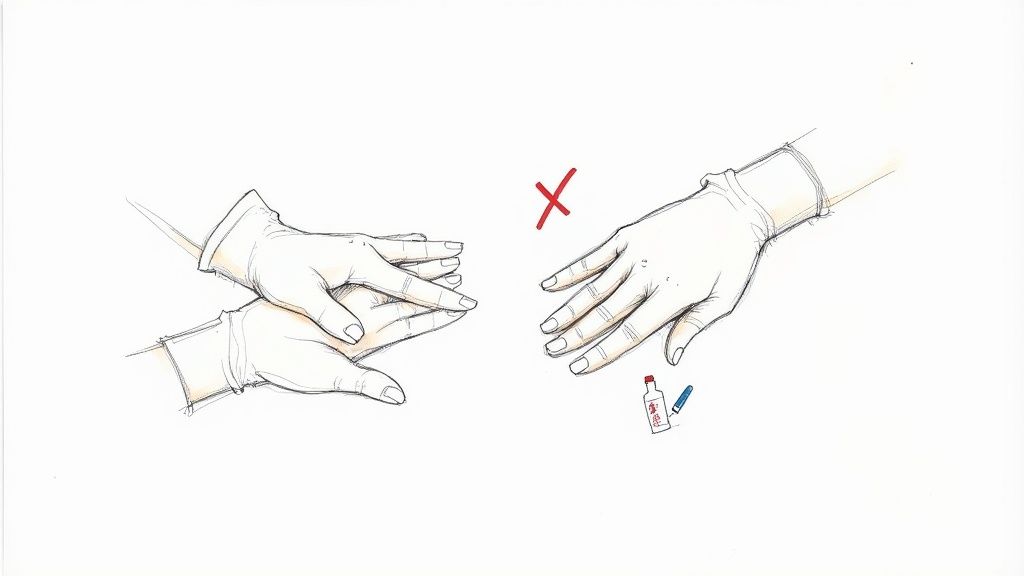
While your diet lays the groundwork for strong nails, your daily habits can either protect that foundation or tear it right down. If you've already sorted out your nutrition but are still wondering, "Why are my nails so weak?" it’s time to look at the external stressors they face every single day.
Think of your nails like a delicate piece of wood. When wood gets soaked, it swells up; as it dries, it shrinks and contracts. This constant back-and-forth eventually causes the layers to separate, splinter, and weaken. Your nails react in almost the exact same way.
This cycle of swelling and shrinking messes with the integrity of the nail plate, leading to peeling, splitting, and general brittleness. Figuring out which of your habits contribute to this is the key to stopping the damage in its tracks.
The Hidden Damage of Water and Chemicals
It might seem harmless, but just being in water a lot is one of the most common reasons for weak nails. Simple, necessary tasks like washing your hands or doing the dishes can strip away your nails' natural protective oils, leaving them dehydrated and fragile.
The problem gets even worse when you add cleaning products to the mix. Detergents and harsh chemicals fast-track moisture loss, making your nails even more vulnerable to damage.
In fact, studies on people in roles requiring constant handwashing—like healthcare, cleaning, or food service—show a 40-60% higher incidence of brittle, peeling nails. That constant cycle of wetting and drying disrupts the delicate keratin structure, making it incredibly hard for nails to stay strong. You can get more insights into the nail care market and influencing factors here.
How Your Manicure Routine Might Be the Culprit
A fresh manicure can make you feel polished and put-together, but the products and techniques involved can sometimes do more harm than good. From harsh removers to the way you file, your nail care routine could be the real source of your nail woes.
Here are the most common offenders:
- Acetone-Based Polish Removers: Acetone is a powerhouse at dissolving polish, but it's also extremely drying. It strips the natural oils from your nails and the skin around them, leaving everything brittle and prone to cracking.
- Aggressive Filing: Filing your nails back and forth like you're sawing a piece of wood creates microscopic tears and weakens the nail tip. This is a fast pass to peeling and snagging.
- Picking or Peeling Off Polish: When you peel off old gel or regular polish, you’re not just removing the color—you’re often ripping off the top layers of your nail plate right along with it. This thins the nail and creates a rough, damaged surface.
Think of your nail plate as a delicate surface that needs gentle care, not aggressive treatment. Every harsh chemical and rough action chips away at its natural resilience, making it harder for it to grow strong.
Making small tweaks, like switching to an acetone-free remover and filing in one direction, can protect your nails from unnecessary stress and help them keep their strength.
The Truth About Gels and Acrylics
Gel manicures and acrylics are popular for a reason—they're durable and look great for weeks. But they can be particularly tough on your natural nails if you’re not careful. The problem often comes down to both the application and, more importantly, the removal process.
Soaking your nails in acetone to get gels off is intensely dehydrating. On top of that, the electric filing used to prep the nail and remove old product can thin the nail plate over time, especially if the technician is a bit too aggressive.
This doesn't mean you have to give them up for good. To enjoy them more safely, find a skilled technician who puts nail health first. It's also a great idea to give your nails regular breaks between appointments—a week or two off every couple of months allows them to recover and breathe. During these breaks, focus on rehydrating your nails and cuticles with nourishing oils to bring back some of that lost moisture.
The Link Between Medical Conditions and Nail Health
While your diet and daily habits are huge factors, sometimes the real reason your nails are weak lies a bit deeper. Think of your nails as a tiny but surprisingly accurate dashboard for your overall health. When something is off internally, your nails are often one of the first places to flash a subtle warning light.
This isn't to scare you, but to empower you. Understanding your body's signals helps you connect the dots. Recognizing how certain health issues show up in your nails means you can have a much more informed chat with your doctor and get a clearer picture of what's really going on.
When Nails Signal a Deeper Issue
Your nails are built by a complex system that needs good circulation, balanced hormones, and efficient cell turnover to thrive. When an underlying medical condition throws a wrench into one of these processes, nail growth and strength can take a direct hit. The result? Nails that suddenly become thin, brittle, or develop strange new textures.
A few health issues are well-known for messing with nail integrity:
- Thyroid Imbalances: Your thyroid is basically the body's metabolic thermostat. If it's underactive (hypothyroidism), everything slows down—including nail growth. This often leads to brittle, dry nails that just don't seem to grow.
- Poor Circulation: Conditions that mess with blood flow, like Raynaud's disease, can starve the nail matrix of the oxygen and nutrients it's desperate for. This can leave you with weak and thinning nails.
- Anemia: Specifically, iron-deficiency anemia. This means your blood doesn't have enough healthy red blood cells to carry oxygen where it needs to go. This can cause pale, brittle, or even spoon-shaped nails (a condition called koilonychia).
- Psoriasis and Eczema: These skin conditions don't just stop at the skin. They can also affect the nail bed and matrix, causing pitting, thickening, discoloration, and even separation of the nail from the skin.
Your nail health offers some valuable clues. If you notice sudden or dramatic changes in your nails—especially if they show up with other symptoms like fatigue, hair loss, or skin issues—it’s probably a good idea to connect the dots and talk to a healthcare professional.
These signs are simply your body's way of trying to communicate. If you listen carefully, you can take proactive steps to address the root cause, not just the frustrating, surface-level symptom of weak nails.
The Natural Impact of Aging on Nail Strength
Beyond specific medical conditions, one of the most common reasons for changes in nail health is simply the natural process of aging. Just like our skin loses some of its elasticity and our hair might start to thin, our nails also evolve over time. As we get older, our bodies naturally produce less moisture, and cell turnover slows way down.
This slowdown means your nails just don't regenerate as quickly as they used to. The nail plate itself can become thinner and more fragile. It's a completely normal part of life, but knowing the "why" behind it can help you adjust your nail care routine to give them what they need.
Aging is a statistically proven factor in weaker nails across the globe. As people get older, especially past 60, the rate of nail growth slows by about 0.5% per year. The nail plate also becomes more brittle. In fact, an estimated 50-70% of older adults experience more splitting and fragility, mostly due to a natural drop in moisture and oil production. You can dive deeper into these trends in the nail care industry if you're curious.
This really drives home the point that giving your nails extra support with hydration and nutrition becomes even more crucial as you age. You can't stop the clock, but you can definitely give your body the resources it needs to keep your nails strong for as long as possible.
Your Action Plan for Stronger, Healthier Nails
Knowing why your nails are weak is the first step, but now it’s time to get into the solutions. The secret to building strong, resilient nails isn’t just one thing—it’s a two-pronged approach that combines consistent external care with powerful internal nourishment.
Think of it like tending a garden. You need to protect your plants from harsh weather on the outside while also enriching the soil so they can grow strong from the roots up. This holistic strategy ensures you’re not just covering up weak nails, but actually building a healthier foundation for the long haul.
Master Your Nail Grooming Routine
How you care for your nails on the outside makes a huge difference. Small, simple tweaks to your grooming habits can prevent the daily wear and tear that leads to peeling and breakage, creating an environment where your nails can finally thrive.
First, let's talk about filing. If you’re sawing back and forth, you're creating tiny, invisible tears that weaken the nail tip. Instead, file gently in one direction. This simple switch seals the edge, making it smooth and far less likely to snag or split.
Next up: your cuticles. They’re the natural barrier protecting new nail growth right at the source. Keep them happy and hydrated by dabbing on a nourishing cuticle oil or cream regularly. This prevents them from getting dry and ragged, and you’ll be less tempted to pick or cut them—which is a fast track to damage.
Hydration and Protection Are Non-Negotiable
Your skin needs moisture to stay supple, and your nails are no different. Constant exposure to water and harsh chemicals strips away their natural oils, leaving them brittle and dehydrated. That’s why protection is a core part of any nail-strengthening plan.
Here are two habits to adopt immediately:
- Wear Gloves for Chores: This one is a game-changer. Whether you're washing dishes, scrubbing the bathroom, or gardening, wearing rubber gloves is your nails' best defense. It's a simple barrier that saves them from the damaging cycle of getting soaked and then drying out.
- Moisturize After Washing: Every time you wash your hands, you strip away moisture. Get into the habit of applying a good hand cream right after, making sure to massage it into your nails and cuticles to put that hydration back where it belongs.
As this infographic shows, weak nails are often a signal of either the natural aging process or other health factors that need a little attention.
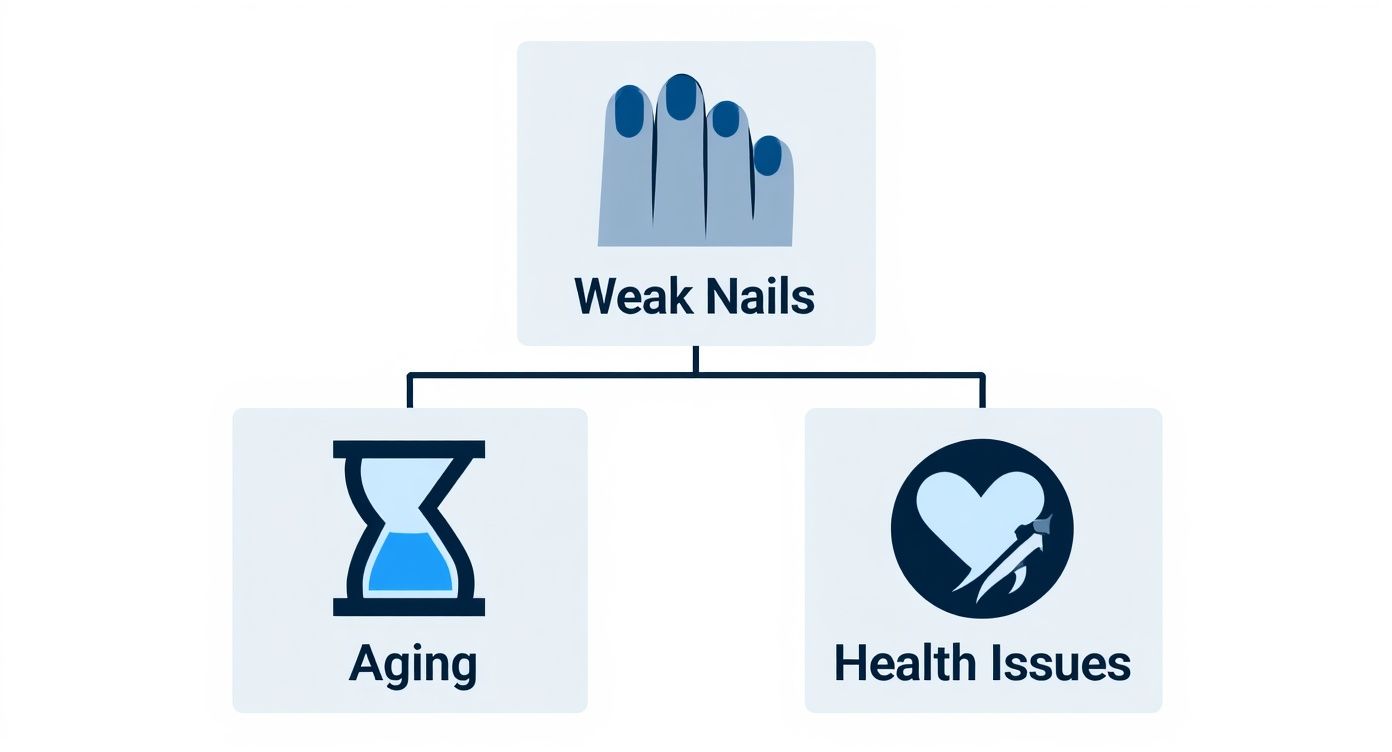
While aging is a common culprit, don't dismiss persistent nail weakness. It can be your body's way of telling you to take a closer look at your overall health.
Fueling Nail Growth from the Inside Out
While external care protects your nails from the outside world, true, lasting strength is built from within. Your body needs a steady supply of specific nutrients to produce strong keratin—the protein that your nails are made of. Fixing your diet is single-handedly the most powerful step you can take.
Think of your diet as the raw material for your body’s nail factory. If the supply line is short on key parts, the final product is going to be weak and flimsy.
The most effective way to strengthen nails is to give your body the essential building blocks it needs for keratin and collagen synthesis. This internal support system is what creates a nail plate that is dense, hard, and resilient from the moment it grows.
Supplements can play a fantastic supporting role here, especially for getting concentrated doses of these key nutrients. A plant-based collagen booster, for instance, is designed to give your body the specific amino acids (like glycine and proline) and co-factors (like vitamin C and silica) it needs to crank up its own collagen and keratin production.
This approach works by fueling your body's natural processes. Instead of just painting a temporary hardener on top, you're helping build a structurally sound nail from the matrix up. For a deeper look at this, check out our guide on how to strengthen nails naturally.
Comparing Nail Strengthening Methods
There are many ways to tackle weak nails, and it helps to understand what each one really does. Below is a quick comparison of some popular methods to help you figure out what might work best for you.
| Method | How It Works | Best For | Potential Downsides |
|---|---|---|---|
| Nail Hardeners | Creates a hard, protective coating on the nail surface using chemicals like formaldehyde. | A quick, temporary fix for preventing immediate breakage. | Can make nails more brittle over time; chemicals can be harsh. |
| Biotin Supplements | A B-vitamin that supports keratin production, strengthening the nail plate from within. | Thin, splitting nails caused by a potential biotin deficiency. | Takes several months to see results; high doses may interfere with lab tests. |
| Dietary Changes | Increasing intake of protein, iron, zinc, and vitamins to fuel healthy nail growth. | Addressing the root nutritional cause of weak nails for long-term strength. | Requires consistency and patience; may not be enough on its own. |
| Collagen Boosters | Provides the body with amino acids and co-factors (like Vitamin C) to build its own collagen and keratin. | Holistic improvement in nail, skin, and hair health by supporting protein synthesis. | Works from the inside out, so results appear with new growth over time. |
Ultimately, combining a nutrient-focused internal strategy with protective external care is the most reliable path to achieving the strong, healthy nails you're after. Consistency is what ties it all together.
Here's the rewritten section, designed to match the specified human-written style, tone, and voice.
Knowing When to See a Doctor for Weak Nails
Most of the time, you can get your nails back on track with better nutrition and a little extra care. But sometimes, weak nails are your body’s way of sending up a flare, signaling a deeper issue that needs a professional eye. Knowing how to spot these warning signs is key to catching potential health problems early.
Think of it like this: if you see a small crack in your wall, you might just patch it up. But if the whole foundation starts to shift, you call in an expert. The same logic applies here. A little brittleness can often be fixed at home, but sudden, dramatic changes mean it’s time to see a doctor or dermatologist.
Red Flags That Signal a Doctor's Visit
It's one thing to have nails that break easily, but it's another thing entirely when they change in ways that seem unusual. If you notice any of the following, especially if they pop up out of the blue or come with other symptoms, it’s time to book an appointment.
- Dramatic Changes in Shape or Texture: This isn't just about a single split. We're talking about nails that curve inward like a spoon (koilonychia), develop lots of little dents (pitting), or form deep, horizontal ridges (Beau's lines). These can be clues to things like iron deficiency or psoriasis.
- Significant Discoloration: Are your nails turning yellow, developing dark streaks, or looking strangely pale or blue? While nail polish or a minor bump can be the culprit, persistent discoloration can point to fungal infections, vitamin deficiencies, or even circulatory problems.
- Nail Separation (Onycholysis): If your nail starts lifting away from the nail bed for no apparent reason, don't ignore it. This could be a sign of a thyroid condition or a fungal infection that requires medical treatment to clear up.
- Persistent Pain, Swelling, or Redness: Any tenderness, puffiness, or redness around your nail that just won’t quit could signal an infection or an underlying inflammatory condition that needs attention.
Preparing for Your Appointment
To get the most out of your visit, do a little prep work. Your doctor will want to know when the changes started, what your diet is like, your daily habits, and any other symptoms you’re experiencing—even if they seem totally unrelated.
Come prepared with a timeline of your nail changes and a list of any supplements or medications you take. This complete picture helps your doctor connect the dots and determine if the issue is localized to your nails or part of a bigger health puzzle.
Seeking professional advice isn't about being an alarmist; it’s about being proactive. Your nails offer a fascinating window into your overall health. By listening to what they're telling you and checking in with an expert when needed, you’re taking a powerful step toward managing your well-being from the inside out.
Still Have Questions About Weak Nails?
Even after digging into the causes and fixes, you might still have a few lingering questions. It’s completely normal. Let's tackle some of the most common ones to help you feel confident about getting your nails back on track.
How Long Does It Really Take to See Stronger Nails?
This is where patience becomes your best friend. Fingernails grow surprisingly slowly—we're talking an average of just 3.5 millimeters per month. Because of this snail's pace, you're looking at a timeline of 3 to 6 months before the new, healthy nail has completely grown out to replace the old, weak tip.
That’s why consistency is everything. Sticking with your new habits, whether it's dietary changes or a new supplement routine, is what gives that fresh growth the strength it needs to emerge resilient and tough.
Can Nail Hardeners Actually Make Things Worse?
It sounds backward, but yes, they absolutely can. While some hardeners provide a temporary fix, over-relying on products packed with harsh chemicals like formaldehyde can seriously backfire. Instead of building strength, these ingredients can make the nail plate even more brittle and prone to snapping over time.
The secret is to use them strategically. Think of a hardener as a temporary support system, not a permanent fix. Make sure to give your nails regular breaks from all polishes and treatments so they have a chance to breathe and rehydrate on their own.
Do Plant-Based Collagen Boosters Actually Work?
They sure do, but they work smarter, not harder. Unlike animal-based collagen that gives your body a direct supply, plant-based boosters are all about providing the raw materials your body needs to build its own collagen and keratin more effectively.
It's a ground-up approach. By delivering foundational building blocks like vitamin C, silica, and specific amino acids, you’re basically fueling your body’s own protein-making factory. The result? Naturally stronger nails, hair, and skin.
Should I Keep My Weak Nails Short for Now?
Definitely. Keeping your nails trimmed short is one of the best things you can do while they recover. Shorter nails are far less likely to snag on your sweater, bend while you're typing, or break from an accidental knock. It dramatically reduces the daily stress on the nail.
This simple step gives your nails a fighting chance to grow out stronger without suffering more setbacks. Once you start to feel their resilience return, you can slowly let them grow to your desired length.
Ready to build stronger nails from the inside out? The Staye plant-based collagen booster provides the essential amino acids and vitamins your body needs to fuel its own keratin and collagen production. Nourish your nails at their foundation and see the difference.