

When people ask me how to really boost collagen naturally, I always tell them to think bigger than just one supplement or a single "superfood." The most effective approach is a holistic one that combines a nutrient-packed diet with smart, protective lifestyle habits.
It’s about loading up on foods rich in vitamin C and the right amino acids, being diligent about shielding your skin from the sun, and getting enough quality sleep to let your body run its natural repair cycles. There's no magic bullet; it's about creating the perfect internal and external environment for your body to do what it does best.
Understanding Your Body's Collagen Blueprint

Think of collagen as your body’s scaffolding. It's the essential protein that gives structure to literally everything—from your skin and bones to your tendons and joints. It’s what keeps skin looking firm and youthful and helps your joints move without a hitch.
But as we get older, our natural collagen production starts to slow down. It's a natural process, but it can be sped up by things like too much sun or other lifestyle choices. This slowdown is what leads to the classic signs of aging we all know: fine lines, wrinkles, and skin that just doesn't bounce back like it used to.
The good news? This isn't a destiny you just have to accept. You have a surprising amount of power to influence your body’s collagen production. Once you understand the core pillars of support, you can take active steps to maintain and even boost it.
The Four Pillars of Natural Collagen Support
This shift toward proactive wellness is happening on a global scale. The collagen market was valued at around USD 5.1 billion in 2023 and is projected to hit USD 7.4 billion by 2030. That growth isn't just a fad; it’s driven by people like you and me who are choosing to use nutrition and lifestyle to support our body's built-in systems, like collagen synthesis. You can learn more about the global collagen market trends and see just how big this movement has become.
To make this simple and actionable, I like to break it down into four key areas. Think of these as the foundational pillars for building a strong, collagen-friendly routine.
To get a quick overview, here are the core strategies we'll be diving into.
Four Pillars of Natural Collagen Support
| Strategy | Primary Focus | Key Examples |
|---|---|---|
| Nutrient-Dense Diet | Providing raw materials | Amino acids from protein, Vitamin C from citrus, Zinc from seeds |
| Lifestyle Protection | Preventing collagen breakdown | Consistent sun protection, stress management, quality sleep |
| Targeted Skincare | Stimulating production topically | Retinoids, Vitamin C serums, peptides |
| Smart Supplementation | Filling nutritional gaps | Collagen peptides, plant-based collagen boosters |
These pillars all work together, building on one another to create a powerful synergy.
Key Takeaway: Boosting collagen isn’t just about adding one thing to your routine. It's about a multi-faceted approach that nourishes your body from the inside while protecting it from the outside.
Each of these pillars plays a unique yet deeply connected role. Your diet provides the essential building blocks, while a protective lifestyle ensures those blocks aren't immediately torn down. In this guide, we'll walk through practical steps for each pillar, giving you the knowledge you need to create a personalized plan that actually works for you.
Building Your Collagen-Boosting Diet
Forget about rigid meal plans. The best way to get your body making more collagen naturally is to understand why you're eating certain foods, not just memorizing a list. Think of it like this: your body has a collagen factory, and your diet provides the raw materials. If you don't supply the right parts, production grinds to a halt.
This is all about focusing on whole foods that deliver the essential amino acids, vitamins, and minerals your body is crying out for. It’s less about restriction and more about making smart, targeted additions that all work together. The goal is a delicious, sustainable way of eating that supports your skin from the inside out.
The Core Building Blocks: Amino Acids
At its most fundamental level, collagen is a protein built from specific amino acids. The two most critical ones are proline and glycine. Without a steady supply of these, your body simply can't construct new collagen fibers.
Luckily, they're not hard to find. Chicken, especially with the skin on, is a fantastic source of both. Eggs are packed with proline, and even dairy like cottage cheese contributes to your amino acid pool.
For my plant-based friends, getting enough of these aminos just takes a little more intention. You’ll find plenty of glycine and proline in:
- Legumes: Think lentils, chickpeas, and kidney beans.
- Seeds: Pumpkin, sunflower, and chia seeds are excellent.
- Soy products: Tofu and tempeh are complete proteins with a great amino acid profile.
A super simple, real-world example? Add a scoop of pumpkin seeds to your morning oatmeal or make a hearty lentil soup for lunch. These small tweaks create the consistent supply of building blocks your body needs every single day.
Your plate should be a construction site for collagen. By consistently providing the right amino acids—the "bricks" of the operation—you give your body the exact materials it needs to build strong, resilient skin, hair, and joints.
This foundational approach ensures your body is never running on empty when it’s time to repair and rebuild. Once you have the bricks in place, it’s time to bring in the "workers"—the essential vitamins and minerals that put it all together.
Essential Cofactors: Vitamin C and Zinc
You can eat all the protein in the world, but without certain key nutrients, those amino acids will never become collagen. Vitamin C is the most crucial player here; it's a non-negotiable cofactor that helps link amino acids together to form that strong, springy collagen structure.
Your body doesn’t make or store vitamin C, so getting it daily is essential. Most of us immediately think of oranges, but other sources are way more potent. A single red bell pepper packs over 150% of your daily vitamin C needs, and kiwis are another powerhouse.
-
Top Vitamin C Sources:
- Red and yellow bell peppers
- Citrus fruits like oranges and grapefruit
- Kiwis and strawberries
- Broccoli and kale
Zinc is another vital mineral that acts like the project manager in collagen production. It activates the enzymes needed for synthesis and helps with cellular repair. You’ll find plenty of zinc in shellfish (oysters are king), legumes, nuts, and seeds.
Creating Synergy on Your Plate
The real magic happens when you start combining these elements in the same meal. This is where you can truly supercharge your body’s ability to create collagen, because you’re thinking about how the nutrients interact.
For example, a common mistake is eating zinc-rich plant foods like lentils without a source of vitamin C. That hit of vitamin C actually makes the plant-based zinc more bioavailable, meaning your body can absorb and use it properly. A simple squeeze of lemon juice over a lentil salad isn't just for flavor—it's a brilliant nutritional strategy.
Here are a few practical meal ideas that put this synergy into action:
- Grilled Chicken Salad: Combine proline-rich chicken with spinach, sliced strawberries, and a lemon-tahini dressing. You get amino acids from the chicken, vitamin C from the strawberries and lemon, and a dose of copper from the sesame in the tahini.
- Hearty Chickpea Curry: This is a plant-based powerhouse. Chickpeas supply the amino acids, tomatoes and bell peppers deliver the vitamin C, and a sprinkle of pumpkin seeds on top adds that crucial hit of zinc.
If you want to go even deeper on specific ingredients, you can explore a full guide on foods that support collagen production to get more ideas for your grocery list.
By focusing on these strategic pairings, you move beyond just "eating healthy" and start eating with a specific purpose—giving your body everything it needs for robust collagen synthesis, one delicious meal at a time.
Essential Nutrients for Collagen Synthesis
A healthy diet is a great start, but if you’re serious about boosting collagen, you need to get specific. Think of it less like general good eating and more like providing your body with a targeted toolkit for a very precise job.
Certain nutrients are the non-negotiable fuel for your body's collagen-making machinery. Each one has a specific role, and when they work together, the results are powerful. Let's break down the most critical players.
The Unsung Heroes of Collagen Production
Some vitamins and minerals are absolute must-haves. They act as the cofactors and activators that turn amino acids into the strong, resilient fibers that give your skin its bounce and your joints their cushion.
First up is Vitamin C. It’s the master architect here, responsible for stabilizing the collagen molecule itself. Without enough vitamin C, the collagen your body makes is just weak and unstable. This is why a consistent daily intake is so important for seeing real changes. For a deeper look at how it works, our guide on the best vitamin C for collagen production breaks it all down.
Then we have two key minerals: zinc and copper.
- Zinc is like the foreman on a construction site, activating the enzymes and proteins needed for synthesis. It’s also crucial for cell repair, helping to mend damaged tissue.
- Copper handles the finishing touches. It helps link collagen and elastin fibers together, creating that strong, flexible matrix that keeps your skin firm.
This infographic gives you a great visual of how to get these nutrients from whole foods.

As you can see, a meal that combines protein from chicken with vitamin C-rich bell peppers and zinc-packed lentils gives your body all the components it needs in one synergistic punch.
Amino Acids: The Direct Building Blocks
At its core, collagen is a protein built from specific amino acids. The two most important ones by far are glycine and proline. They form the very foundation of the collagen helix.
While your body can make some of these on its own, giving it a direct dietary source is like making sure the assembly line never runs out of raw materials. This is where smart nutrition—and supplementation—can make a huge difference, especially as our natural production slows down with age.
Think of glycine and proline as the specific bricks needed to build a collagen wall. You can have all the cement (Vitamin C) and workers (zinc) in the world, but without the right bricks, you can't build the structure.
This is why just eating a generic "high-protein" diet isn't always enough. The type of amino acids really, really matters.
Here's a quick reference for the key players in collagen synthesis, their roles, and where you can find them.
Key Nutrients for Collagen Production
| Nutrient | Role in Collagen Production | Top Food Sources | Supplement Note |
|---|---|---|---|
| Vitamin C | Stabilizes the collagen triple helix; a critical cofactor. | Citrus fruits, bell peppers, strawberries, broccoli, kiwi. | Look for 500–1000 mg daily. Best taken in divided doses for absorption. |
| Zinc | Activates enzymes and proteins essential for synthesis. | Oysters, red meat, poultry, beans, nuts, whole grains. | Aim for 15–30 mg per day. Often found in mineral blends. |
| Copper | Essential for cross-linking collagen and elastin fibers. | Shellfish, nuts, seeds, whole grains, dark leafy greens. | A smaller dose of around 2–3 mg is typically sufficient. |
| Glycine | The most abundant amino acid in collagen; forms its core. | Bone broth, gelatin, pork rinds, chicken skin, fish. | Often supplemented in doses of 3-5 grams for targeted support. |
| Proline | Works with glycine to create the collagen helix structure. | Egg whites, dairy, cabbage, asparagus, mushrooms. | Usually supplemented alongside glycine in collagen formulas. |
Focusing on foods rich in these nutrients provides a solid foundation, while targeted supplements can help fill any gaps and ensure your body has everything it needs.
The Rise of Collagen Peptides and Boosters
So, how do you guarantee you're getting enough of these specialized nutrients? This is where supplements really shine, offering a concentrated and direct approach. It's no surprise that their popularity is surging.
In fact, the collagen market hit nearly USD 10 billion in 2024 and is expected to grow by 11.2% annually through 2034. This boom is fueled by people like us who want natural, effective ways to support our body’s own production.
When it comes to supplements, there are two main paths:
- Hydrolyzed Collagen Peptides: Usually from animal sources (like bovine or marine), these are small, easily absorbed chains of amino acids. The cool part? They don’t just supply building blocks. They also act as signaling molecules that can prompt your cells to ramp up their own collagen-making.
- Plant-Based Collagen Boosters: This is the perfect strategy for vegans, vegetarians, or anyone who prefers a non-animal option. These supplements don't actually contain collagen. Instead, they deliver the exact plant-derived amino acids, vitamins, and minerals your body needs to do the job itself.
A good plant-based booster, for example, might combine glycine and proline with vitamin C from acerola cherry and zinc. It’s a complete, all-in-one package designed to fuel your body’s natural processes from every angle—a clean, effective way to get results without animal products.
Lifestyle Habits That Protect Your Collagen
Eating all the right foods is like having the best materials to build a house, but if you don't protect the construction site, those materials can get damaged or washed away. This is exactly what happens when your daily habits work against your collagen-boosting efforts.
Your lifestyle is the defense system for the collagen you already have and the new collagen you’re trying to build. Getting this right is critical. It stops you from taking one step forward with your diet, only to take two steps back because of your habits.
Shield Your Skin from Sun Damage
The sun is, without question, the number one enemy of healthy collagen. The sun's UV rays kick off a process called photoaging, releasing enzymes that actively shred your existing collagen and elastin fibers. This is what brings on wrinkles and sagging far faster than your age alone ever would.
Wearing a broad-spectrum SPF 30 sunscreen every single day is non-negotiable. But you can build an even stronger defense from the inside out. Loading up on antioxidant-rich foods helps your skin better protect itself against UV-induced stress. Think of it as creating an internal shield.
- Lycopene: Found in tomatoes and watermelon, this powerful antioxidant has been shown to help guard skin against sun damage.
- Polyphenols: Berries, dark chocolate, and especially green tea are packed with these compounds, which help neutralize the free radicals created by sun exposure.
This two-pronged approach—sunscreen on the outside, antioxidants on the inside—gives your collagen its best shot at thriving.
Tame the Effects of Sugar and Stress
Sugar and stress are two other major culprits in collagen destruction, and they often work as a team.
A diet high in refined sugar leads to a damaging process called glycation. Put simply, extra sugar molecules latch onto proteins like collagen, creating nasty new molecules called advanced glycation end products (AGEs). These AGEs make your collagen fibers stiff, brittle, and weak. The result? Sagging skin and wrinkles.
Key Insight: Cutting back on refined sugar isn't just for weight management; it's a direct anti-aging strategy for your skin. Swapping a soda for green tea or grabbing a handful of berries instead of a cookie can dramatically lower your glycation risk and preserve your skin's youthful bounce.
Chronic stress is just as destructive. When you're constantly on edge, your body floods itself with the stress hormone cortisol. Over time, high cortisol levels are proven to break down collagen and elastin, putting the brakes on your skin's natural repair process.
Prioritize Restorative Sleep and Movement
Your body does its best repair work while you're asleep. It’s not just rest—it’s active regeneration. During deep sleep, your body releases human growth hormone (HGH), which plays a huge role in rebuilding tissues and stimulating collagen synthesis. Aiming for 7-9 hours of quality sleep is one of the most powerful things you can do.
Regular exercise gives you another big boost. It gets your blood flowing, making sure all those valuable collagen-building nutrients from your diet actually get delivered to your skin cells. Better circulation also helps flush out waste products, creating a healthier environment for your cells to work their magic.
You don't need to live in the gym. Try adding these into your routine:
- A brisk 30-minute walk to get your heart pumping.
- Gentle yoga or stretching to lower cortisol and improve circulation.
These habits aren’t just about "being healthy." They are targeted actions that create an environment where collagen can be produced and, just as importantly, protected. When you shield your skin from the sun, manage sugar and stress, and get enough sleep and movement, you ensure all your dietary efforts pay off with real, visible results.
Skincare Ingredients That Support Collagen
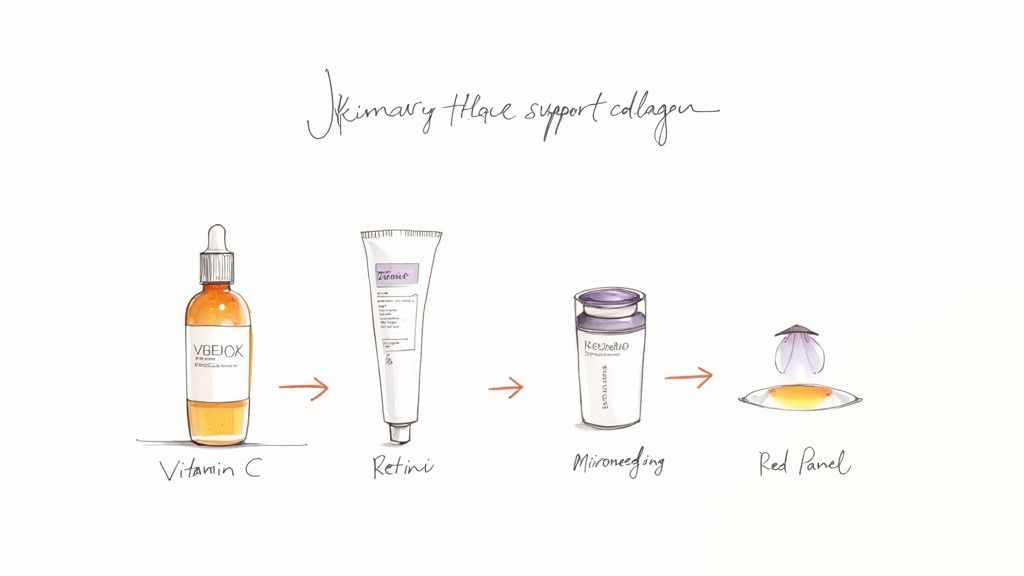
While your diet and supplements work from the inside out, your skincare routine offers a direct, topical path to boosting collagen. It's the other half of the equation.
The right ingredients can actually communicate with your skin cells, signaling them to ramp up production of this essential protein. This targeted approach is what creates a truly comprehensive strategy for firm, resilient skin. Knowing what to look for on a product label is the first step.
The Powerhouse Ingredients for Your Skin
When it comes to topically stimulating collagen, a few ingredients are the undisputed heavy hitters. Their effectiveness is backed by mountains of research, making them a go-to for anyone serious about skin health.
- Retinoids (Vitamin A derivatives): These are the gold standard for a reason. Retinoids work by accelerating skin cell turnover and directly stimulating the fibroblasts—the tiny factories responsible for creating collagen. Consistent use can dramatically improve skin texture and soften fine lines.
- Vitamin C: Just like it's crucial in your diet, Vitamin C is a superstar in skincare. It's a potent antioxidant that neutralizes the free radicals that break down your existing collagen. It’s also an essential cofactor in the collagen synthesis process itself, making it a non-negotiable part of any pro-collagen routine.
- Peptides: Think of peptides as tiny messengers. These short chains of amino acids signal your skin to get to work and produce more collagen. Different peptides have different jobs, but many are specifically designed to target sagging and a loss of firmness.
Creating a Smart and Consistent Routine
Having the right ingredients is only half the battle. How you use them matters just as much, and consistency is everything. Topical treatments need time to work their magic.
A simple, effective approach is applying a Vitamin C serum in the morning. This helps protect your skin from daily environmental damage. At night, introduce a retinoid product, which works best while your skin is in its natural repair cycle.
Expert Tip: If you're new to active ingredients like retinoids, start slow. Use it just two or three nights a week at first, then gradually increase the frequency as your skin gets used to it. This helps you avoid irritation while still getting all the collagen-boosting benefits.
And always remember to layer your products from thinnest to thickest, finishing with a good moisturizer to lock it all in.
Beyond the Bottle: Professional Treatments
For anyone looking to take things a step further, professional treatments can create a controlled healing response that naturally puts collagen production into overdrive.
Two of the most popular and effective options are:
- Microneedling: This procedure uses tiny, sterile needles to create micro-injuries in the skin. Your body's natural wound-healing process kicks in, triggering a significant surge in new collagen and elastin production.
- Red Light Therapy (RLT): This is a completely non-invasive treatment that uses specific wavelengths of red light to penetrate the skin and energize your cells. It's been shown to stimulate fibroblasts, leading to increased collagen synthesis over time with zero downtime.
This growing interest in natural, effective methods is reflected in market trends. The natural collagen market is projected to grow from USD 4.2 billion in 2025 to USD 7.1 billion by 2032, fueled by a global shift toward wellness-focused routines. For a deeper dive, you can explore detailed insights on global collagen trends.
Pairing these strategies with powerful antioxidants, like those found in grape seed extract, can also provide significant protective benefits. You can read more about the benefits of grape seed extract for skin right here on our blog.
Your Top Collagen Questions, Answered
Once you start getting serious about supporting your collagen, a few questions always come up. It's easy to feel a bit lost in the world of supplements, diet hacks, and skincare claims.
Let's cut through the noise. Here are some clear, science-backed answers to the most common questions I hear.
How Long Does It Really Take to See a Difference?
This is the big one, and the honest answer is: it’s a marathon, not a sprint. Your body needs time to actually absorb the nutrients, fire up its collagen-making machinery, and start rebuilding tissues. Patience and consistency are everything.
You might feel some early wins, like better skin hydration and a bit more plumpness, within 4-8 weeks. But for the more significant changes—think improved skin elasticity, real firmness, and a noticeable softening of fine lines—you’re looking at a 3-6 month timeframe.
Keep in mind, everyone is different. Your age, diet, how consistent you are, and your lifestyle all play a role. The key is to build a sustainable habit, not to search for an overnight fix.
Can Vegans Actually Boost Their Collagen?
Absolutely. If you’re on a plant-based diet, your strategy is simply to become a "collagen booster." Instead of consuming collagen directly, you’re giving your body the exact raw materials it needs to produce its own. Think of it as supplying the factory, not just buying the final product.
A smart plant-based approach looks like this:
- Key Amino Acids: Load up on foods rich in glycine and proline. Think beans, seeds, nuts, and soy products.
- Vitamin C: This is non-negotiable. Vitamin C is the spark plug for collagen synthesis. Get plenty from bell peppers, kiwis, strawberries, and broccoli.
- Essential Minerals: Don't forget zinc and copper. You'll find them in legumes, whole grains, and leafy greens.
When you supply these building blocks, you’re empowering your body to run its own collagen production line efficiently.
Is Bone Broth a Better Choice Than a Supplement?
It’s less about one being "better" and more about what works for you and your goals. Bone broth is a fantastic whole-food source of collagen, and it comes packed with other beneficial minerals. The only catch is that the amount of collagen can be pretty inconsistent from one batch to the next.
Hydrolyzed collagen peptide supplements (or their plant-based booster equivalents) offer something different: a concentrated, precisely measured, and super digestible dose of the specific amino acids your body is craving.
Both are great. The best choice is simply the one you'll stick with day in and day out.
The Takeaway: Both bone broth and targeted supplements work. The real magic comes from consistency, so pick the option that fits seamlessly into your daily routine.
Do I Have to Quit Sugar Completely?
Not necessarily. The real enemy isn't the occasional dessert; it's a diet consistently high in refined sugar. Too much sugar triggers a process called glycation, where sugar molecules latch onto your collagen fibers, making them stiff, brittle, and weak.
A sustainable approach isn't about total deprivation. It’s about a major reduction. Focus on cutting back on the big offenders—sugary drinks, processed snacks, and daily sweets. Prioritizing whole foods with a low glycemic index will do infinitely more to protect your collagen than stressing over a single cookie. It's all about long-term habits, not short-term perfection.
Ready to give your body the complete toolkit it needs to build its own collagen, naturally? The Staye plant-based collagen booster provides the essential amino acids, vitamins, and antioxidants to support radiant skin, strong hair, and healthy joints from the inside out. Explore Staye and start your journey today.