

Supporting your body's natural collagen production starts with understanding what it is and giving yourself the right raw materials. Think of collagen as your body's internal scaffolding—the essential protein that gives structure to everything from your skin and bones to your tendons and ligaments.
To keep that structure strong, you need a smart combination of a nutrient-rich diet, key lifestyle habits, and a solid defense plan to protect the collagen you already have.
What Is Collagen and Why Does It Matter?
Imagine trying to build a house without a frame. The walls would crumble, the roof would have no support, and the whole thing would just fall apart. In your body, collagen is that essential frame.
It’s the most abundant protein we have, making up roughly 30% of our body's total protein. It serves as the primary structural component of our skin, bones, muscles, tendons, and ligaments.
Collagen is quite literally the glue that holds you together. It’s what’s responsible for keeping your skin elastic, your joints moving smoothly, and your connective tissues strong. When collagen levels drop, we start to see the classic signs of aging: fine lines, sagging skin, and stiff, achy joints. It's the silent hero working behind the scenes to keep you feeling resilient and strong.
The Different Roles of Collagen
We often talk about collagen like it's a single thing, but it’s actually a whole family of proteins, each with a different job. There are at least 28 known types, but a few key players are especially important for our health and vitality:
- Type I: This is the most common type, and you’ll find it in your skin, bones, tendons, and even your teeth. It’s all about providing rigidity and strength, which is why it's so critical for maintaining firm, youthful-looking skin.
- Type II: Found mostly in elastic cartilage, this type acts as a cushion for our joints. It’s what helps them move smoothly and without pain.
- Type III: This one works alongside Type I to support the structure of our muscles, organs, and arteries, helping to keep skin firm and elastic.
Understanding these different roles makes it clear why a decline in collagen affects so much more than just our appearance. It impacts how we move, feel, and function every single day.
Why Your Collagen Production Declines
Our bodies are fantastic collagen factories when we're young, but production doesn't stay at peak levels forever. The slowdown starts sooner than you might think.
Beginning in our early 20s, our body’s ability to produce high-quality collagen naturally decreases by about 1-2% each year. This slow, steady decline is one of the main drivers of the aging process.
But it's not just about getting older. Several factors can hit the fast-forward button on this decline. Sun exposure, for instance, allows damaging UV rays to break down existing collagen fibers. Lifestyle choices like smoking, a diet high in sugar, and chronic stress also degrade collagen and slow down its production.
This is exactly why learning natural ways to boost collagen is so important—it’s about both rebuilding what you've lost and protecting what you have.
The growing awareness of collagen’s central role in health has sparked a massive wellness movement. The global collagen market was valued at around USD 9.4 billion and is projected to expand significantly, showing a major shift toward proactive, preventative health. You can read more about the growing collagen market trends and their implications. This demand makes it clear: people are actively looking for effective ways to support their body's foundational protein from the inside out.
Eating for Collagen: Your Nutritional Blueprint
Think of your body as a sophisticated collagen factory, constantly at work building and repairing the very framework of your skin, joints, and bones. And just like any high-tech facility, it needs a steady stream of top-quality raw materials to run at peak performance. When it comes to naturally boosting collagen, your diet is the most important supply chain you control.
You can't just eat a spoonful of collagen and expect it to magically appear on your face. It doesn't work that way. Instead, the goal is to give your body the exact building blocks and helper nutrients it needs to synthesize its own. This is about creating a consistent, supportive dietary environment, not chasing a single "superfood."
This infographic gives a great overview of what collagen actually does—providing structure, strength, and keeping our skin healthy.
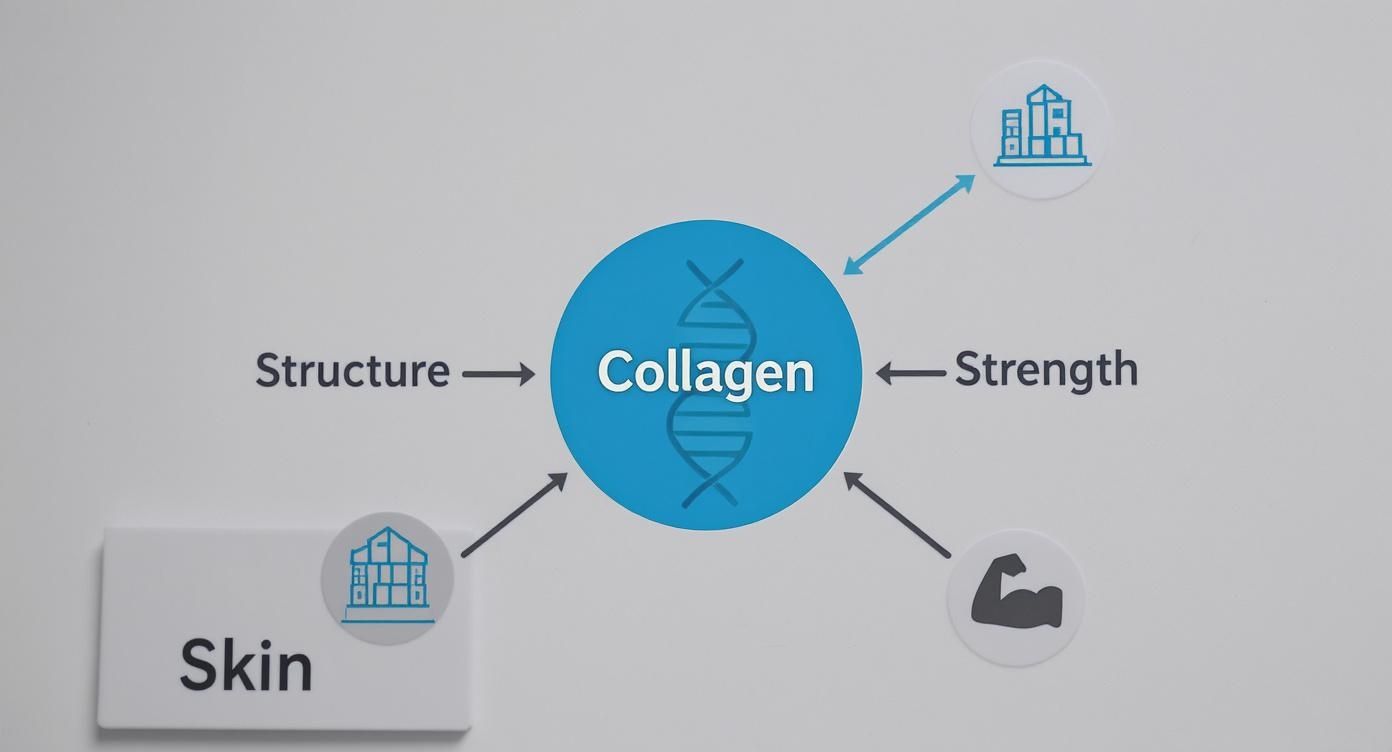
As you can see, collagen is far more than a beauty ingredient; it’s a foundational protein for your body’s overall resilience.
The Key Building Blocks: Amino Acids
At the very heart of collagen production are amino acids—the small units that link together to form protein. Your body needs a full spectrum of them, but three, in particular, are the superstars for creating strong, healthy collagen fibers.
- Glycine: This is the most abundant amino acid in collagen, making up roughly one-third of its entire structure. It’s what allows collagen to form its tight, strong helix shape.
- Proline: Working hand-in-hand with glycine, proline helps stabilize the collagen structure, making sure it doesn’t break down easily under stress.
- Lysine: This amino acid is the linker. It’s responsible for cross-linking individual collagen fibers together, creating that strong, supportive mesh inside your tissues.
Without enough of these specific aminos, your body simply doesn't have the raw materials to build new collagen, no matter what else you’re eating.
Fueling Your Factory With Whole Foods
So, where do you get these critical components? The most effective strategy is to focus on protein-rich whole foods. These sources don't just provide the necessary amino acids; they come packaged with other beneficial nutrients, too.
A great place to start is with foods like:
- Bone Broth: Simmered for hours, bone broth releases collagen and its amino acids into a rich, easy-to-digest liquid.
- Lean Poultry and Fish: Chicken, turkey, and fish (especially with the skin on) are fantastic sources of glycine, proline, and lysine.
- Eggs: The whites are especially rich in proline, a key player in the collagen-making process.
- Beans and Legumes: For anyone following a plant-based diet, options like kidney beans, chickpeas, and lentils offer a solid supply of these essential amino acids.
The Master Architect: Vitamin C
If amino acids are the bricks, then Vitamin C is the master architect overseeing the entire construction project. It's a non-negotiable part of the process. Without it, collagen production grinds to a halt.
Vitamin C’s main job is to help add special chemical groups to proline and lysine. This is the critical step that allows the amino acids to twist into their stable triple-helix structure. Without enough Vitamin C, the collagen your body makes is weak, unstable, and breaks down quickly.
Make sure your diet is loaded with Vitamin C-rich foods:
- Citrus Fruits: Oranges, grapefruits, and lemons are the classics for a reason.
- Bell Peppers: A red bell pepper contains nearly 3 times more Vitamin C than an orange!
- Berries: Strawberries, blueberries, and raspberries are packed with both Vitamin C and protective antioxidants.
- Leafy Greens: Kale, spinach, and broccoli pull double duty by providing a healthy dose of this crucial vitamin.
For a deeper dive, check out our guide on specific foods that support collagen production.
Essential Mineral Helpers
Beyond the main building blocks and the architect, a few key minerals act as the essential support crew, making sure the factory runs without a hitch.
- Zinc: This mineral acts as a helper for the enzymes involved in both building and repairing collagen. You can find it in nuts, seeds, whole grains, and oysters.
- Copper: Copper is needed for the final, crucial step of production—cross-linking collagen fibers together to create a strong, resilient matrix. Good sources include seeds, nuts, and dark leafy greens.
By focusing on a varied, nutrient-dense diet, you give your body all the tools it needs. This "inside-out" nutritional approach is one of the most powerful natural ways to boost collagen, supporting your skin’s health and your body’s strength for the long haul.
Protecting Your Collagen with Antioxidants
Building new collagen is a powerful strategy, but it’s only one half of the equation. Think of it like spending weeks carefully building a beautiful sandcastle, only to watch the incoming tide wash it away. Protecting the collagen you already have is just as vital, and that means defending it from its biggest enemy: free radicals.
Free radicals are like tiny, unstable wrecking balls careening through your body. We encounter them every day—from UV radiation, air pollution, and even just our own internal metabolic processes. These rogue molecules go around damaging healthy cells, including the fibroblasts that produce collagen, and can even degrade your existing collagen fibers directly.
This widespread damage is known as oxidative stress, and it’s a major driver of accelerated aging, leading to more wrinkles and a loss of skin firmness. To fight back, your body needs a dedicated defense team. That's where antioxidants come in.
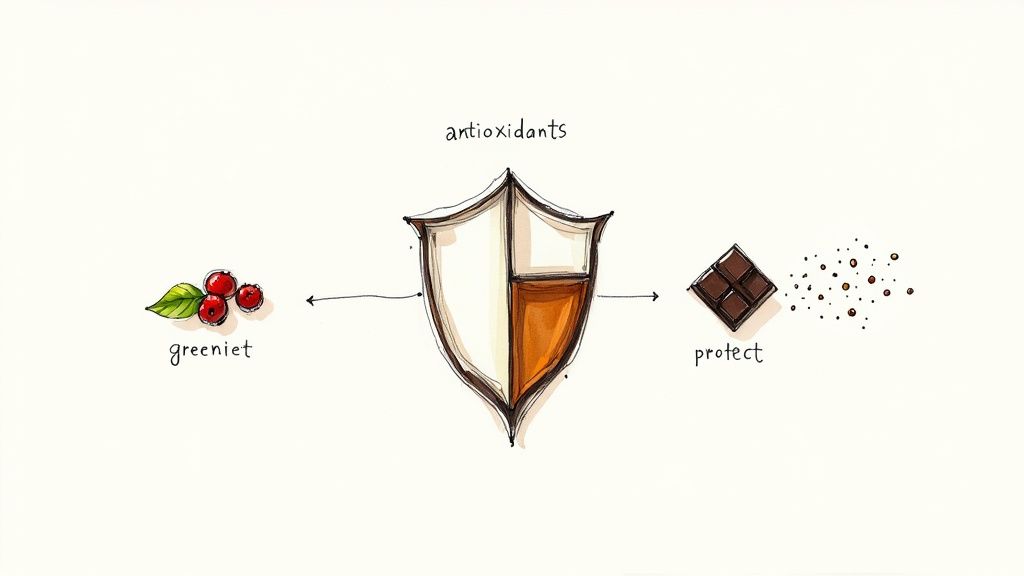
How Antioxidants Defend Your Collagen
Antioxidants are powerful compounds that act like shields, neutralizing free radicals before they can do any real harm. They generously lend an electron to the unstable free radical, calming it down and stopping the chain reaction of damage in its tracks.
By dialing down oxidative stress, antioxidants create a much safer environment for your collagen to thrive. This two-pronged approach—building new collagen while protecting existing collagen—is one of the most effective natural ways to support your skin for the long haul.
By neutralizing free radicals, antioxidants act as a personal security detail for your collagen, preserving the skin’s structural integrity and preventing premature degradation.
Your Antioxidant-Rich Food Arsenal
Loading up your plate with antioxidant-rich foods is like deploying a highly skilled defense team throughout your body. These foods are packed with compounds that specifically target and neutralize the free radicals that threaten your collagen.
Here are some of the top dietary sources to bring into rotation:
- Berries: Blueberries, strawberries, and raspberries are bursting with anthocyanins, the powerful antioxidants that give them their vibrant colors and potent protective abilities.
- Dark Chocolate: Good news for chocolate lovers! High-quality dark chocolate (70% cacao or higher) is rich in flavanols, which have been shown to improve skin hydration and help protect against sun damage.
- Green Tea: This ancient beverage is a fantastic source of catechins, especially EGCG, which is celebrated for its ability to shield skin from UV-induced damage.
- Leafy Greens: Powerhouses like spinach and kale are packed with lutein and zeaxanthin, antioxidants that help filter harmful light and protect skin cells from environmental stressors.
Making these foods a regular part of your meals provides a constant supply of defenders to keep your collagen safe and sound.
Powerful Botanicals for Collagen Protection
Beyond everyday foods, certain botanicals have been studied for their exceptional antioxidant properties and their ability to directly support collagen health. These plant-based allies offer a more concentrated dose of protection.
Two major standouts are aloe vera and ginseng. Studies suggest aloe vera can not only stimulate the production of collagen and hyaluronic acid but also help shield the skin from radiation damage when applied topically. In a similar vein, research shows that ginseng contains compounds called ginsenosides, which may help prevent the breakdown of collagen caused by UV light.
Of course, we can't forget Vitamin C. It's a superstar in this arena, acting as both a critical building block for collagen synthesis and a primary antioxidant. For a deeper look at its dual role, you can explore our guide on finding the best Vitamin C for collagen production.
Ultimately, protecting your collagen is a non-negotiable part of any successful skin health strategy. While your body works hard to build new protein fibers, a diet rich in antioxidants ensures that your efforts aren't being undermined. This defensive approach is key to preserving your skin's firmness, elasticity, and youthful resilience for years to come.
Lifestyle Habits That Build or Break Collagen
While a nutrient-rich diet lays the foundation for making collagen, your daily habits decide whether you're building on that foundation or actively tearing it down. Some lifestyle choices are like accelerators for collagen breakdown, undermining even the best diet. On the other hand, adopting supportive habits can seriously boost your body's natural ability to produce and preserve this vital protein.
Think of your collagen as a finely woven net holding your skin firm. Habits like too much sun exposure act like sharp scissors, physically snipping and damaging the fibers. Others, like a high-sugar diet, are like spilling sticky glue all over the net, making it brittle, stiff, and weak. Understanding this is the first step toward making small changes that add up to big results.
The Major Collagen Destroyers
Certain things we do every day are especially tough on our skin's structure. By recognizing and dialing these back, you can slow down the premature aging of your collagen. Protecting what you have is just as important as building more.
The two biggest culprits? Unprotected sun exposure and a high sugar intake.
- UV Radiation from Sun Exposure: This is, without a doubt, collagen's number one enemy. When ultraviolet (UV) rays hit your skin, they kick off a chain reaction of damage that directly degrades both collagen and elastin. This process, known as photoaging, is responsible for up to 80% of the visible signs of aging, like wrinkles and saggy skin.
- High Sugar Intake: Eating too much sugar triggers a process called glycation. In simple terms, sugar molecules attach themselves to proteins like collagen, forming nasty new molecules called advanced glycation end products (or AGEs for short). These AGEs make collagen fibers rigid and brittle, stopping them from working properly and speeding up skin aging.
Building Collagen Through Supportive Habits
Just as some habits wreck collagen, others actively support its creation and repair. Weaving these practices into your daily life creates an environment where your body can thrive, maximizing its natural collagen-making power. It's about working with your body's innate regenerative cycles, not against them.
This is where you can really take back control and tip the scales in your favor.
Prioritize Quality Sleep
Sleep isn't just about resting—it's a critical window for your body to repair and regenerate. During deep sleep, your body releases growth hormones that fire up the production of new collagen. On the flip side, chronic sleep deprivation raises your cortisol levels, a stress hormone known to actively break down collagen fibers.
Aiming for 7-9 hours of quality sleep a night is one of the most effective things you can do for your collagen. It gives your body the dedicated time it needs to rebuild the structural proteins that keep your skin firm and your joints healthy. Think of it as your body's nightly collagen construction shift.
A consistent sleep schedule is a non-negotiable for a pro-collagen lifestyle. It’s when your body’s natural repair crew is at its peak, directly impacting the health and resilience of your skin and connective tissues.
Embrace Moderate Exercise
Regular physical activity is another powerful tool for supporting healthy collagen. Moderate exercise gets your blood flowing, which means essential nutrients and oxygen are delivered more efficiently to your skin cells and fibroblasts—the specialized cells responsible for making collagen.
This boosted circulation helps fuel the entire production line. Plus, some studies suggest that the physical stress from exercises like resistance training might actually signal your fibroblasts to ramp up collagen synthesis to strengthen those tissues. It’s all about balance, though; over-exercising can increase oxidative stress, so consistency is way more important than intensity.
Manage Stress Levels
Chronic stress keeps your body in a constant state of "fight or flight," which leads to persistently high levels of cortisol. As we mentioned, cortisol is a major collagen saboteur, directly getting in the way of its production and speeding up its breakdown.
Bringing stress-management techniques into your life is crucial for protecting your collagen. Practices like meditation, deep breathing exercises, yoga, or even just spending time in nature can help lower cortisol, creating a much friendlier internal environment for collagen to thrive. By managing your stress, you're actively defending your skin’s youthful structure from hormonal damage.
Skincare Ingredients That Support Collagen

While a nutrient-rich diet builds healthy skin from the inside, a smart skincare routine can give you powerful support from the outside. You can't just slather pure collagen on your face and hope for the best—the molecules are simply too large to get past your skin's protective barrier.
The real magic happens when you use topical ingredients that act as signals, nudging your own skin cells to ramp up their natural collagen production. Think of these ingredients as personal trainers for your skin, guiding your cells to perform at their peak. They work by speeding up cell turnover, protecting the collagen you already have, and providing the essential tools your skin needs to build more.
This one-two punch of internal nutrition and external support is the secret to maintaining firm, resilient skin for the long haul.
Retinoids: The Cellular Wake-Up Call
There’s a reason retinoids—all derived from Vitamin A—are so revered by dermatologists. They are one of the most heavily researched ingredients in skincare, and the results speak for themselves. They essentially act as a direct line of communication to your skin cells, telling them to behave more like they did when they were younger and more energetic.
When applied to the skin, retinoids latch onto receptors inside your cells. This simple action kicks off a chain reaction of benefits, most notably speeding up cell turnover and firing up collagen synthesis. By sweeping away old, sluggish cells and encouraging the production of fresh, new collagen, retinoids can visibly soften fine lines and dramatically improve skin texture.
You can find them in all sorts of strengths, from gentle over-the-counter retinols to more potent prescription-strength options like tretinoin. The key is always to start low and go slow, giving your skin time to adjust.
Vitamin C: The Dual-Action Defender
Just like it’s a non-negotiable hero in your diet, Vitamin C is an absolute powerhouse when applied topically in a well-formulated serum. Its role in skincare is twofold: it's a brilliant antioxidant and a crucial player in building new collagen fibers.
First, as an antioxidant, a good Vitamin C serum helps neutralize the free radicals caused by sun exposure and pollution before they can chew away at your existing collagen. It’s like a daily shield for your skin’s structural integrity.
Second, and just as important, Vitamin C is required for the enzymes that link and stabilize collagen molecules. Without enough Vitamin C on the scene, the collagen your body produces is weak and flimsy.
This dual-action makes a daily Vitamin C serum one of the smartest things you can do for your skin’s long-term health, offering both protective and proactive benefits.
Peptides: The Smart Messengers
Peptides are short chains of amino acids that work like tiny messengers in the skin. You can think of them as little keys, each designed to unlock a very specific job within your cells. When it comes to collagen, certain peptides are built to send a direct signal to your fibroblasts—the cellular factories that make collagen—telling them it's time to get busy.
Different peptides have different missions:
- Signal Peptides: These can trick your skin into thinking its collagen has been damaged, which prompts it to kickstart the repair process and create more.
- Carrier Peptides: These help deliver trace minerals like copper, which is essential for collagen synthesis, right to the cells where it's needed most.
Adding peptide-based products to your routine is like giving your skin a clear set of instructions to keep collagen production humming along. This proactive, science-backed approach is catching on everywhere. In fact, the Asia-Pacific region has become the fastest-growing market for collagen-related products, with a booming wellness industry driving huge demand. You can discover more about global collagen consumption trends on mordorintelligence.com, but the takeaway is clear: choosing smart ingredients like peptides is part of a global shift toward smarter, more effective skincare.
Your Simple Plan for Boosting Collagen Naturally
Bringing all this together doesn't mean you have to completely overhaul your life. Not at all. The most powerful approach is simply to weave small, consistent habits into your daily rhythm.
The goal here is sustainability, not perfection. It’s about creating an environment where your body has everything it needs to consistently build and protect its most vital protein.
Let’s walk through what a day focused on naturally boosting collagen could look like. It’s far simpler than you might think and centers on nourishing your body from the moment you wake up.
A Collagen-Conscious Daily Routine
Morning:
- Breakfast: Start your day with a protein-rich meal. Think eggs, a smoothie with a scoop of plant-based protein, or some Greek yogurt. This is all about supplying your body with those crucial amino acids first thing.
- Skincare: Right after cleansing, apply a good Vitamin C serum. This acts as a shield against the environmental stress your skin will face throughout the day. Follow it up with a broad-spectrum sunscreen of at least SPF 30. Think of this as your non-negotiable line of defense.
Afternoon:
- Lunch: Build a plate that’s bursting with color. I’m talking leafy greens, a lean protein source like chicken or chickpeas, and a side of vibrant bell peppers for another hit of Vitamin C.
- Snack: Instead of something processed, reach for a handful of berries and nuts. This simple combo delivers a powerful dose of antioxidants to fight off free radical damage, along with essential minerals like copper.
The key takeaway is consistency. Small, daily actions compound over time, creating a powerful support system for your body's collagen framework and overall vitality.
Evening:
- Dinner: Keep your focus on whole foods. A piece of salmon with roasted broccoli is a fantastic choice, providing not just protein but also healthy fats and other key nutrients.
- Skincare: After washing your face, it’s time for your targeted treatment. This is the perfect window to apply a retinoid or peptide serum, which supports your skin’s natural repair and regeneration cycle while you sleep.
This straightforward plan gives your body the building blocks, protectors, and supportive habits it needs to thrive.
And if you’re looking to give your routine an extra edge, exploring high-quality supplements for collagen production can be a really valuable addition to your strategy. At the end of the day, it's these small, deliberate choices that create a powerful and lasting impact.
Got Questions About Boosting Collagen? We've Got Answers.
Jumping into the world of collagen can feel a little overwhelming. There's a lot of information out there, and it’s normal to have questions. Let's clear things up and tackle some of the most common queries people have when they start their collagen-boosting journey.
Can You Really Boost Collagen on a Vegan Diet?
Yes, absolutely! While the most talked-about collagen sources like bone broth are off the table for vegans, you can give your body everything it needs to build its own collagen from the ground up. The strategy just shifts from consuming collagen to producing it.
Think of it like building a house. Instead of buying a pre-fabricated one (animal collagen), you’re sourcing all the high-quality raw materials (plant-based nutrients) for your body to do the construction itself.
To make it happen, your diet needs to be intentional. You'll want to focus on:
- The Right Amino Acids: Glycine, proline, and lysine are the key "bricks" for collagen. You'll find them in abundance in foods like beans, lentils, tofu, nuts, and seeds.
- Vitamin C: This is the non-negotiable "spark plug" for collagen synthesis. Without it, the whole process stalls. Pack your plate with citrus fruits, bell peppers, broccoli, and berries.
- Essential Minerals: Zinc and copper are the "supervisors" on the construction site, making sure everything runs smoothly. Find them in whole grains, nuts, seeds, and even a little dark chocolate.
A well-planned vegan diet isn't just a workaround; it's an incredibly effective way to support your body's natural collagen factory.
How Long Until I Actually See Results?
This is one of the most common questions, and the answer is all about patience and consistency. Building new collagen is a marathon, not a sprint. Your body is doing deep, structural work, so you won’t see a dramatic change overnight.
Generally, you can expect to notice the first subtle shifts—like better skin hydration and a bit more plumpness—within 4 to 12 weeks. For the more significant, visible results like smoother fine lines or more comfortable joints, you're looking at a timeline of several months.
The key to boosting collagen is consistency. Small, daily habits are what compound over time to create visible, lasting change.
Think of it as a long-term investment in your body's foundation. You're rebuilding from the inside out, and that's a process worth giving time to.
Are Collagen Supplements Worth It?
This is a big one. Collagen supplements, usually sold as hydrolyzed peptides from animal sources, have exploded in popularity. And a good amount of research does show they can help with things like skin elasticity and hydration.
But if you're living a plant-based lifestyle, those traditional supplements are obviously not an option.
This is where a new category of supplements comes into play: collagen boosters. Instead of delivering pre-made animal collagen, these smart formulas give your body the exact plant-derived amino acids, vitamins, and minerals it needs to fire up its own production. It's a powerful approach that works with your body's natural biology, offering a clean, effective, and vegan-friendly alternative.
Ready to support your body's collagen production from the inside out? Staye offers a clean, plant-based collagen booster designed to provide the exact nutrients your body needs to thrive. Discover the complete formula and start your journey at shopstaye.com.