

When it comes to the best supplements for aging skin, the most powerful approach is an “inside-out” strategy that focuses on rebuilding and protecting from within. We're talking about key players like collagen peptides to restore your skin's structural foundation, antioxidants like Vitamin C and E to guard against cell damage, and essential minerals that support the whole repair process.
This guide is designed to cut through the marketing noise and give you a science-backed look at how targeted nutrition can seriously boost your skincare routine.
Your Evidence-Based Path to Younger-Looking Skin
While all those creams and serums are great, they're really only half the battle. True, lasting skin health comes from giving your body the raw materials it needs to repair, regenerate, and defend itself. This is where strategic supplementation really shines, working in tandem with your daily skincare regimen.
Think of it like this: if your skin is a house, topical products are a fresh coat of paint. They make the outside look fantastic, but they can't do much for a crumbling foundation. Supplements, on the other hand, are the concrete, steel, and lumber needed to fortify that foundation from the ground up.
The Rise of "Beauty From Within"
The whole idea of nourishing your skin from the inside out is really catching on. The global anti-aging supplements market, currently valued at around $4.88 billion, is expected to nearly double to a staggering $9.79 billion by 2034. This boom is being fueled by a growing understanding that ingredients like collagen peptides are scientifically shown to improve skin hydration, elasticity, and density. You can dig into more of the data on the anti-aging supplements market over on Precedence Research.
This shift reflects a deeper understanding that what we put in our bodies is just as important as what we put on our skin. It’s about building resilience at a cellular level, not just masking surface-level concerns.
To help you get your bearings, the table below gives you a quick, at-a-glance summary of the heavy hitters in the skin supplement world. We've broken down their main job, and how solid the science is behind them. Think of this as your cheat sheet before we dive deeper into each one.
Top Supplements for Aging Skin At a Glance
| Supplement Category | Primary Role in Skin Health | Level of Evidence |
|---|---|---|
| Collagen Peptides | Provides amino acid building blocks to rebuild skin structure and improve elasticity. | Strong |
| Vitamin C (Ascorbic Acid) | Essential for collagen synthesis and a potent antioxidant that protects from UV damage. | Strong |
| Vitamin E (Tocopherol) | Works with Vitamin C to protect cell membranes from oxidative stress. | Moderate to Strong |
| Plant-Based Antioxidants | Neutralizes free radicals from environmental aggressors to prevent collagen breakdown. | Moderate |
| Key Minerals (Zinc, Copper) | Supports skin repair, inflammation control, and connective tissue formation. | Moderate |
With this overview in hand, you're ready to explore exactly how each of these nutrients works to support healthier, more resilient skin as you age.
Understanding How Your Skin Ages
To get why certain supplements can be so effective for aging skin, you have to understand what’s actually happening under the surface. It helps to think of your young skin as a brand-new, top-of-the-line mattress—it's firm, bouncy, and resilient. No matter what, it just snaps right back into shape.
That impressive structure is all thanks to two key proteins: collagen and elastin. Think of collagen as the network of supportive "springs" inside the mattress, giving it strength and firmness. Elastin, on the other hand, acts like the elastic fibers that give the mattress its bounce, letting it stretch and return to its original form without a problem.

As we get older, this internal support system naturally starts to weaken. The process begins sooner than you might think—starting in our mid-20s, our bodies produce about 1% less collagen in the skin each year. Over the decades, that slow but steady decline really adds up, leading to a structure that’s far less robust.
The Main Causes of Skin Aging
This decline isn't just about birthdays passing; it's sped up by a mix of internal and external forces. Getting familiar with these aggressors is the first step in learning how to fight back from the inside out.
The two main drivers of skin aging are:
- Intrinsic Aging: This is the natural, unavoidable aging process that's written into your genetic code. It’s behind the gradual slowdown in cell turnover and the reduced production of collagen, elastin, and hyaluronic acid (your skin's built-in moisturizer).
- Extrinsic Aging: This bucket includes all the external factors that pile on damage. The absolute biggest culprit is sun exposure (often called photoaging), but pollution, smoking, and a poor diet also play major roles. In fact, these external factors are responsible for up to 90% of the visible signs of skin aging.
These outside stressors unleash a storm of unstable molecules called free radicals in your skin. To get a clear picture, imagine free radicals as tiny, out-of-control pinballs ricocheting around inside your skin cells, causing chaos and damage wherever they hit. This process is known as oxidative stress.
Oxidative stress is essentially a direct attack at the cellular level. It actively breaks down your existing collagen and elastin fibers while also crippling your skin's ability to make new, healthy ones. This creates a vicious cycle of damage and decline.
All this cumulative damage is what eventually turns our firm, bouncy mattress into one that’s a bit lumpy and saggy. The springs (collagen) become weaker and more spread out, and the elastic fibers (elastin) get stretched out and lose their snap-back ability. The result? The classic signs we all recognize: fine lines, deeper wrinkles, a loss of firmness, and an uneven texture.
How Supplements Can Intervene
Now that you see the "why" behind skin aging, you can understand where supplements fit in. They don't just put a temporary patch on the problem; they get to work internally to address the root causes of this structural breakdown.
The most effective supplements for aging skin have three main goals:
- Rebuild the Structure: They provide the essential raw materials—like specific amino acids—that your body needs to fire up its own collagen production again.
- Protect from Damage: They deliver powerful antioxidants to neutralize those chaotic free radicals, shielding your existing collagen from more oxidative stress.
- Support Key Processes: They supply critical vitamins and minerals that act as catalysts for your skin's natural repair and regeneration cycles.
By targeting these areas, you can help reinforce your skin’s foundational support system from within. This "inside-out" strategy is really the cornerstone of a modern, effective approach to promoting healthier, more resilient skin for the long haul.
The Superstar Supplement for Skin Structure
If you think of your skin’s support system like a mattress, collagen is the network of springs that gives it that firm, bouncy feel. When we talk about the best supplements for aging skin, topping up your collagen is arguably the single most impactful thing you can do. It's the undisputed superstar.
And it’s not just a niche wellness trend. The demand for collagen-based supplements is exploding, with the market projected to grow from around $3.97 billion in 2025 to nearly $7.82 billion by 2034. This boom is driven by smart formulas that often pair collagen with other skin heroes like vitamins C and E to amplify its effects. You can get a sense of just how big this category is becoming by looking into the latest beauty supplement market trends.
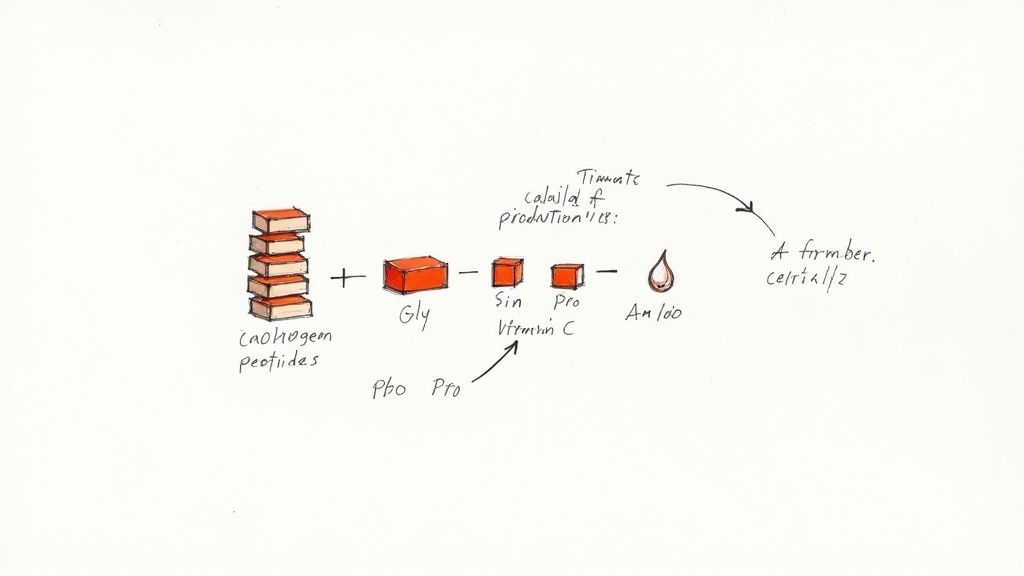
But how does swallowing a collagen supplement actually help your skin? It’s a lot more clever than just patching up worn-out spots. It works by giving your body both the raw materials and the "go-ahead" signal to kickstart its own repair work.
How Collagen Peptides Work
The most effective form you’ll find in supplements is hydrolyzed collagen, which you’ll also see called collagen peptides. "Hydrolyzed" just means the massive collagen protein has been broken down into tiny, easily absorbed chains of amino acids.
Here’s a simple way to think about it: you can't fix a brick wall by trying to shove a giant, pre-made slab of brick into it. You need individual bricks and mortar. Collagen peptides are those individual bricks—small, manageable pieces your body can actually put to work.
Once these peptides enter your bloodstream, they do two critical jobs:
- They provide the raw materials. They flood your system with the exact amino acids needed to build new collagen, especially glycine, proline, and hydroxyproline.
- They signal for more production. The very presence of these peptides in your blood acts as a trigger for your fibroblast cells (the skin's collagen factories). It’s like a memo goes out saying, "Hey, there's been a breakdown! Time to ramp up production!"
This dual-action approach is what makes collagen so effective for aging skin. It’s not a passive fix; it's an active process that nudges your body to get back to its own regeneration. If you want to dive deeper into its role, check out our guide on what exactly collagen is and why it's so important.
What the Clinical Evidence Says
The science backing collagen peptides is pretty solid. Study after study has shown real, measurable improvements in the key signs of youthful skin.
Instead of wading through dense scientific papers, here’s what the research consistently shows in plain English. After a few months of daily use, people often see:
- Better Skin Hydration: Skin gets much better at holding onto moisture, which gives it that plump, dewy look.
- Increased Elasticity: The skin's ability to "snap back" improves, making it feel and look firmer.
- Reduced Wrinkle Depth: Fine lines and even some deeper wrinkles become visibly less noticeable.
One thing the research makes crystal clear is that consistency is everything. These benefits don't happen overnight. They build up over time with daily intake, usually over at least three to six months. It’s a long game that gives your body the time it needs to rebuild from within.
The Non-Negotiable Partner: Vitamin C
Taking a collagen supplement without making sure you have enough Vitamin C is like trying to build that brick wall without any mortar. It just won't work.
Vitamin C is absolutely essential for collagen synthesis. It acts as a "helper molecule" for the enzymes that stabilize collagen fibers and link them together into a strong, resilient mesh. Without enough Vitamin C, the collagen your body makes is weak and flimsy, which means fragile skin.
This is why you'll see so many high-quality collagen supplements with Vitamin C added right into the formula. It's the ultimate partnership, ensuring those amino acid building blocks you’re supplying actually turn into the strong, healthy skin you’re after.
Essential Nutrients for Skin Defense and Repair
While collagen provides the heavy-duty scaffolding for your skin, it doesn’t work alone. Think of it as the frame of a house—essential, but totally vulnerable without walls and a roof to protect it. A whole team of supporting micronutrients acts as that protective barrier, defending your collagen from damage and keeping the entire structure sound.
These nutrients are the unsung heroes in the quest for healthy, resilient skin. They’re basically your skin's on-call maintenance crew, handling everything from antioxidant defense to inflammation control and cellular repair. Without them, even the best collagen-building efforts can fall flat.

This supporting cast makes sure the collagen you have—and the new collagen you’re building—stays strong and does its job. Let's get to know the key players that help defend and repair your skin from the inside out.
Vitamin E: The Antioxidant Bodyguard
Vitamin E is a fat-soluble antioxidant that acts as a loyal partner to Vitamin C. If Vitamin C is the first line of defense against free radicals in the watery parts of your cells, Vitamin E is the bodyguard for your cell membranes, which are made of fats.
It specifically shields these delicate membranes from oxidative stress, preventing the kind of cellular damage that makes us look older. This partnership is what makes them so effective; Vitamin C actually helps regenerate Vitamin E after it's neutralized a free radical, allowing it to get right back to work. This teamwork makes them one of the most powerful duos you'll find among the best supplements for aging skin.
By shielding the outer layer of your skin cells, Vitamin E helps maintain their structural integrity. This preserves your skin's natural moisture barrier, keeping it hydrated, supple, and better protected from environmental aggressors like UV radiation and pollution.
You can find Vitamin E in foods like sunflower seeds, almonds, and avocados. But getting a therapeutic dose to combat daily environmental damage can be tough through diet alone, which is where a good supplement can make a real difference. To learn more about how antioxidants work as a team, you can check out our guide to the best antioxidant supplements for skin.
Zinc: The Master of Repair and Inflammation Control
If your skin experiences any kind of damage—from a small cut to the constant, low-grade inflammation caused by UV exposure—zinc is one of the first minerals on the scene. It plays a massive role in wound healing, cell production, and keeping inflammation in check.
Think of zinc as the foreman on a construction site. It directs the repair crews (your cells) to the site of damage and makes sure the whole healing process runs smoothly and efficiently.
It does this through a few key actions:
- Cell Turnover: Zinc is vital for creating fresh new skin cells and shedding the old, damaged ones.
- Enzyme Function: It assists hundreds of enzymes, including the ones that produce collagen and fight off free radicals.
- Inflammation Regulation: It helps calm down inflammatory responses in the skin, which can stop the breakdown of precious collagen and elastin.
A zinc deficiency can lead to slow wound healing and other skin issues. While it's found in oysters, beef, and pumpkin seeds, supplementation helps ensure you have optimal levels to support your skin’s constant repair needs.
Biotin: For Foundational Skin Health
Biotin, also known as Vitamin B7, is famous for its connection to healthy hair and nails, but its benefits run deep into skin health, too. Biotin is a key player in the metabolism of fats, which are absolutely essential for maintaining healthy skin cells.
Basically, biotin helps make sure your skin cells have the fatty acids they need to form a strong, protective outer layer. When this barrier is robust, your skin is much better at retaining moisture and keeping irritants out. It’s no surprise, then, that a lack of biotin can sometimes show up as dry, itchy skin.
While a true deficiency is rare, making sure you get enough supports the foundational processes that keep skin looking and feeling healthy. Including these defenders—Vitamin E, Zinc, and Biotin—in your routine provides a complete strategy, protecting the very structure that collagen works so hard to build.
Harnessing Plant-Based Skin Boosters
For those who prefer a plant-derived path to skin health, the options are incredibly powerful. Instead of supplying animal-based collagen directly, this approach gives your body the precise botanical compounds and nutrients it needs to build and protect its own supply. It’s all about nourishment from the inside out.
Think of it like this: you can either bring a pre-built brick wall to a construction site (animal collagen) or deliver a pristine pile of high-quality bricks, mortar, and the expert crew to do the job (plant-based boosters). Both get you a strong wall, but the second method empowers your body’s own natural building process.
Potent Antioxidants from Nature
Many of the best supplements for aging skin draw their power straight from the plant kingdom, especially when it comes to antioxidant defense. Certain plant compounds are exceptionally skilled at neutralizing the free radicals that wreak havoc on your skin’s structure.
Two of the most researched botanical bodyguards are:
- Resveratrol: Found in the skin of grapes, this compound is a master at fending off environmental stressors. It helps protect the collagen and elastin you already have from breaking down under the daily assault of UV rays and pollution.
- EGCG (Epigallocatechin gallate): The star component of green tea, EGCG is a potent antioxidant that helps reduce inflammation and shield skin cells from damage. Its protective qualities are a key reason why green tea extracts are so popular in skin health.
These plant-based allies work by stopping damage before it starts, preserving your skin's youthful framework for longer. Extensive research, including randomized controlled trials, backs up the effectiveness of supplements in fighting skin photoaging. While collagen peptides have strong evidence, other options with emerging support include amino acids, Coenzyme Q10 (CoQ10), and green tea extracts. You can discover more insights about these anti-aging supplement findings on Zoe.com.
Demystifying Vegan Collagen Boosters
This is where a common point of confusion comes up. Since true collagen is only found in animals, there is no such thing as "vegan collagen." What you see advertised are actually plant-based collagen boosters—intelligent formulas designed to give your body everything it needs to ramp up its own production.
These aren't just a random mix of vitamins. They are strategically formulated kits of raw materials.
A high-quality plant-based collagen booster doesn't provide collagen; it provides the essential co-factors and amino acid precursors for collagen synthesis. It’s about fueling the factory, not just delivering the finished product.
These formulas typically combine a synergistic blend of key ingredients to get the job done right. You can learn more by exploring our detailed guide on how plant-based collagen supplements work.
It's helpful to see how these two approaches stack up side-by-side. One delivers the finished product, while the other provides the building blocks.
Comparing Animal-Derived Collagen vs. Plant-Based Boosters
| Feature | Animal-Derived Collagen (Peptides) | Plant-Based Collagen Boosters |
|---|---|---|
| Source | Cow (bovine), fish (marine), or pig (porcine) connective tissues. | Plant-based sources like bamboo, fruits, and amino acids derived from fermentation. |
| Mechanism | Provides hydrolyzed collagen peptides as a direct source for the body to use. | Supplies key vitamins, minerals, and amino acids that stimulate the body’s own natural collagen production. |
| Key Ingredients | Hydrolyzed collagen peptides. | Vitamin C, Silica, Zinc, plant-derived amino acids (Glycine, Lysine, Proline), and antioxidants. |
Both paths aim for the same goal—healthier, more resilient skin—but they get there in fundamentally different ways. The choice often comes down to dietary preferences and personal philosophy.
Key Components of a Plant-Powered Booster
The most effective plant-based formulas are built around a few core components that work together beautifully. They arm your body with the necessary tools for both building new collagen and protecting what you already have.
The essential ingredients typically include:
- Vitamin C: As we've covered, this is the non-negotiable spark plug for collagen synthesis. It’s the catalyst that turns amino acids into strong, stable collagen fibers.
- Silica: Often sourced from bamboo or horsetail extract, silica is a crucial trace mineral that helps strengthen connective tissues, including skin, hair, and nails.
- Key Amino Acids: Since plants don’t contain collagen, these boosters supply the specific amino acid "bricks" your body needs, like Glycine, L-Lysine, and L-Proline.
- Zinc: This mineral acts as a co-factor for collagen-producing enzymes, making sure the entire process runs smoothly and efficiently.
By combining these elements, plant-based boosters offer a complete, vegan-friendly system for encouraging your body to maintain its own youthful vitality from within. This makes them a fantastic alternative for anyone looking to support their skin health while adhering to a plant-based lifestyle.
How To Choose And Use Skin Supplements Wisely
Walking down the supplement aisle can feel like a pop quiz you didn't study for. With so many bottles making big promises, how do you separate the good stuff from the marketing fluff?
Finding the best supplements for aging skin isn’t about luck; it’s about becoming a savvy label-reader. It’s about knowing what to look for—and what to walk away from—so you can make a choice that actually delivers.
The first thing I always tell people is to ignore the flashy claims on the front and head straight for the ingredient list. Vague terms like "proprietary blend" are an immediate red flag. Why? Because they hide the exact amount of each ingredient, making it impossible to know if you're getting a dose that’s actually effective or just a sprinkle of something for show.
Instead, look for total transparency. A high-quality supplement will proudly list every single active ingredient and its specific dosage. This empowers you to compare the formula to what scientific studies have found to be effective.
Decoding The Label For Quality
Beyond the ingredients themselves, a few key markers can signal a product's quality and safety. Since supplements aren't regulated with the same rigor as pharmaceuticals, third-party certifications become your best friend.
Think of these seals as an independent stamp of approval. They verify that what's on the label is actually what's in the bottle and that the product is free from nasty contaminants.
- NSF International: This seal means the product meets strict standards for public health protection.
- U.S. Pharmacopeia (USP): When you see a USP seal, you can trust the product's ingredient integrity, purity, and potency.
- Informed-Sport: This one is especially important for athletes, as it tests for substances banned in competition.
Spotting one of these logos gives you an extra layer of confidence that you’re putting your money toward something safe and accurately labeled.
Just a quick but important note: always chat with your doctor or a healthcare professional before starting a new supplement. They can look at your personal health needs, check for any potential interactions with medications, and help you find the right path forward.
Lifestyle Factors That Amplify Your Results
Supplements can be incredibly powerful, but they don't work in a vacuum. You simply can't supplement your way out of a lifestyle that's actively working against your skin. To really get the most out of your investment, you have to pair smart internal nutrition with external protection and healthy habits.
Here's an analogy I like: taking skin supplements without using sunscreen is like trying to renovate your house during a hurricane. You’re putting in all this effort to build and repair, but a destructive force is constantly tearing it all down.
The infographic below shows how key plant-based ingredients—like Vitamin C, specific amino acids, and silica—form the foundation of a great skin booster.
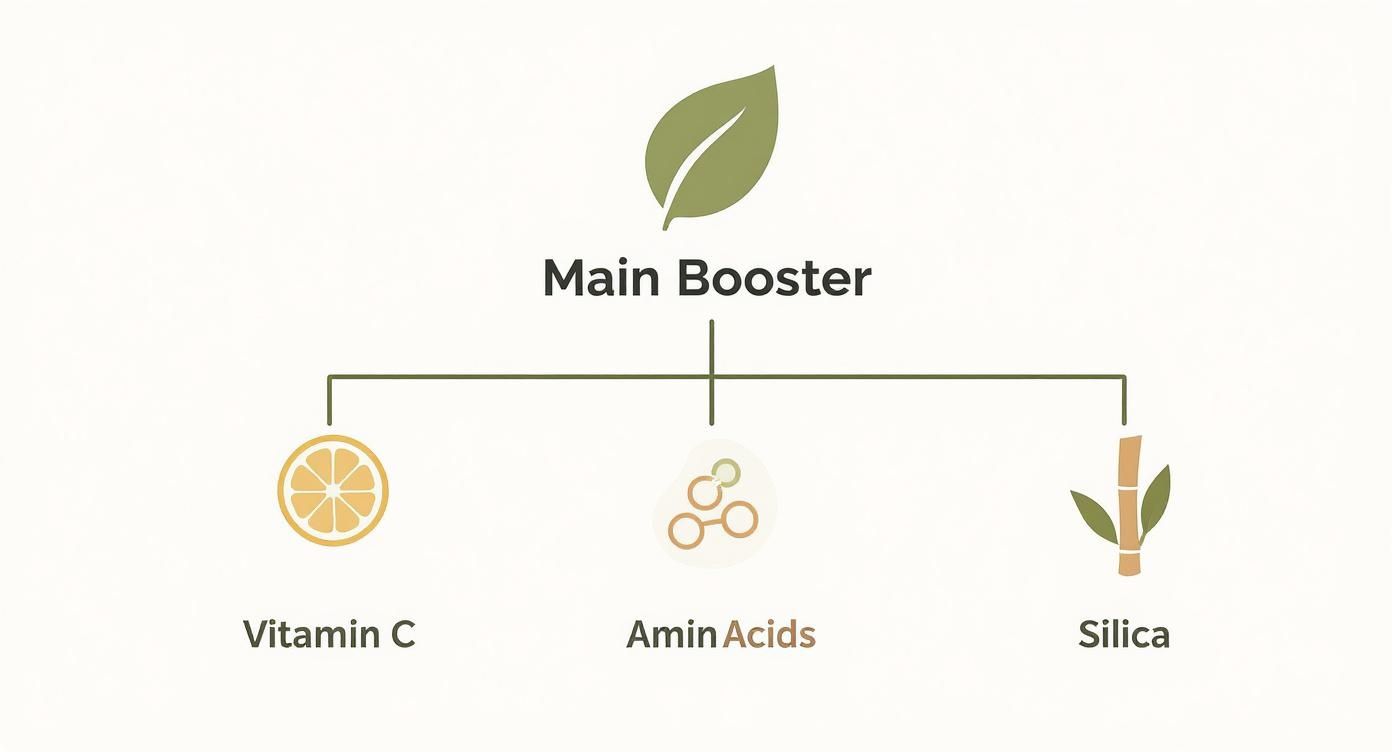
It’s all about a synergistic blend of ingredients that gives your body the raw materials it needs to fuel its own natural collagen production.
For the best possible results, you absolutely have to integrate these three non-negotiable habits into your routine:
- Consistent Sun Protection: UV radiation is, without a doubt, the number one cause of collagen breakdown. A daily broad-spectrum sunscreen isn't just a good idea; it's the single most effective anti-aging product you can use.
- A Nutrient-Rich Diet: Supplements are meant to complement your diet, not replace it. Fill your plate with antioxidant-rich fruits and veggies, lean proteins, and healthy fats.
- Proper Hydration: Skin cells need water to function. Well-hydrated skin looks plumper and more resilient because, on a cellular level, it's working more efficiently. Aim for plenty of water throughout the day.
When you combine smart supplementation with these foundational practices, you create a powerful, holistic approach to achieving and maintaining vibrant, healthy skin for the long haul.
Common Questions About Supplements for Aging Skin
Diving into the world of skin supplements can feel a little overwhelming, and it's natural to have questions. Getting clear on what to expect is the first step toward a routine you can stick with. Let's tackle some of the most common things people wonder about.
How Long Until I See Results?
This is the big one, right? When it comes to rebuilding your skin from the inside out, patience and consistency are everything. You might start to notice small, encouraging changes—like better hydration and a bit more plumpness—in as little as 4 to 6 weeks.
But the real, visible transformation takes time. For more significant structural improvements, like a boost in firmness and a softening of fine lines, you’ll want to give it at least 3 to 6 months of daily use. Think of it this way: your body needs that time to actually absorb the nutrients, ramp up its collagen production, and get to work on renewal.
Can I Just Get These Nutrients From Food?
A healthy diet is non-negotiable—it's the foundation for everything. But hitting the specific, therapeutic doses of certain nutrients needed for skin repair through food alone can be a real challenge. For example, getting the same concentrated blast of amino acids like glycine and proline found in hydrolyzed collagen would be pretty tough to do with just your daily meals.
Think of supplements not as a replacement for a great diet, but as a targeted tool. They deliver a potent, reliable dose of the key building blocks that have been shown in studies to truly support your skin’s structure and repair mechanisms.
Are There Side Effects to Consider?
For most healthy people, supplements like collagen peptides, Vitamin C, and Biotin are very well-tolerated when taken at the recommended dose. Sometimes, people might experience a little digestive upset when they first start, but this usually settles down on its own.
That said, it’s always a smart move to chat with your doctor before adding anything new to your routine. This is especially true if you have any pre-existing health conditions, are pregnant, or take other medications, just to be sure there are no potential interactions.
Ready to nourish your skin from within? The Staye plant-based collagen booster is formulated with the building blocks your body needs, like Vitamin C, bamboo silica, and key amino acids, to support radiant skin, strong hair, and healthy nails. Fuel your natural vitality by exploring our science-backed formula at https://shopstaye.com.